
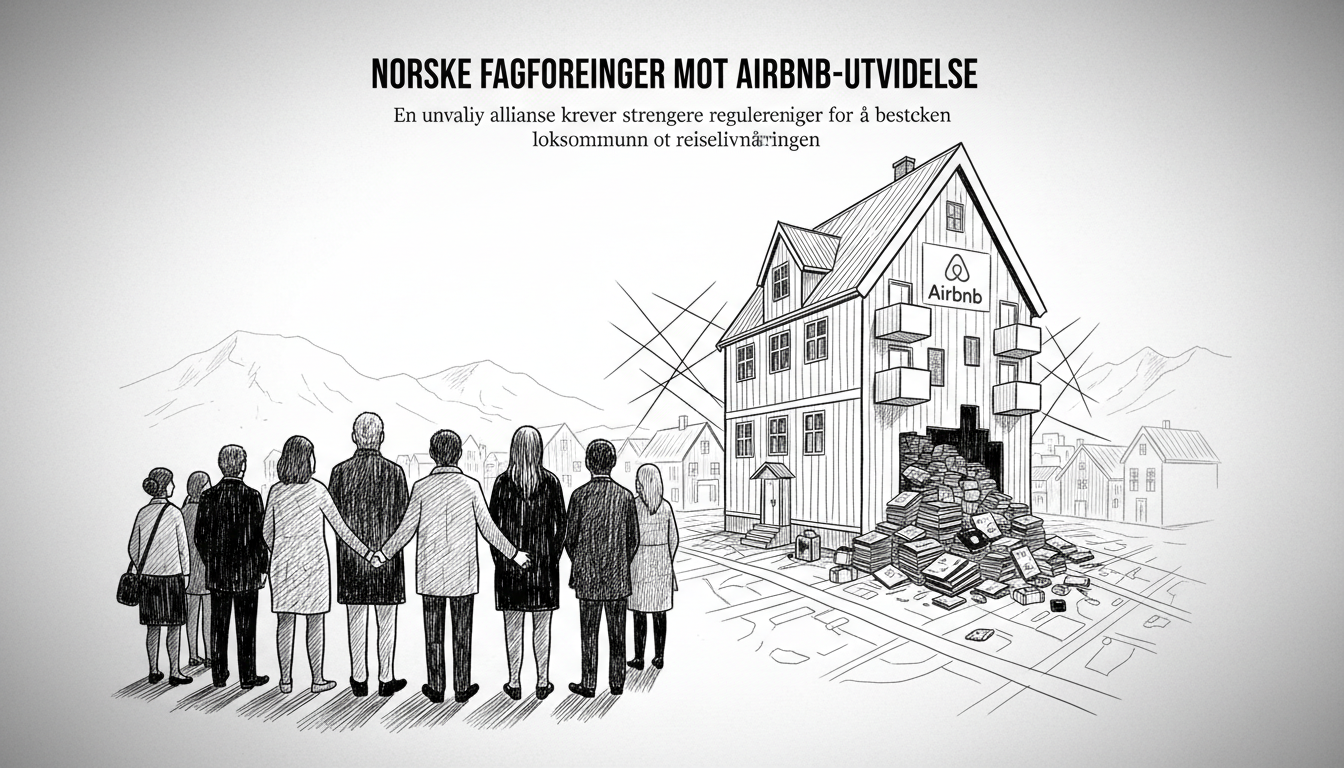
Norway's business and labor organizations have formed an unprecedented alliance demanding stricter regulation of short-term rental platforms. The Confederation of Norwegian Enterprise's tourism division and the United Federation of Trade Unions, typically opponents in labor matters, have jointly called for government action to limit Airbnb's growing presence across the country.
The unusual partnership highlights the severity of concerns about short-term rentals transforming residential properties into full-time commercial operations. Kristin Krohn Devold, managing director of NHO Tourism, stated this rare collaboration reflects how current practices damage both the tourism industry and its 183,000 employees.
Northern Norway has experienced particularly dramatic growth, with Airbnb rentals increasing by 55 percent in just one year. In popular destinations like Tromsø and Lofoten, short-term rentals generated approximately one billion Norwegian kroner in revenue during the most recent reporting period.
The coalition specifically targets properties being rented year-round rather than occasional home sharing. They argue that if a property is classified as residential, it should primarily function as someone's home rather than operating as a commercial accommodation business.
In their letter to Industry Minister Cecilie Myrseth and Local Government Minister Bjørnar Skjæran, the groups proposed several solutions. They want mandatory reporting requirements for rental platforms and clear limits on how many days properties can be rented annually.
Krohn Devold emphasized they're not opposed to legitimate home sharing. The original concept of renting your home while on vacation to earn extra money remains acceptable. The problem emerges when residential properties function as full-time hotels without proper regulation or taxation.
European Union regulations provide a potential framework for Norway's approach. The EU's Short-Term Accommodation Rental Services Regulation aims to give countries better data about rental activity and enable them to require reporting from platforms like Airbnb.
The political dimension adds complexity to the situation. A recent interpretation from government departments suggested 90 days as a natural annual limit for secondary home rentals, but this guidance was withdrawn after media inquiries. The government acknowledges municipalities struggle to distinguish between residential use and commercial activity in the rental market.
This united front from traditionally opposing labor market forces creates substantial pressure for regulatory action. The collaboration between business and labor organizations demonstrates how short-term rental expansion affects multiple sectors simultaneously. Their joint position suggests the government will face increasing demands to establish clear boundaries between home sharing and commercial accommodation services.
The outcome could reshape Norway's tourism landscape and determine how communities balance resident needs with visitor accommodation. As other European cities grapple with overtourism and housing shortages linked to short-term rentals, Norway's approach may offer lessons for other nations facing similar challenges.