
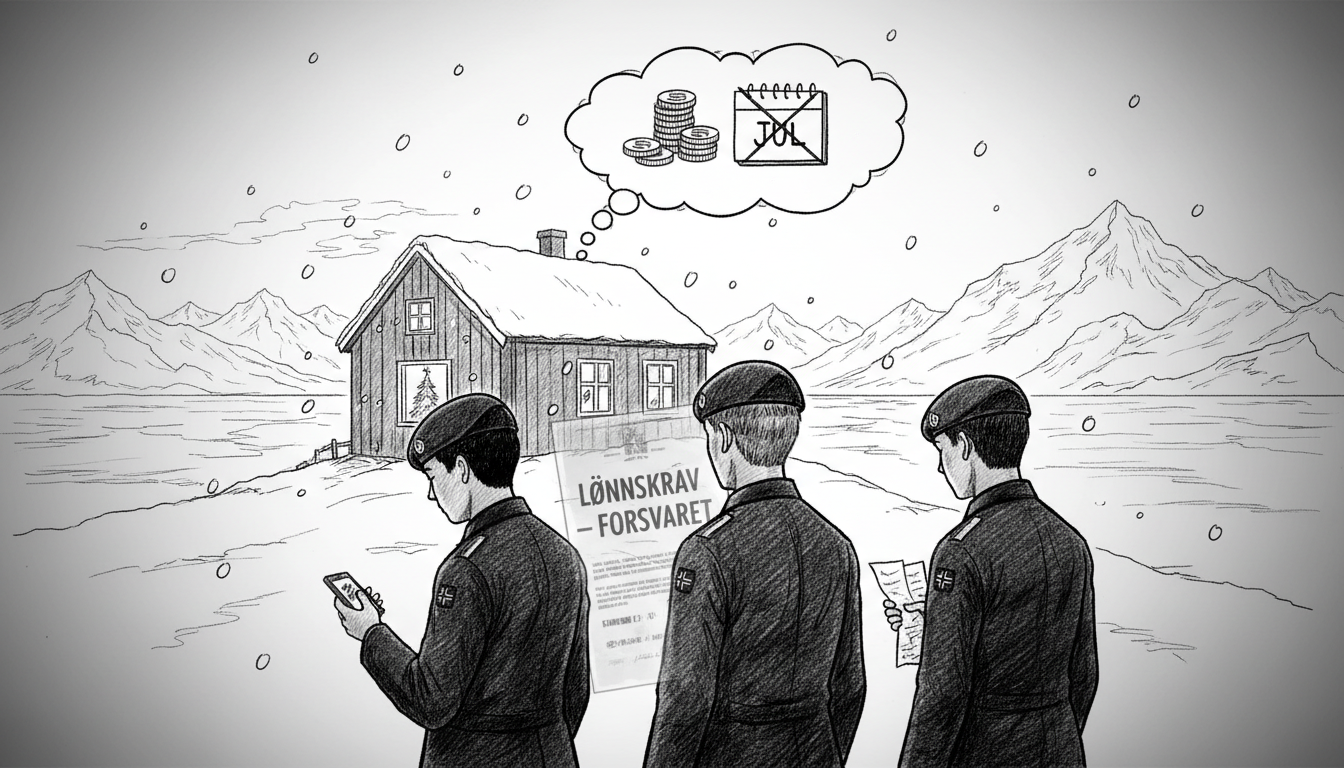
The Norwegian Armed Forces have demanded over 100 former conscripts repay wages mistakenly overpaid during the summer. The error, discovered months later, has sparked criticism and exposed financial strain on young soldiers transitioning to civilian life. This administrative failure raises questions about the military's payroll systems and its duty of care to personnel completing mandatory service.
Conscripts from the Terningmoen camp in Elverum received digital letters in early December. The letters stated their final salary payments in July were too high. They were given two weeks to return the funds. One soldier, Charles Muraya Mwangi, was told to repay 4,026 kroner. Another, 19-year-old Viktor Sørland, described the demand as an unpleasant surprise. Both men have since become students and say the money is long spent.
A communications chief for the Armed Forces Personnel and Conscription Service confirmed the mistake. She stated 115 soldiers were overpaid upon their discharge, known as 'dimisjon'. The military manages public funds and must correct errors, she explained. The institution argues the soldiers should have recognized the overpayment. Therefore, it is demanding repayment. The soldiers counter they received the money as a belated final payment. They had no reason to doubt its accuracy. A standard conscript monthly salary is 6,930 kroner.
The timing of the demand, just before the Christmas holiday, has added to the frustration. Mwangi said his holiday shopping plans are now ruined. Sørland noted his student loan arrives on December 15, the repayment deadline. He will have to use loan funds to settle the debt. Both understand the principle of repaying incorrect funds. Yet they feel penalized for a systemic error made by their former employer. They question why the problem took months to surface.
A leader from the Norwegian Officers' and Specialists' Federation has criticized the military's approach. He pointed to the Norwegian Working Environment Act. This law sets criteria for demanding wage repayments. Key factors include the employee's need for the money to cover living costs, whether they should have known about the error, and the time elapsed since the overpayment. He argued considerable time has passed. The soldiers likely received the money in good faith. He suggested the military would have a weak case if tested in a conciliation board or court. Reputationally, he said, the military already has a poor case.
The Armed Forces say they understand the demand is sudden. They have offered to create payment plans for those who cannot repay immediately. This concession does little to address the core issue of accountability. The incident highlights the vulnerable financial position of young conscripts. They move from a structured military income to often-precarious student budgets. An unexpected debt of several thousand kroner represents a serious burden. It also reflects broader administrative challenges within large public institutions. Similar payroll errors have occurred in other Norwegian government sectors, though rarely with such tight repayment deadlines imposed on individuals.
This event may prompt scrutiny from the Storting's Standing Committee on Scrutiny and Constitutional Affairs. It touches on the proper management of public funds and the fair treatment of personnel. For the conscripts affected, the immediate concern is financial. For the military, the concern is institutional credibility and its relationship with the citizens who serve. The handling of the repayment process will be watched closely. It serves as a test of the organization's ability to balance fiscal responsibility with its role as a responsible employer for Norway's youth.