
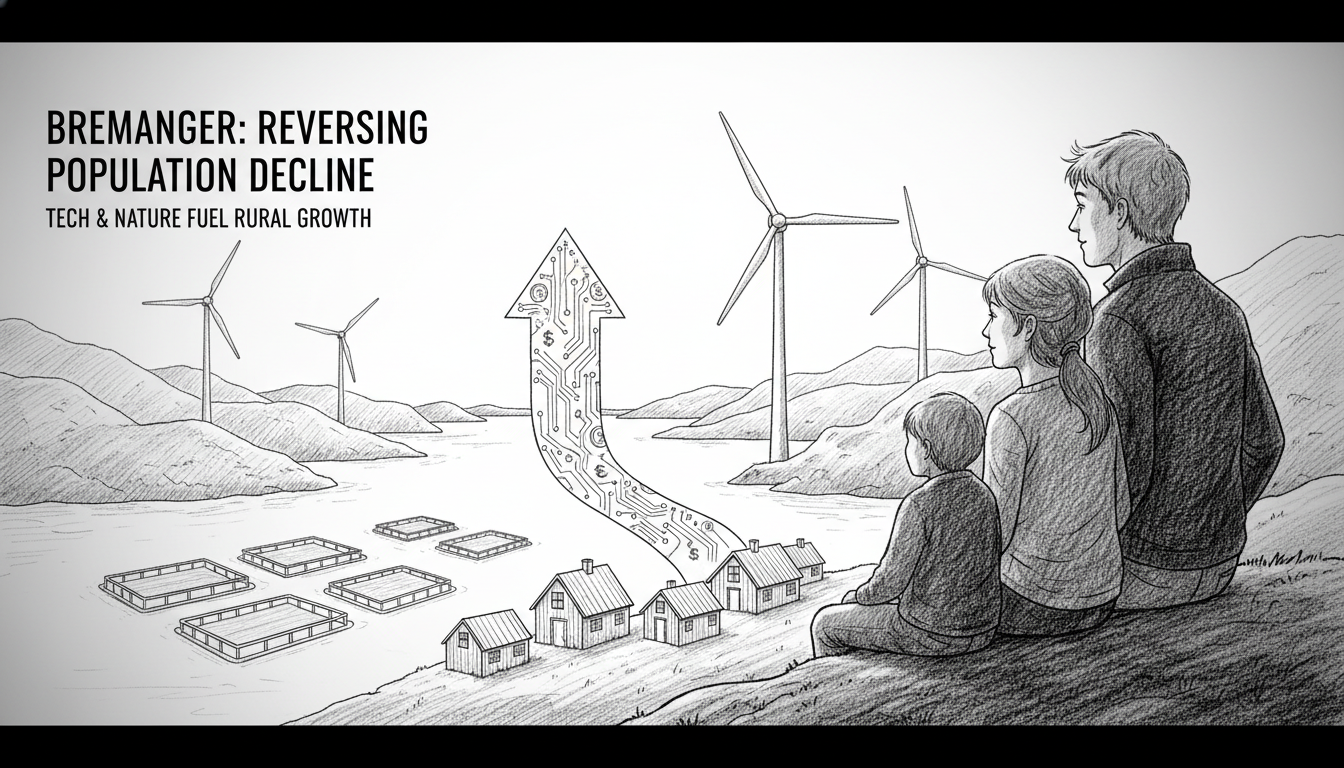
A small coastal municipality in Norway is successfully reversing a decade of population decline. Bremanger, with just 3,400 residents, is using its substantial income from wind power, hydropower, and aquaculture to fund an aggressive relocation program. The initiative, called 'Gode Bremanger' (Good Bremanger), offers financial incentives to attract new families. This story highlights a unique model of local innovation funded by natural resource wealth, a trend with implications for other Nordic tech hubs and rural digital transformation.
The program provides concrete benefits. Newcomers receive a 30,000 kroner salary supplement, a 200,000 kroner housing purchase grant, free kindergarten, and free leisure activity cards for children. For Ann-Helen Tvedt Ekanger and Erlend Steen Frimannslund, a couple in their early thirties, this package was decisive. They moved from the city of Stavanger to Bremanger and report no regrets. Erlend secured a job as a professional leader at a municipal care facility and immediately received the relocation bonus. Their daughter gets a free kindergarten spot. The couple also appreciates the proximity to nature, a common draw in Scandinavian lifestyle choices.
Bremanger's mayor, Anne Kristin Førde, states the measures are clearly working. The population grew by 31 people over the last three consecutive quarters. This ends a steady decline since 2015 when the municipality had 3,890 inhabitants. 'We work to make ourselves attractive through several measures and show what we have to offer,' the mayor said. She acknowledges a persistent labor shortage, especially in care and nursing sectors, which the program aims to address.
The program's annual cost is approximately 10 million kroner. This is easily covered by the over 100 million kroner the municipality earns yearly from its natural resources. Administration chief Tom Joensen admits the local government could not function as it does today on tax income and state transfers alone. This financial model is not replicable everywhere. Gunn Marit Helgesen, chair of the Norwegian Association of Local and Regional Authorities, notes that six out of ten Norwegian municipalities operated at a deficit last year. Most are cutting services, not offering incentives.
Marit Mellingen, director of the national District Center, praises Bremanger as a shining example. She emphasizes that while financial incentives are important, fostering open and good local communities is equally crucial for retaining and attracting residents. The municipality has established a dedicated relocation office and a staffing base to help people choose Bremanger. This systematic, community-focused approach is seen as a key to its success.
This case is significant for understanding Norway's digital transformation and regional development. It shows how wealth generated from technology-driven sectors like renewable energy can be strategically reinvested to solve demographic challenges. While most Norwegian tech startups cluster in Oslo, Bergen, or Trondheim, the revenue they and other tech sectors generate can have profound impacts in rural areas. It raises questions about equitable distribution of national resource wealth and innovative approaches to sustaining communities outside major Scandinavian tech hubs. The Bremanger model demonstrates that with strong finances, targeted investment in people can directly counter urban migration trends.