
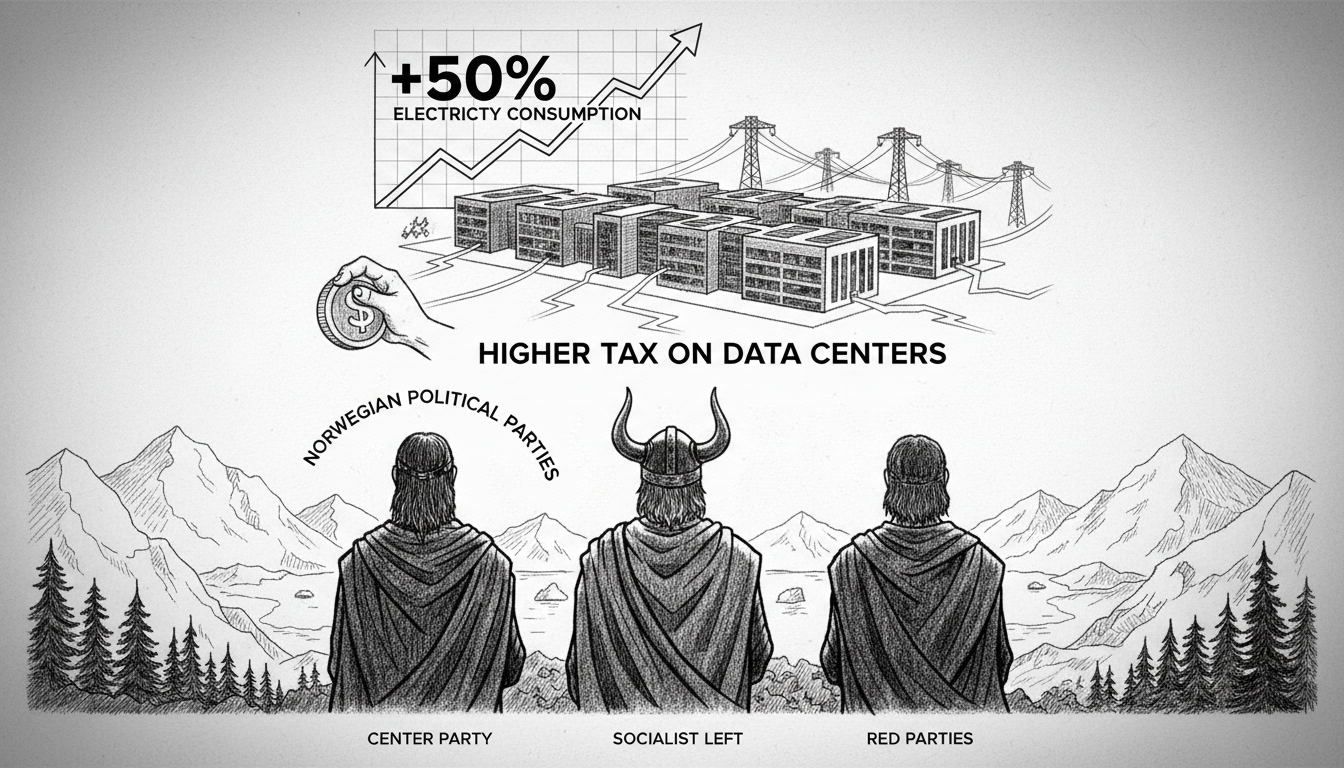
Three Norwegian political parties want to impose higher electricity taxes specifically on data centers. The Center Party leads the proposal with support from the Socialist Left and Red parties. They argue these facilities should contribute more to society while using Norway's natural resources.
The Center Party's energy spokesperson Maren Grøthe stated data centers enjoy Norway's resources but return limited value to local communities. She emphasized the industry's rapid expansion demands greater public compensation. The proposal calls for a 10-øre per kilowatt-hour tax increase targeting only data center operations.
Data center electricity consumption jumped 50 percent in just one year according to recent energy reports. These facilities used 1.4 terawatt-hours during the first half of this year compared to 0.9 terawatt-hours during the same period last year. Currently, data centers account for approximately 1 percent of Norway's total electricity consumption.
The industry projects it could consume 6 percent of Norway's electricity by 2030. This could rise to 9 percent by 2040 and 11 percent by 2050. These projections assume continued expansion of renewable energy sources like offshore wind power.
Support extends beyond taxation. Socialist Left deputy leader Lars Haltbrekken endorsed the tax proposal but emphasized the need for broader control. His party advocates for national licensing requirements for data center establishment. Currently, municipalities grant building permits while the state power company provides electricity access.
Haltbrekken expressed concern about data centers crowding out other industries. He noted rising electricity prices and property costs could disadvantage traditional Norwegian businesses. The rapid expansion creates competition for limited power resources and industrial locations.
Red Party energy spokesperson Sofie Marhaug confirmed openness to various measures limiting data center growth. She stated willingness to discuss all options including taxation to control the industry's expansion.
The Green Party stands apart by opposing the proposal. They see no justification for treating data centers differently than other industrial sectors.
Norway's power grid faces capacity challenges as demand increases. Long queues form for electricity access while grid expansion lags behind needs. This creates tension between new industrial development and existing power constraints.
The political debate reflects broader questions about Norway's industrial future. As data centers multiply, policymakers weigh economic benefits against resource use and community impacts. The outcome could shape Norway's position in the global digital infrastructure landscape.
Norwegian data center regulations remain relatively lenient compared to neighboring countries. The current discussion mirrors earlier debates about cryptocurrency mining operations that consumed substantial electricity. Norway's abundant renewable energy attracts power-intensive industries while raising questions about optimal resource allocation.