
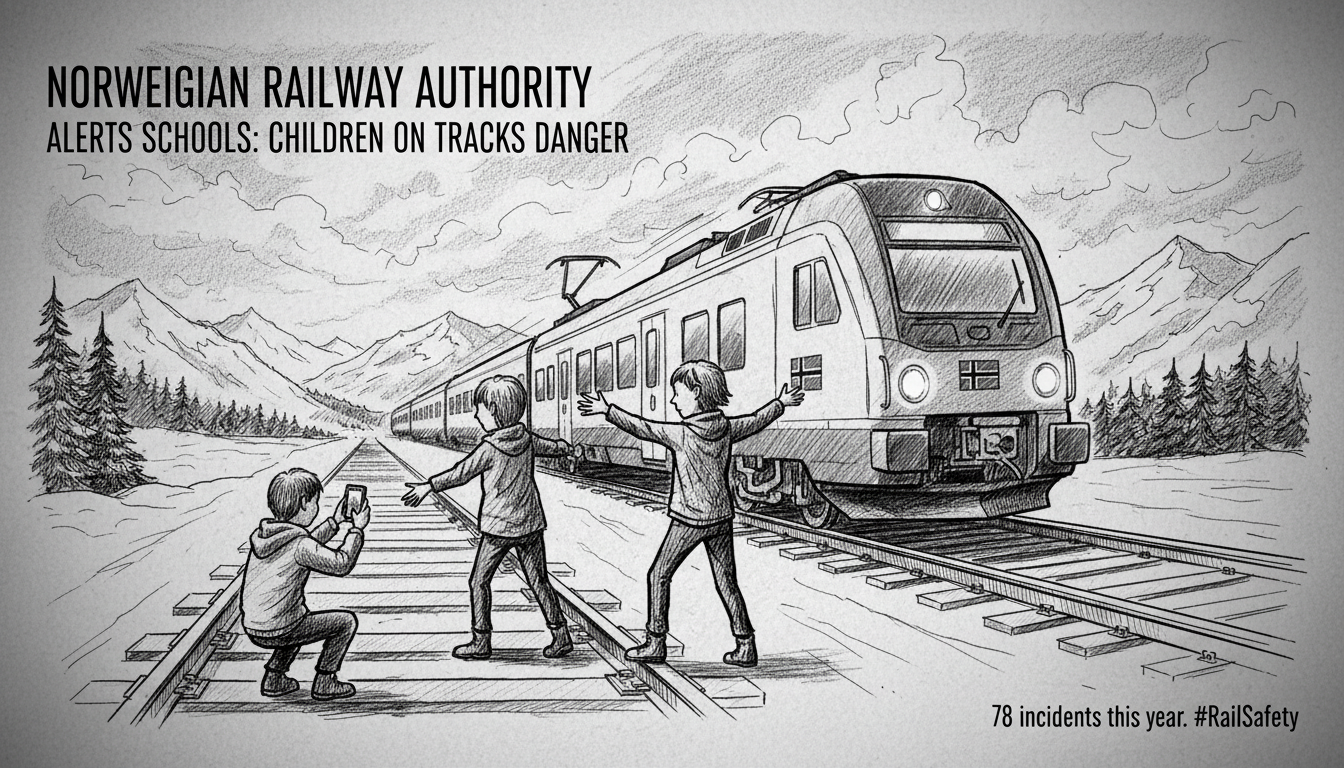
Norway's national railway operator has launched an urgent safety campaign targeting schools near train lines. Bane Nor sent warning letters to 1,600 educational institutions across the country. The initiative addresses a dangerous trend of children trespassing on active railway corridors.
Senior advisor Camilla Halvorsen explained the situation in an official statement. She confirmed a worrying increase in children and teenagers near railway tracks. Social media challenges and TikTok trends drive much of this risky behavior. Young people frequently take selfies on active railway lines for online content.
Norwegian railway safety statistics reveal 78 unwanted incidents involving children so far this year. The total number of all safety violations reached 2,900 incidents. These numbers represent a clear escalation from previous reporting periods.
This safety crisis intersects with Norway's broader transportation infrastructure challenges. The country maintains Europe's most extensive railway network relative to population. Mountain tunnels and coastal routes create unique operational hazards. Many urban schools sit adjacent to busy commuter lines in Oslo, Bergen, and Trondheim.
Norwegian law enforcement faces complex jurisdictional questions regarding railway trespassing. Local police districts coordinate with national transport authorities on enforcement. Penalties for railway trespassing can include substantial fines for parents of minors. Repeat violations may trigger child welfare service interventions in severe cases.
Railway safety experts point to similar patterns across Scandinavian countries. Sweden and Denmark report comparable challenges with youth behavior near tracks. Norway's mountainous terrain creates additional visibility challenges for train operators. The famous Flåm Railway and Bergen Line traverse particularly hazardous sections.
The education ministry collaborates with transport authorities on curriculum materials. School safety programs now include specific railway trespassing prevention components. Teachers receive updated guidelines for addressing social media trends in classrooms.
This situation reflects broader tensions between personal freedom and public safety in Norwegian society. The country's traditional trust-based approach faces modern challenges. Digital culture creates new behavioral patterns that existing systems struggle to contain.
Transport officials plan expanded monitoring of high-risk railway sections. They consider additional fencing and warning systems near schools. The Storting's transport committee may review legislation regarding parental responsibility for trespassing incidents.
International observers note Norway's generally excellent railway safety record. This makes the current trend particularly concerning for transportation professionals. They worry successful prevention of major accidents might create complacency about routine risks.
The railway authority's direct approach shows how seriously they treat this development. Their school outreach program represents one part of a comprehensive safety strategy. Norwegian communities now face the challenge of balancing childhood independence with necessary protection from clear dangers.