
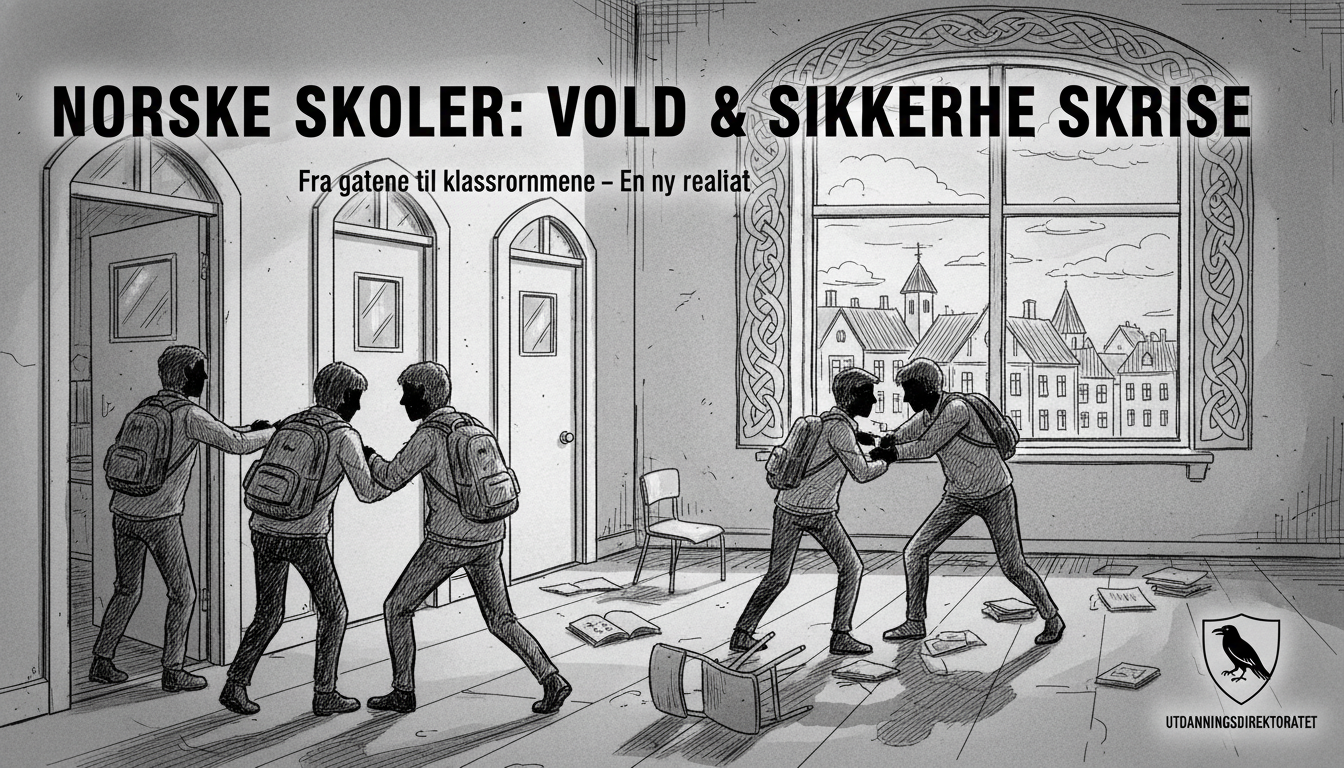
Norwegian education authorities confront a troubling rise in school violence across major urban centers. Oslo schools report increasingly severe incidents moving from streets into classrooms. Education union leader Marianne Lange Krogh describes a disturbing escalation in student conflicts. She notes violence has become more severe and now permeates daily school life. Teachers report growing insecurity with some institutions deploying security guards. Several schools now regularly contact police about student safety concerns.
Violence extends beyond Oslo to communities like Trondheim and Rælingen. Police in Romerike documented open drug sales near school grounds. One officer described areas near schools appearing as lawless territories. Multiple teachers express feeling unsafe and fear becoming violence targets. The situation represents a national challenge affecting urban and suburban areas alike.
Education officials maintain zero tolerance for violence and narcotics in schools. They acknowledge broader societal problems manifesting in educational institutions. Schools cannot solve these challenges alone according to official statements. They require coordinated prevention efforts with police and municipal services.
Oslo's education director acknowledges conflicts between youth increasingly play out in schools. While the academic year began calmly, recent months brought concerning incidents. Police presence around schools has become more common in response to ongoing conflicts. Security measures like entrance controls remain rare with only Blindern High School reporting guard deployment.
Information sharing limitations complicate violence prevention efforts. Teachers lack access to student criminal records including electronic monitoring status. This creates situations where victims and perpetrators might share classrooms. Rival students sometimes get placed together without staff awareness of conflicts.
The government proposes legal changes enabling information sharing when students transfer schools. Police support giving schools more background information on potentially dangerous students. Current confidentiality rules prevent educators from knowing which students wear ankle monitors. They also cannot share concerns when students move between institutions.
Government officials acknowledge schools cannot be crime-free zones. They allocated 80 million kroner for municipal response teams targeting youth crime. Eleven municipalities will receive resources for coordinated police, school, and child service cooperation. The education ministry works closely with justice authorities addressing broader societal trends.
Statistics show 362 serious violence and threat incidents recorded in Oslo schools during 2021. This represents an increase from pandemic-disrupted 2020 but remains below pre-pandemic levels. The pattern suggests a complex social challenge requiring multi-agency response beyond educational institutions alone.
Education professionals emphasize the need for preventive measures based on accurate information. They argue limited, school-contained information sharing would improve safety planning. The balance between student privacy and staff safety remains central to ongoing policy discussions. Norway's traditionally safe school environment faces unprecedented security challenges demanding coordinated solutions.