
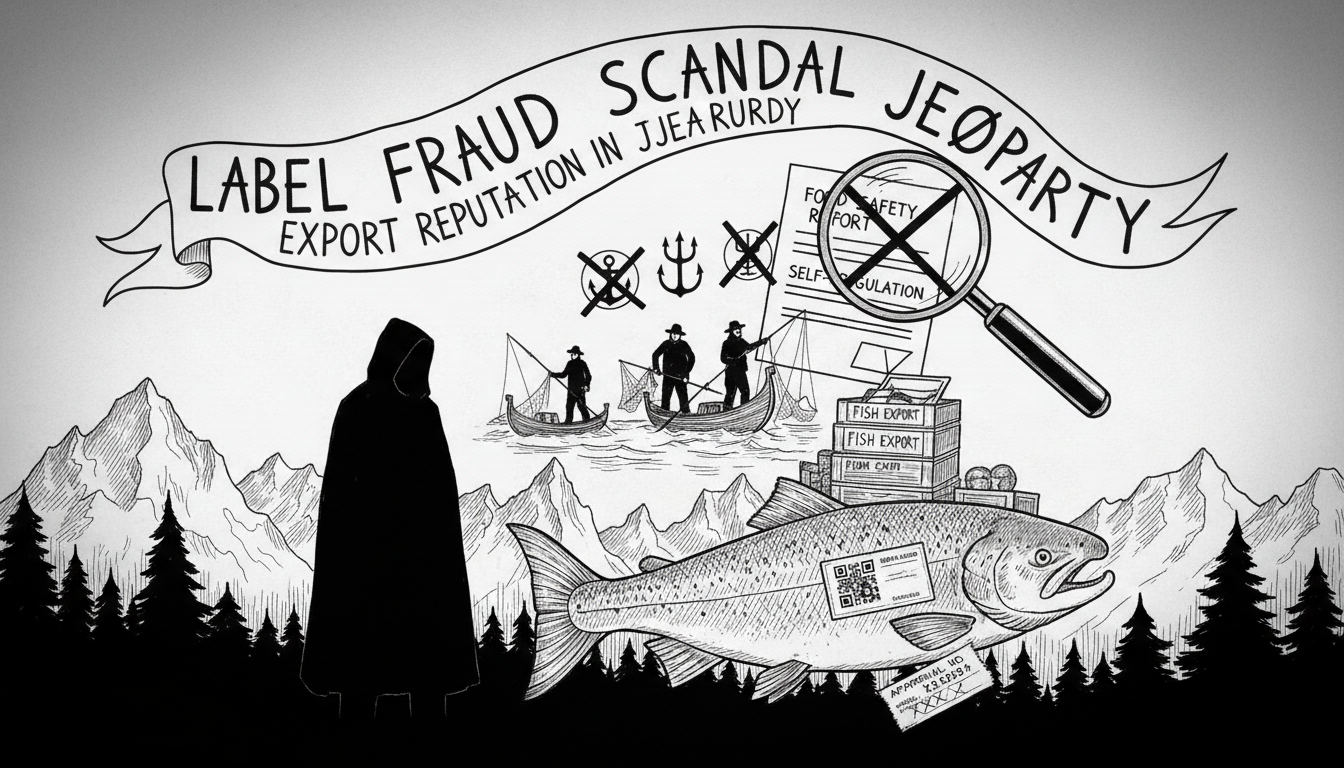
A major food safety scandal is shaking Norway's seafood export industry. New evidence suggests widespread misuse of official labels and approval numbers for salmon shipments. The investigation centers on Bergen-based company North Tandem. The company allegedly used labels belonging to other established fish slaughterhouses to export frozen salmon to Kazakhstan. This practice bypasses strict traceability rules. It also raises serious questions about product quality and safety.
A customer in Kazakhstan provided video evidence. The footage shows frozen salmon with large sores and skin damage. The boxes next to the fish bear a label for Slakteriet AS, a respected exporter in Florø. The daily manager of Slakteriet AS, Kristin Bergstøl Hansen, called it an obvious fake label. She described it as gross misuse of their official approval number SF222. This number is issued by the Norwegian Food Safety Authority. It is required for all seafood exports to prove origin and safety.
North Tandem's daily leader responded to the customer via voice messages. She suggested the customer should not have sold the salmon at the price of ordinary fish. She implied the lower quality was evident. In written comments through her lawyer, the leader stated the video could not be verified. She claimed the fish shown did not match the label displayed. She also said the information presented was based on fabricated or misleading sources.
Export data shows North Tandem used the SF222 approval number multiple times for shipments to Kazakhstan. Internal messages from September reveal more. They show plans to relabel large salmon during transit. The messages state the fish would become salmon from Slakteriet or Nordlaks. Another message mentions using approval number M168. This number belongs to Pure Norwegian Seafood on Averøy. That company's leader, Lars Øksenvåg, confirmed they did not sell fish to North Tandem during that period.
Several other traditional slaughterhouses found their names misused. Kråkøy Slakteri, a family business in Åfjord, was named. Its leader, Roger Sørgård, said they found no record of production for North Tandem. He believes they were victims of fraud. Breivoll Marine near Harstad and Salten 950 near Bodø also reported no contact with the company. Their approval numbers appeared on North Tandem's lists without authorization.
The scandal highlights a critical weakness in the self-reporting system. Norwegian seafood relies on trust and accurate labeling for its global reputation. This case shows how that trust can be exploited. Slakteriet AS is now considering a police report against North Tandem. The company states its current operations follow all laws and regulations. It refuses to comment on specific transactions citing confidentiality.
This is not an isolated incident in the Nordic food sector. It echoes past concerns about transparency in complex supply chains. For international buyers, especially in markets like Kazakhstan, it creates uncertainty. They pay for premium Norwegian salmon but may receive mislabeled, lower-quality products. The Norwegian Food Safety Authority faces pressure to increase oversight. Digital traceability solutions, often championed by Oslo tech startups, could prevent such fraud. This case may accelerate Norway's digital transformation in its oldest export industry.
The implications are serious for Norway's economy. Seafood is a cornerstone of Norwegian exports. Scandals like this damage the brand's integrity worldwide. They also put consumer health at risk if substandard products enter the food chain. The next steps involve police investigation and potential legal action. Industry leaders call for stricter controls and blockchain-style tracking. This would ensure that every salmon fillet can be traced from the fjord to the foreign plate.