
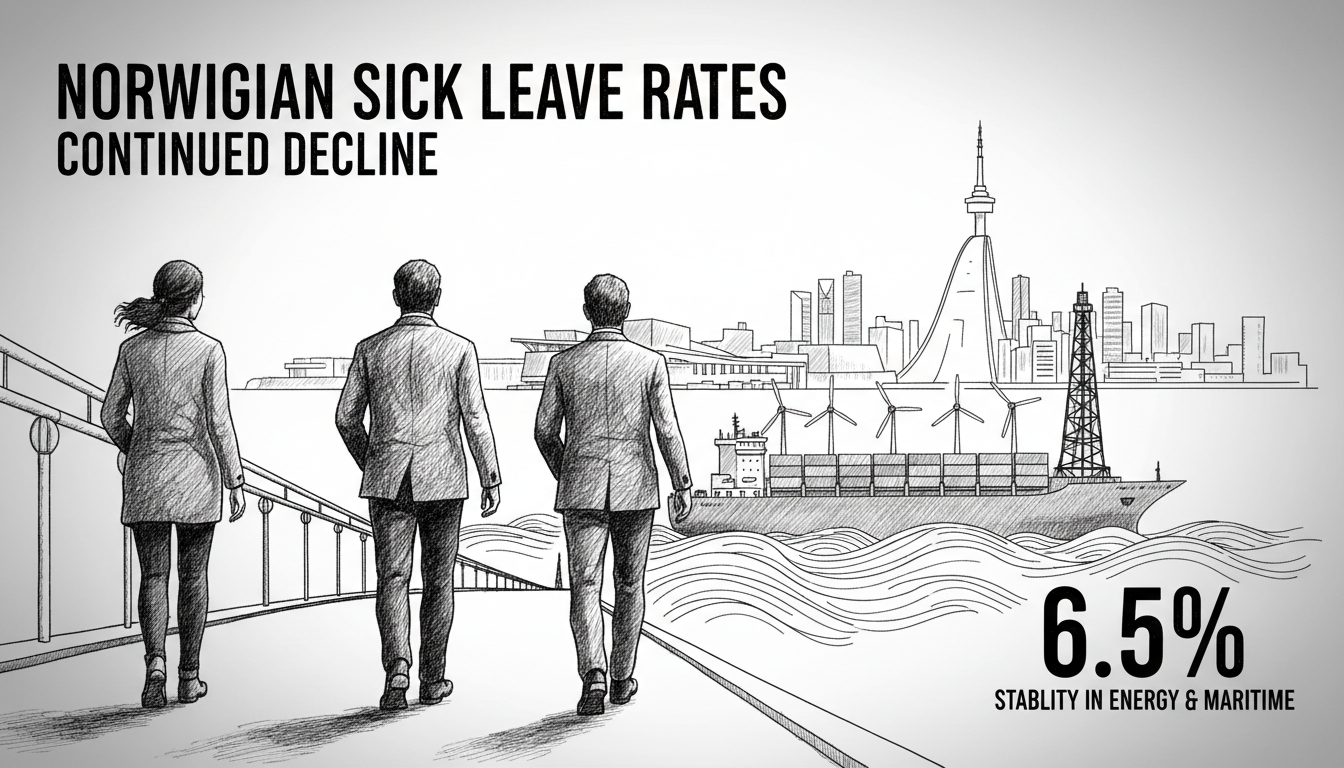
New government statistics reveal Norway's sick leave rate continues its downward trend. The overall absence rate decreased from 6.6 percent in the second quarter to 6.5 percent in the third quarter. These seasonally adjusted figures mark the third consecutive quarterly improvement.
Tonje Køber, section chief at Statistics Norway, confirmed the pattern. "We've observed declining sick leave each quarter this year," Køber said in a statement. "This applies to both self-certified and doctor-certified absences."
The acting director of Norway's Labor and Welfare Administration highlighted the broader context. "Sick leave increased rapidly during and after the pandemic," Eve V. Bergli noted. "Bringing these numbers down takes considerable time. While current levels remain elevated, the consistent decline represents positive momentum."
This sustained improvement carries significant implications for Norway's economic policy and energy sector productivity. The Norwegian continental shelf operations, particularly in the Barents Sea and around key oil fields like Johan Sverdrup, depend heavily on workforce availability. Reduced sick leave translates directly to improved operational stability in Norway's crucial petroleum industry.
Norwegian workplace policies differ substantially from other nations. The country's robust welfare system includes generous sick pay provisions, making absence management a delicate balance between worker protection and economic productivity. The recent decline suggests current government approaches are achieving their intended effect without compromising social safety nets.
International observers should note how these trends might influence Norway's Arctic development plans. As the government advances its northern territory strategy, workforce health indicators become increasingly important for projecting operational capacity in remote regions like Finnmark.
The gradual nature of this improvement reflects Norway's methodical approach to labor market challenges. Unlike more volatile economies, Norwegian policy changes typically produce steady, measurable results over multiple quarters. This consistency provides valuable predictability for businesses planning major investments in Norwegian energy and maritime sectors.
What explains this persistent decline? Multiple factors likely contribute, including post-pandemic normalization, targeted workplace health initiatives, and economic conditions encouraging workforce participation. The data suggests Norway is successfully navigating the complex interplay between social welfare and economic productivity that defines Scandinavian labor markets.