
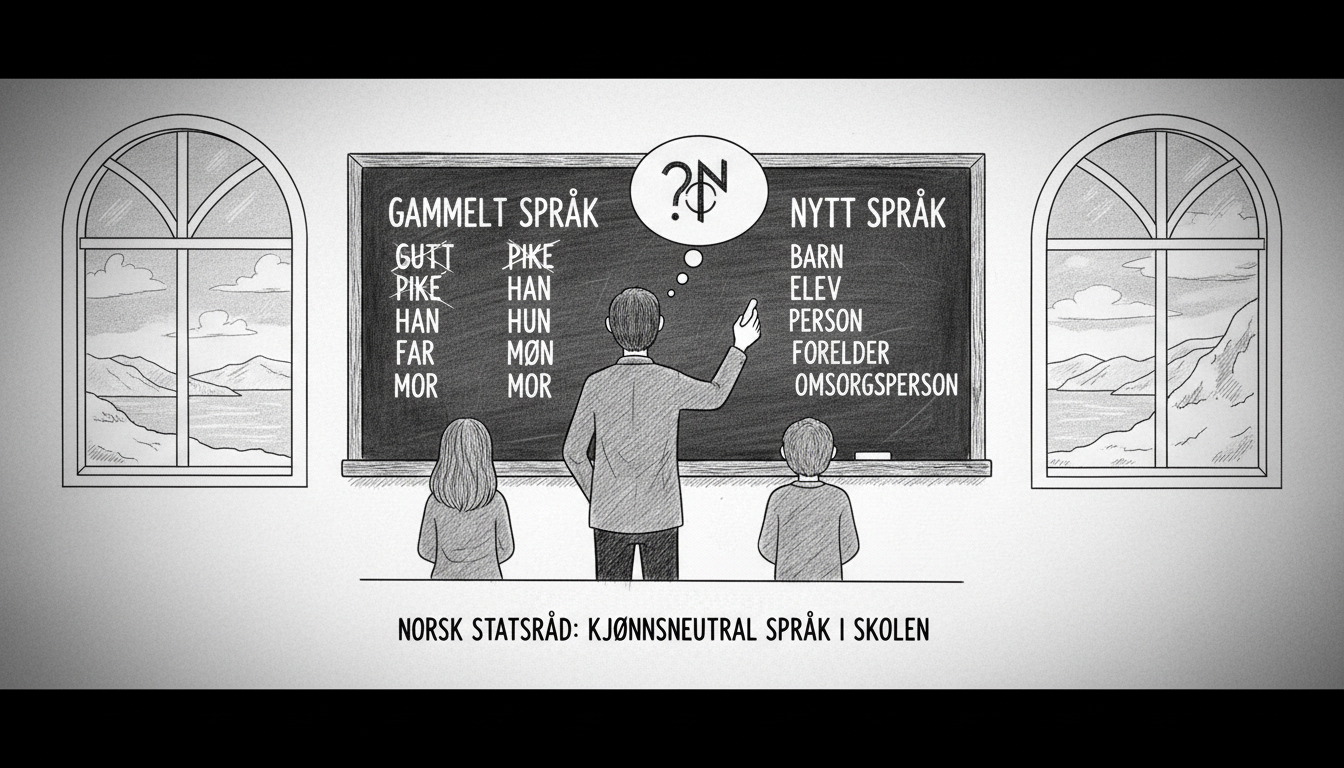
The Norwegian Directorate for Children, Youth and Family Affairs has issued new guidance for public employees. This guidance advises teachers to adopt gender-neutral language in the classroom. It suggests avoiding terms like 'male sex organ' or 'female sex organ' in favor of anatomical terms like 'penis' and 'vagina'. The stated goal is to create a more inclusive environment for gender diversity. This policy shift reflects a broader national move toward recognizing gender identity over biological sex in several areas of law and public life. The guidance is currently out for public consultation.
This directive places Norwegian educators at the center of a complex cultural and legal debate. For generations, Norwegian society operated on a binary understanding of gender. The state now defines gender primarily based on an individual's subjective experience. This is part of an effort to include people who do not fit within a two-gender model. The policy asks teachers to adjust their language to avoid confirming a binary model. A practical example cited is rewriting 'men's health' to 'the health of people with a penis and scrotum'.
Legal experts immediately raised questions about potential conflicts with fundamental rights. The European Convention on Human Rights guarantees freedom of thought, conscience, and religion. It also states that the state must respect parents' rights to ensure education aligns with their religious and philosophical convictions. Norway's Constitution and its Anti-Discrimination Act protect against discrimination based on religion, belief, sexual orientation, and gender identity. The new guidance could pressure students to adopt a concept of gender that conflicts with their religious beliefs.
The guidance also suggests that transgender individuals should choose gender-divided spaces according to their identity. This could mean biological boys accessing girls' locker rooms in schools. The directorate has not detailed how to balance this with the concerns of other students, particularly those in puberty or from different religious backgrounds. Many in Norway's Muslim minority would find such a practice deeply problematic. The guidance even advises staff to use different names and pronouns for a student when parents are present versus when they are alone. Critics call this a form of deception that breaks trust with the home.
The policy appears to be on a collision course with established national law and human rights principles. There is room for a new view on gender in Norwegian schools. But to avoid infringing on other minorities' rights, it must exist alongside other perceptions of what gender is. The state's intentions are undoubtedly good. Yet the professional advice risks creating an exclusive form of inclusion. This is especially true within the school system, which must operate in cooperation with the home. The final consultation period will determine if these guidelines are implemented as written or revised to address the clear legal tensions they create.