
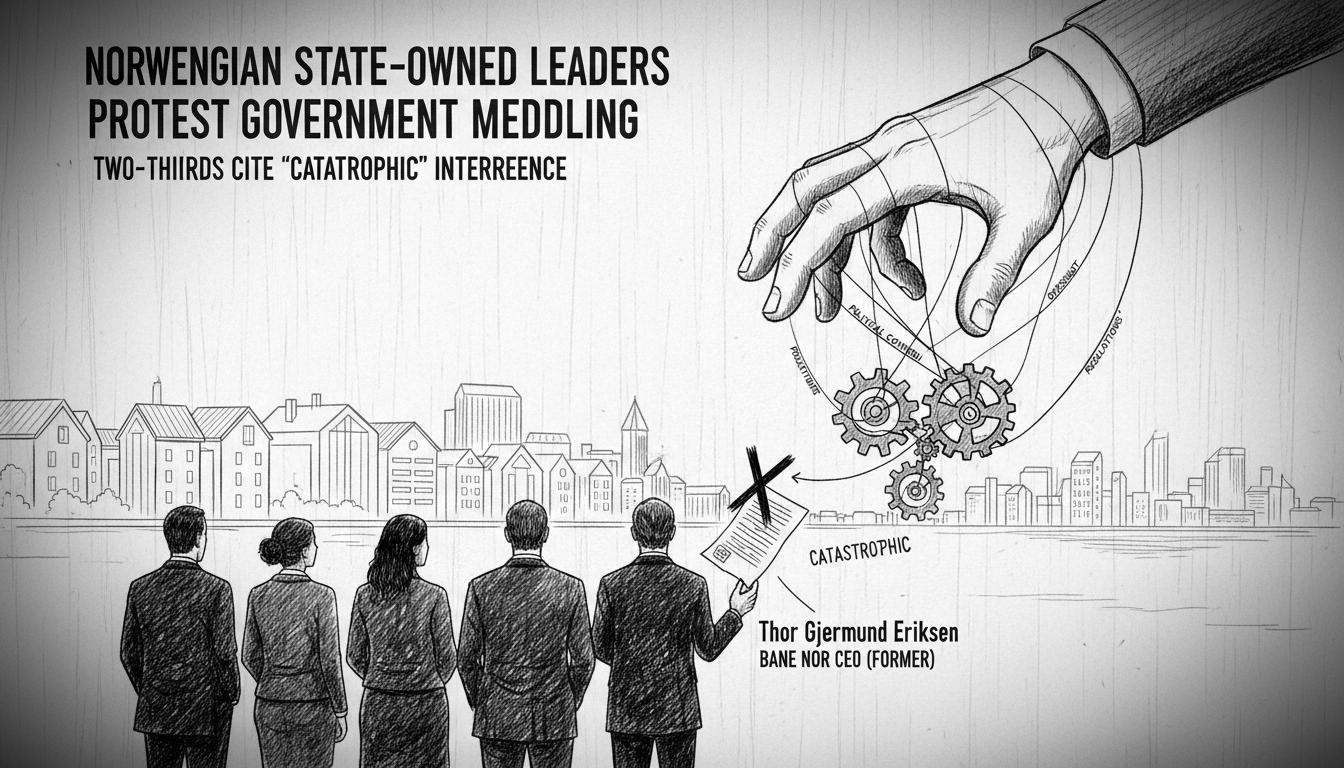
Former Bane Nor CEO Thor Gjermund Eriksen resigned on February 26 after just eighteen months leading Norway's state-owned railway company. He left his position as head of the organization responsible for operating, maintaining, and modernizing the country's railways.
"When you have responsibility that's impossible to exercise, you have to do something else," said Eriksen, who moved from executive leadership to board positions.
Eriksen previously served as director of Norway's public broadcaster NRK and CEO of the national lottery Norsk Tipping. He described the Ministry of Transport's management of Bane Nor as "catastrophic."
"We could have achieved so much more with the resources we have in the railway sector," he stated. "We need clearer management, realistic goals, and better alignment between responsibility and authority."
Eriksen isn't alone in his criticism. A new survey from employer organization Spekter reveals nearly two-thirds of public sector executives believe political authorities micromanage their operations.
The survey gathered responses from 577 leaders across state-owned enterprises. Results varied by sector: 83% of healthcare executives reported excessive political interference, compared to 67% in transport and 39% in culture.
Most respondents lead companies fully owned by the Norwegian state, including regional health authorities, airports operator Avinor, railway companies Bane Nor and Vy, road developer Nye Veier, postal service Posten, and the national lottery.
Eriksen described his working relationship with political authorities as unbalanced. "I had an excellent relationship with the board," he noted. "But I had ten times more meetings with the ministry and railway directorate than with the board."
He acknowledged the state must oversee major railway projects but criticized the three-tier reporting structure. "It becomes nearly impossible to be responsible for execution when you report to the board, directorate, and ministry," Eriksen explained.
The former CEO described state ownership of Bane Nor as complex, unclear, and random. He believes frequent leadership changes result from this frustration. When Eriksen hired a new finance director at Bane Nor, it was the fifth person in that role in seven years.
Bane Nor's official target is 90% punctuality, but Eriksen never met anyone who considered this realistic short-term. He cited decades of neglected maintenance, aging trains, and dramatically increased traffic as obvious causes for delays.
Anne-Kari Bratten, CEO of Spekter, confirmed Eriksen's observations. "I see very clearly that the room for executives to manage and develop their businesses is under pressure," she said.
Bratten connected this to increased political micromanagement, extensive reporting requirements, and constantly changing directives from government ministers. She noted regional health enterprises received 37 requirements in January and 27 new detailed demands in June from the health minister.
"But no significant new funding followed," Bratten observed. "So hospitals must reallocate money and staff. They do this because leaders are responsive and loyal to political guidance."
The Spekter CEO distinguished between political direction and operational management. "I think owners—meaning the state—should have clear expectations about priorities within their budget allocations," she stated. "But they should leave it to executives and professionals to find the best way to achieve them."
Eriksen pointed to multiple reports and evaluations supporting his position. He noted little indication that transport ministry officials have reflected on improving their ownership approach.
The transport minister previously defended close oversight of Bane Nor, calling it "completely natural" given the situation in Norwegian railways. He stated this ensures proper use of public funds and clearer governance.
This situation reveals a fundamental tension in Norway's approach to state-owned enterprises. Political oversight intended to ensure accountability often hampers operational effectiveness, creating a cycle where leaders cannot implement long-term improvements.
The high turnover in key positions—Norway has had four railway directors since the 2017 railway reform—suggests systemic issues beyond individual leadership capabilities.