
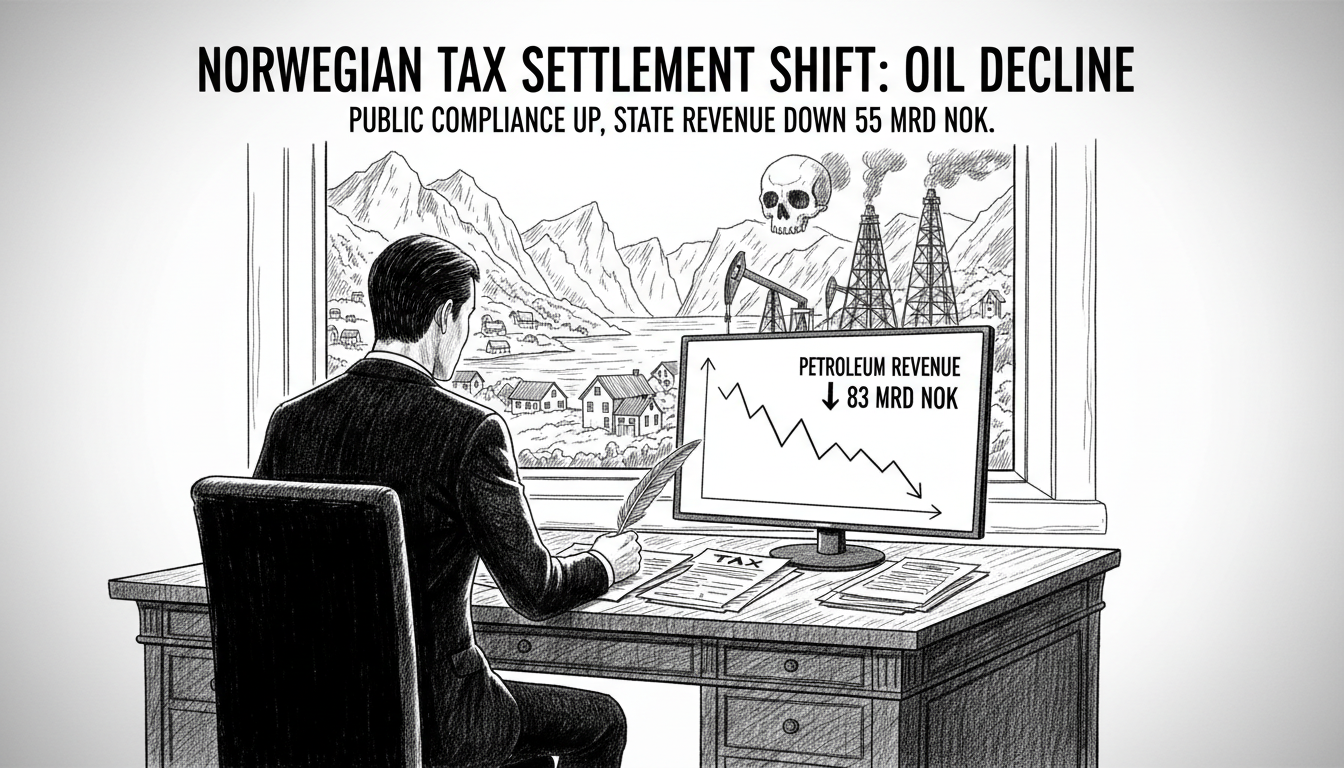
The final Norwegian tax settlement for the last income year reveals a significant shift in taxpayer outcomes and a notable drop in petroleum tax revenue. Initial projections showed 1.1 million taxpayers facing a supplementary tax bill. That number has now fallen to just under 790,000. This sharp decline of over 300,000 cases is directly attributed to taxpayers reviewing and correcting their preliminary tax returns. The data underscores a clear message from the Tax Administration: proactive review works. Regine H. Vastvedt, a divisional director at the agency, stated that the figures show how vital it is to check your tax return. She noted that more people log in each year to verify numbers and make necessary changes, emphasizing the taxpayer's ultimate responsibility for accuracy.
The broader fiscal picture shows a substantial decrease in total tax revenue collected. The state collected approximately 1,242 billion kroner in tax for the income year, which is about 55 billion kroner less than the previous period. The primary driver of this shortfall is a steep 83-billion-kroner drop in petroleum tax revenue. Officials cite somewhat lower oil prices as a key factor. This decline highlights Norway's ongoing fiscal balancing act, where state budgets in Oslo remain heavily influenced by volatile energy markets and production from fields like Johan Sverdrup and Troll. The petroleum sector, comprising 430,000 companies, paid a total of 506 billion kroner in tax, with nearly 382 billion of that coming from the special petroleum tax.
For individual taxpayers, the story is one of correction and refund. While the number facing supplementary tax fell, the number receiving a refund increased. Initially, 2.8 million were projected for a refund. The final settlement raised that to 3.1 million, with an average refund of 16,600 kroner. Those who did owe supplementary tax faced an average bill of 36,900 kroner. The process was largely completed before summer, though some complex cases involving attachments, missing information, or subsequent payments from agencies like NAV extended into late November. Vastvedt explained that the agency employs various control mechanisms and random checks to ensure accuracy, and they calculate tax on backdated social security payments to prevent overpayment.
This annual process is more than an administrative exercise. It reflects the high-trust, high-compliance social contract in Norwegian society. The system relies on self-reporting within a framework of stringent checks. The significant movement in numbers from the draft to the final settlement shows this contract in action. Citizens engage with the system to correct it, and the state adjusts accordingly. The parallel story of falling petroleum revenue is a sobering counterpoint. It serves as a periodic reminder to the Storting, Norway's parliament, of the long-term challenge facing the sovereign wealth fund. The state's ability to fund public services and infrastructure projects is still tethered to the hydrocarbon revenues from the Norwegian Continental Shelf, even as the nation pursues its ambitious Arctic and green energy policies. The current government must navigate these dual realities of reliable domestic tax compliance and unpredictable global commodity markets.