
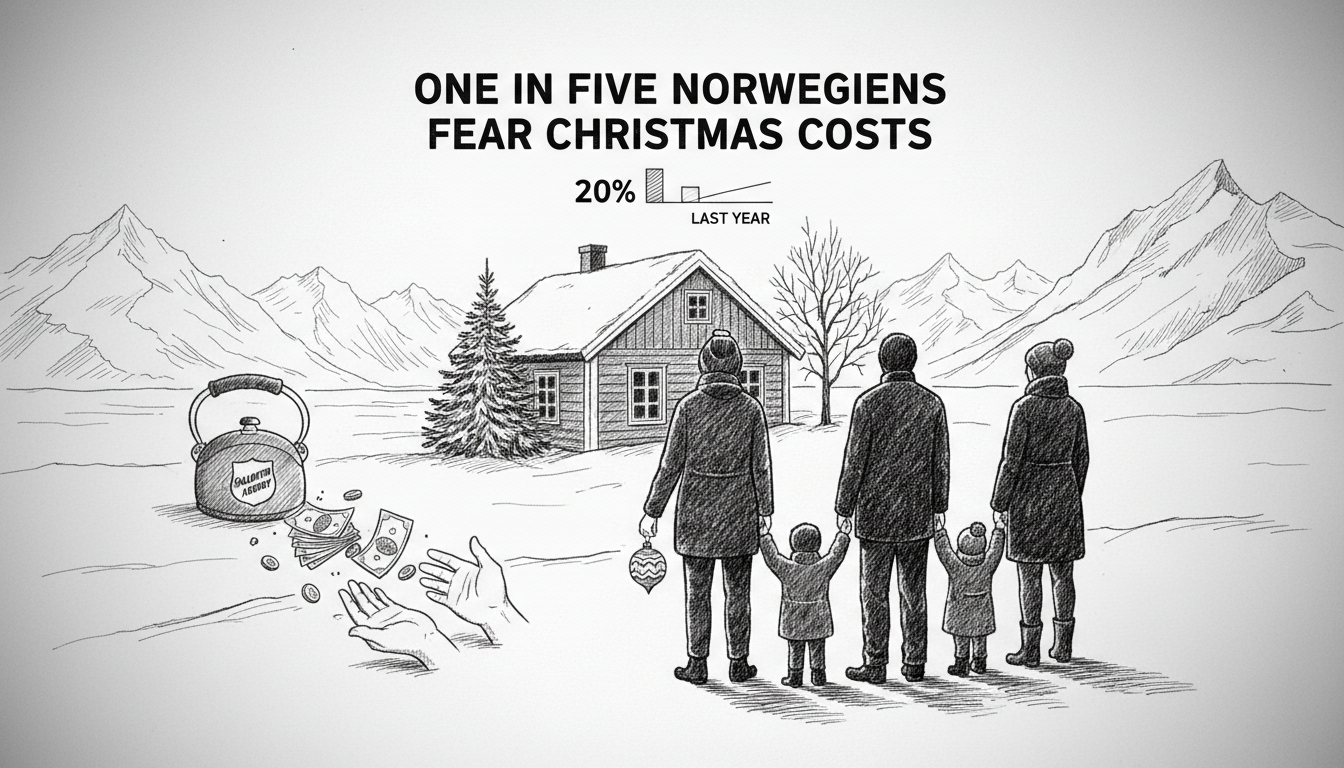
New data reveals nearly twenty percent of Norwegians worry about financing their Christmas celebrations this year. The Salvation Army's poverty barometer shows nineteen percent of the population expresses this financial concern. Among families with children, the situation appears more dire with one in four reporting economic anxiety about holiday expenses. These figures show no improvement from the previous year, indicating persistent financial pressure on Norwegian households.
Elin Herikstad, assistant social services chief at the Salvation Army, confirms the troubling trend in an official statement. She notes the organization observes no improvement from last year's figures. The consistent numbers across years suggest structural economic challenges rather than temporary fluctuations. Meanwhile, nineteen percent of respondents report their financial situation has improved during the past six months. This represents the highest increase since August 2023, creating a complex picture of Norway's economic landscape.
One in seven Norwegians dreads the Christmas season, matching last year's sentiment. Financial concerns drive this anxiety for thirty-six percent of those who report holiday dread. Herikstad explains that economic pressure represents just one aspect of seasonal stress. Changed family situations, grief, and separation from loved ones also contribute significantly to holiday difficulties. The human impact extends beyond pure economics to emotional and social dimensions.
Forty-four percent of respondents cite general stress as their primary concern about Christmas. Another thirty-nine percent point to high expectations as their main anxiety source. These psychological factors combine with financial pressures to create a challenging holiday environment for many Norwegians. The data suggests that even in one of Europe's wealthiest nations, seasonal celebrations bring both joy and burden to citizens.
One in seven Norwegians believes this Christmas will prove more difficult than usual due to rising prices. Among parents expressing this concern, one in three believes their children will notice the strained financial situation. Herikstad observes that families demonstrate remarkable resilience despite economic limitations. She notes families stretch their resources creatively to build positive memories for their children, even when traditional celebrations prove financially challenging.
Travel reductions represent another consequence of economic pressure. Nineteen percent of Norwegians plan to cut back on visits to family and friends due to financial constraints. This matches last year's percentage exactly. Herikstad describes this trend as particularly painful since Christmas often represents the only opportunity for extended family gatherings throughout the year. The social implications extend beyond immediate financial concerns to potentially lasting family connections.
This data emerges against Norway's complex economic backdrop. The country maintains one of Europe's highest GDP per capita figures, yet these findings reveal economic vulnerability persists across segments of society. Norway's extensive welfare system and oil wealth haven't eliminated financial anxiety during seasonal celebrations. The statistics suggest economic pressures affect citizens despite the nation's overall prosperity, highlighting distributional challenges within the Scandinavian model.
The findings carry implications for Norwegian social policy as the Storting continues debates about welfare spending and economic support measures. With energy prices fluctuating and household budgets tightening, these Christmas concerns may reflect broader economic trends affecting Norwegian consumers. The data provides valuable insight into how global economic pressures manifest in one of the world's most developed social democracies.