
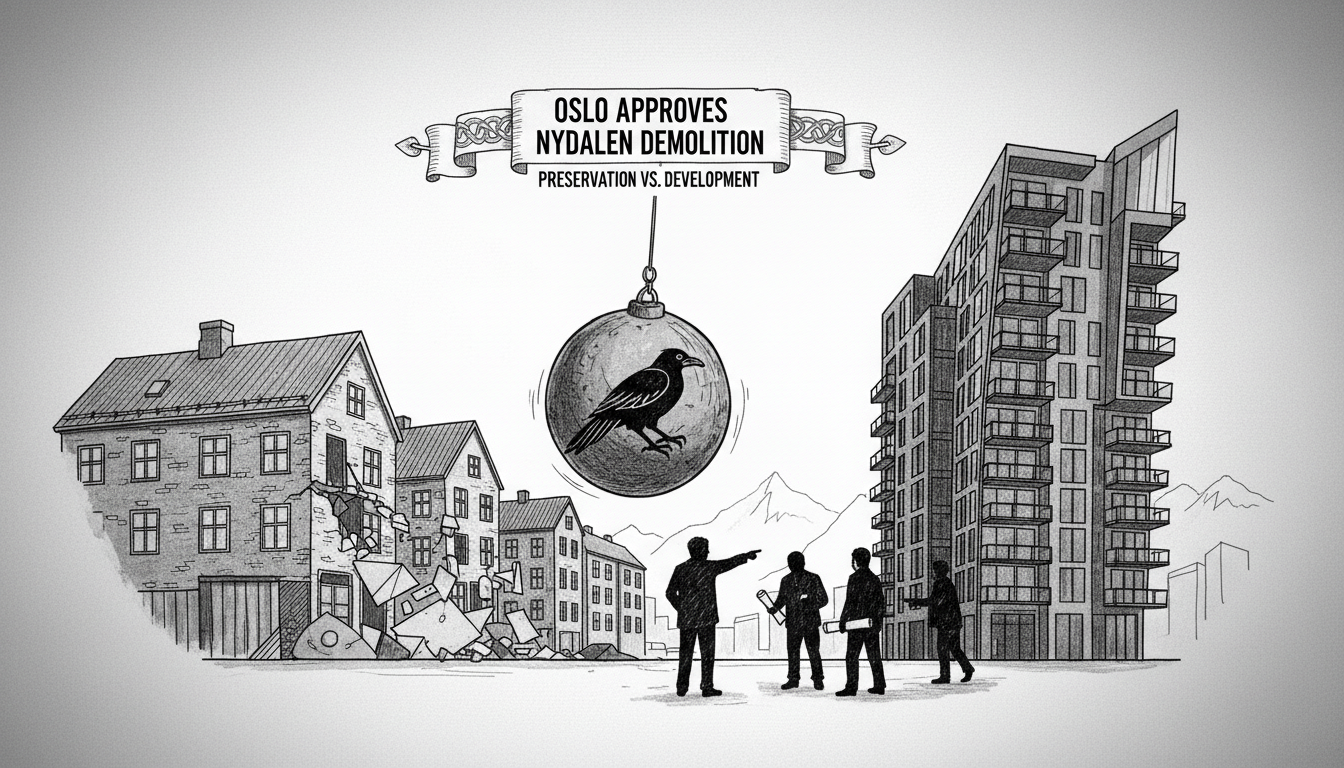
Oslo's city government has approved sweeping demolition plans for the Nydalen district. The decision will remove fully functional buildings along a main thoroughfare. This move comes despite broad agreement that minimal demolition should occur in urban development.
The affected area centers around Gullhaug Square in Nydalen. This district currently features Snøhetta's iconic slanted high-rise buildings. The eastern brick buildings scheduled for removal date back to the mid-1990s. These structures have housed numerous businesses including Peppes Pizza and various office companies. All buildings remain in good condition according to inspections.
Local residents expressed disbelief about the planned demolition. People encountered in Nydalen could hardly believe everything would soon be torn down. The city council approved the measure following intense debate last week. Most of the city block will disappear to make way for new construction.
The redevelopment project will create 300 new housing units alongside commercial spaces and cafes. This represents a significant transformation of the urban landscape in one of Oslo's distinctive neighborhoods. The decision highlights ongoing tensions between preservation and development in Norway's capital city.
Urban development policies in Norway typically emphasize sustainable reuse of existing structures. This makes the wholesale demolition approach particularly noteworthy. The Norwegian Parliament has previously emphasized building conservation in urban planning guidelines. Current government policies stress reducing construction waste and environmental impact.
Oslo faces constant pressure to increase housing supply amid population growth. The city must balance this need against preservation of functional urban fabric. Nydalen represents a case study in these competing priorities. The district has evolved from industrial area to modern mixed-use neighborhood over recent decades.
The demolition approval raises questions about valuation of recent architectural heritage. Buildings from the 1990s now face the same preservation debates historically reserved for older structures. This decision may set precedents for how Norwegian cities handle late 20th century construction.
Construction is scheduled to begin in the coming months. The project will temporarily disrupt local businesses and residents. Long-term impacts on neighborhood character remain uncertain. Similar redevelopment debates continue in other Norwegian urban centers facing growth pressures.