
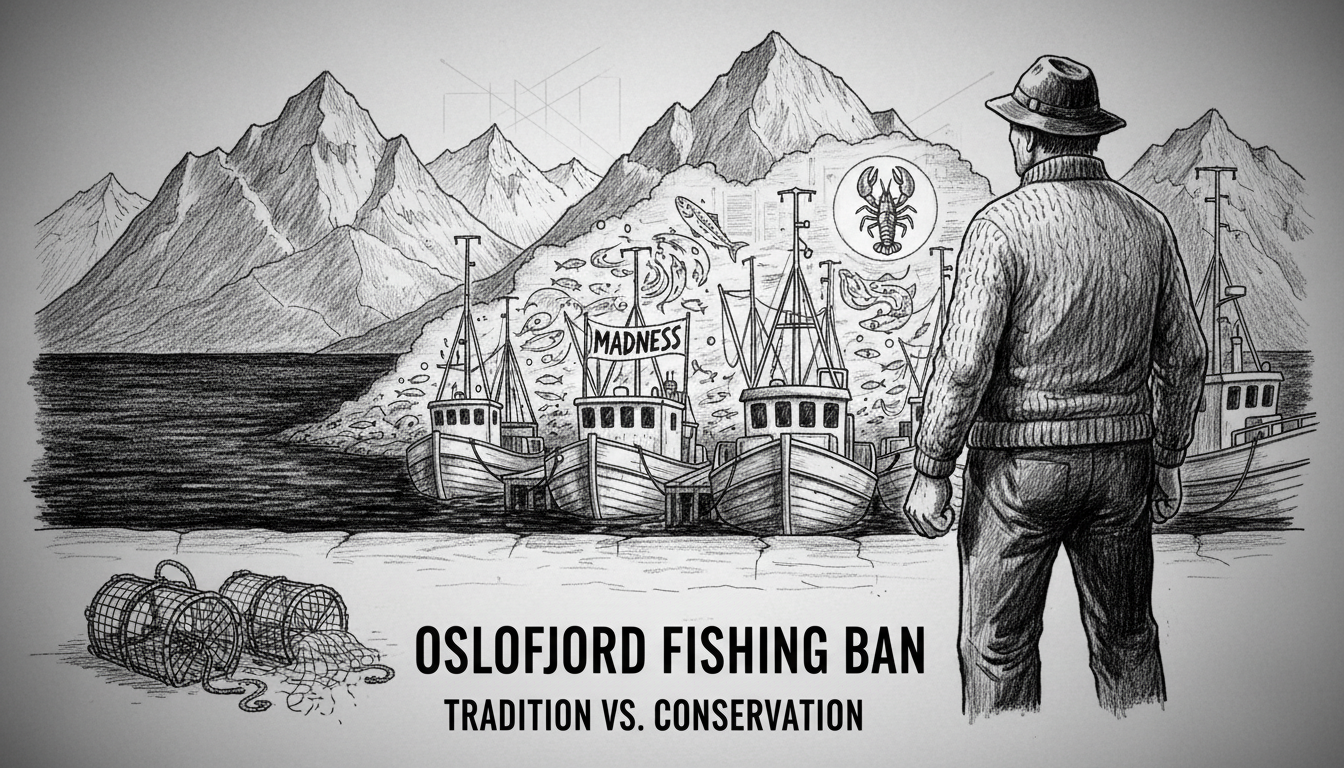
A total fishing ban takes effect in large parts of the Oslofjord. This move ends decades of lobster fishing tradition. Professional fishermen face a direct hit to their livelihoods. The government cites a severe decline in marine life as the reason. Critics call the policy drastic and poorly planned.
In the small community of Utgårdskilen on Hvaler, ten fishing boats just completed their final season. They sold lobsters worth 1.3 million Norwegian kroner in just seven and a half weeks. This was a 28 percent increase from last year. For veteran fisherman Roar Bekkevik, this season was his last after 50 years. He says 95 percent of his lobster grounds will vanish. Lobster fishing provided half his income during the autumn months.
The new regulations create zero-fishing zones across the inner Oslofjord. The ban covers both commercial and recreational fishing. Even fishing with a rod from shore will be illegal in protected areas. Authorities also plan to limit private lobster traps. The goal is to restore fish stocks and the broader ecosystem. Officials argue too much life has disappeared from the fjord.
Fishermen and local businesses strongly oppose the ban. Kurt Allan Hansen, manager of the Fjordfisk AS receiving station, labels it 'madness'. He questions where displaced fishermen are supposed to go. The concentration of fishing effort in remaining areas could create new problems. Bekkevik points to visible wildlife like seals and seabirds as proof of a living sea. He believes the government's assessment is flawed.
Scientific data presents a complex picture. Researchers confirm a doubling of the seal population in the region since 1999. A single seal can eat 2 to 4 kilograms of fish daily. However, scientists note a critical lack of precise fish stock measurements for the area. This data gap fuels the dispute. Fishermen feel they are bearing an unfair burden for a problem with many sources.
Oslo's environment council acknowledges the sacrifice fishermen are making. She states the government must ensure proper compensation. The council admits a fishing ban alone will not save the fjord. Reducing agricultural runoff and upgrading water treatment plants are also essential. The hope is that protected areas will allow marine life to gradually recover. No one expects quick fixes for the damaged ecosystem.
The ban impacts a wide circle around the fjord. Approximately 1.6 million people live in the region. Bekkevik notes that even a small percentage who enjoy the sea represents many thousands. The loss extends beyond income to culture and family tradition. The policy highlights a classic Nordic conflict. It pits environmental protection against established coastal livelihoods and public access to nature.
What comes next is uncertain. Fishermen demand better science and compensation. Environmentalists warn that without action, the fjord's health will keep declining. The situation serves as a test case for Norway's blue economy ambitions. Balancing digital transformation and sustainable use of natural resources remains a key challenge. The outcome here could influence marine policy along the entire Scandinavian coast.