
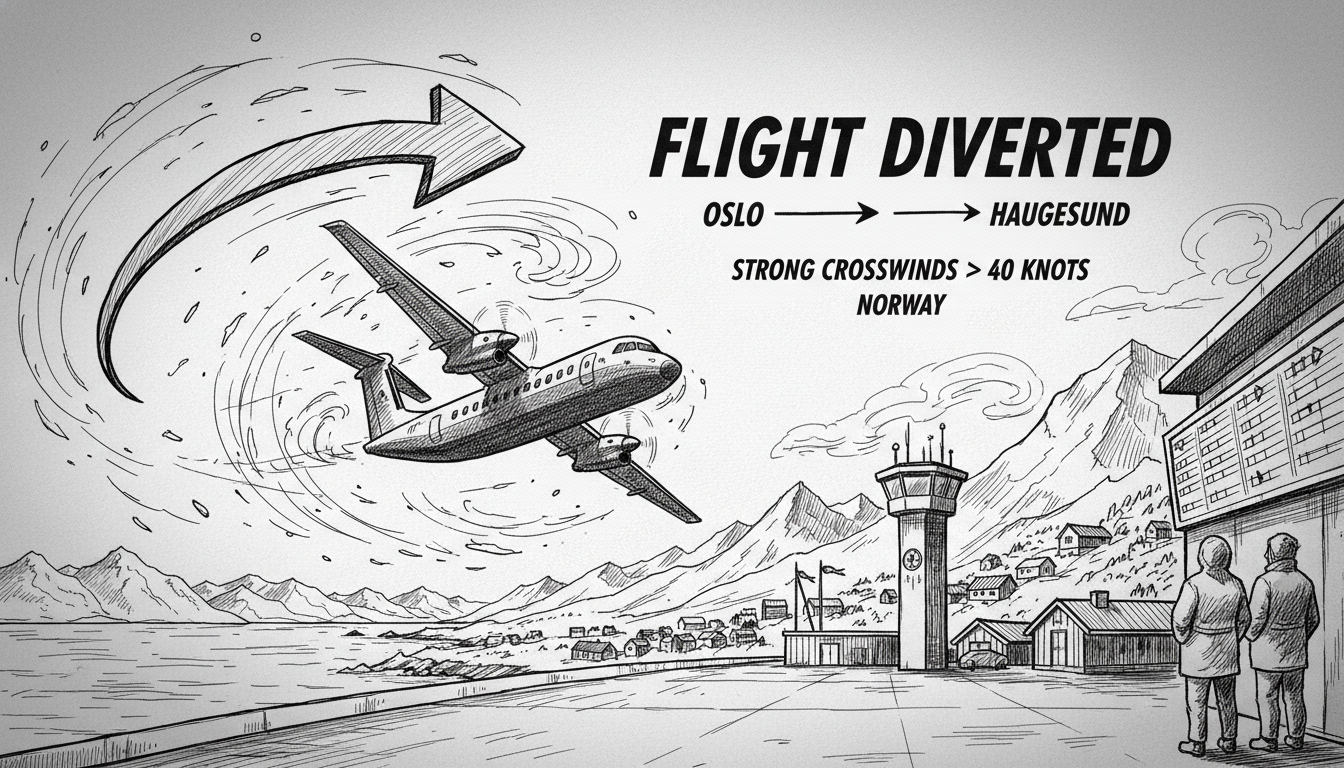
A commercial flight from Oslo Airport faced operational challenges Friday morning when it could not land at Haugesund Airport. The aircraft returned to its origin due to powerful crosswinds exceeding 40 knots. These conditions created unsafe landing parameters for aviation operations along Norway's western coastline. The incident highlights the persistent weather challenges facing regional air travel in Scandinavia.
Operations manager Jan Ove Solstrand addressed the situation in a public statement. He confirmed the crosswind challenges were substantial enough to prevent standard landing procedures. The wind intensity created conditions that fell below minimum safety standards for aircraft operations. Solstrand noted that if wind directions remain unchanged, additional flight disruptions could occur throughout the day. Travelers were advised to monitor communications from their airlines for real-time updates.
This weather-related diversion reflects broader transportation vulnerabilities in Norway's coastal regions. Haugesund Airport's location near the Boknafjord makes it particularly susceptible to maritime weather patterns. Similar incidents have occurred previously during seasonal transitions when atmospheric conditions become unpredictable. The airport's runway orientation relative to prevailing winds creates specific operational constraints that pilots must navigate carefully.
Norway's aviation infrastructure must balance accessibility with safety in challenging geographic conditions. The country's mountainous terrain and extensive coastline create unique microclimates that affect transportation reliability. Air travel remains crucial for connecting remote communities along the fjord-dotted landscape. These weather disruptions demonstrate the ongoing balance between maintaining schedule reliability and ensuring passenger safety in Nordic aviation operations.
Regional airports like Haugesund serve critical economic functions beyond passenger transport. They support offshore energy operations and maritime industries central to Norway's economy. Weather disruptions can ripple through supply chains affecting multiple sectors. The petroleum industry relies on consistent air connections for personnel transfers to offshore installations in the North Sea. Even temporary airport closures can impact production schedules and operational efficiency.
Aviation authorities maintain strict protocols for wind limitations during landing sequences. Different aircraft types have specific crosswind thresholds that determine operational feasibility. Pilots receive specialized training for Scandinavian conditions but must adhere to absolute safety parameters. The decision to divert reflects professional judgment prioritizing passenger protection over schedule adherence. Such operational decisions, while inconvenient for travelers, demonstrate the uncompromising safety culture within Norwegian aviation.