
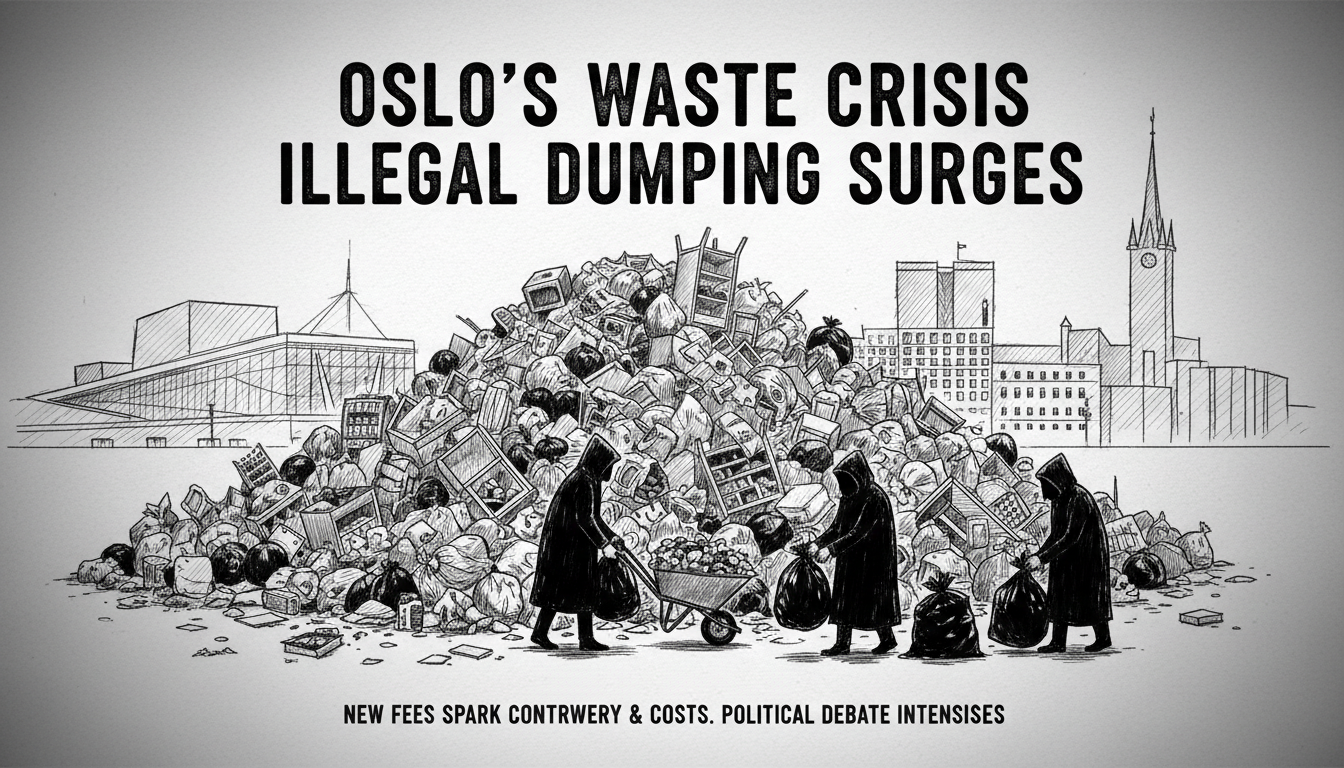
Oslo confronts a growing illegal waste disposal problem following the introduction of municipal garbage fees. The city's conservative government implemented charges for construction and renovation waste disposal at recycling stations earlier this year. This policy shift has triggered widespread unauthorized dumping across the capital.
Abdulla Alsabeehg from the Labour Party's environmental committee confirms the escalating situation. He states that residents regularly submit photographs of illegal dumping sites. The problem has expanded significantly beyond previous levels, creating major environmental challenges. Furuset in Groruddalen represents just one of many affected locations.
Official data reveals a concerning trend. The Waste Management and Recycling Agency recorded illegal waste increases from 673.4 tons to 787.6 tons between recent annual periods. These figures exclude additional dumping in parks and public spaces managed by the Urban Environment Agency.
Jørgen Bakke Fredriksen from the Waste Management Agency identifies a troubling development. He suspects organized 'waste taxi' operations now dump garbage illegally. These companies transport waste for payment but avoid official disposal fees. Their business models appear financially unsustainable without violating regulations.
Fredriksen explains the enforcement challenges. Prosecution requires concrete evidence like names or documentation within the waste. Even with photographic evidence of vehicles dumping, cases often collapse. Offenders frequently claim accidental dumping followed by cleanup.
The political debate intensifies over fee removal. Labour Party representatives proposed eliminating charges during the revised budget process. They argue the city spends tens of millions cleaning dumped waste. The previous free disposal system functioned effectively for years without similar problems.
Disposal costs create financial pressure. Construction waste disposal costs 525 kroner for half to one cubic meter. Concrete, brick, and stone materials cost 1,400 kroner for similar volumes. These expenses likely contribute to increased illegal dumping incidents.
The conservative government implemented fees seeking additional revenue streams. This approach has generated unintended consequences throughout Oslo's neighborhoods. Cleaning scattered waste now consumes municipal resources that might offset initial revenue gains.
Oslo's waste management challenge reflects broader urban policy considerations. Balancing municipal finances against environmental protection requires careful calibration. The current situation demonstrates how fee structures can influence public behavior in unexpected ways.
International observers note Oslo's historical leadership in environmental initiatives. This waste disposal dilemma presents an interesting case study in policy implementation. Cities worldwide monitor how Oslo addresses these competing priorities.
The situation continues evolving as political parties debate solutions. The Labour Party promises to continue pushing for fee elimination. They advocate returning to free disposal principles that previously maintained cleaner urban environments.