
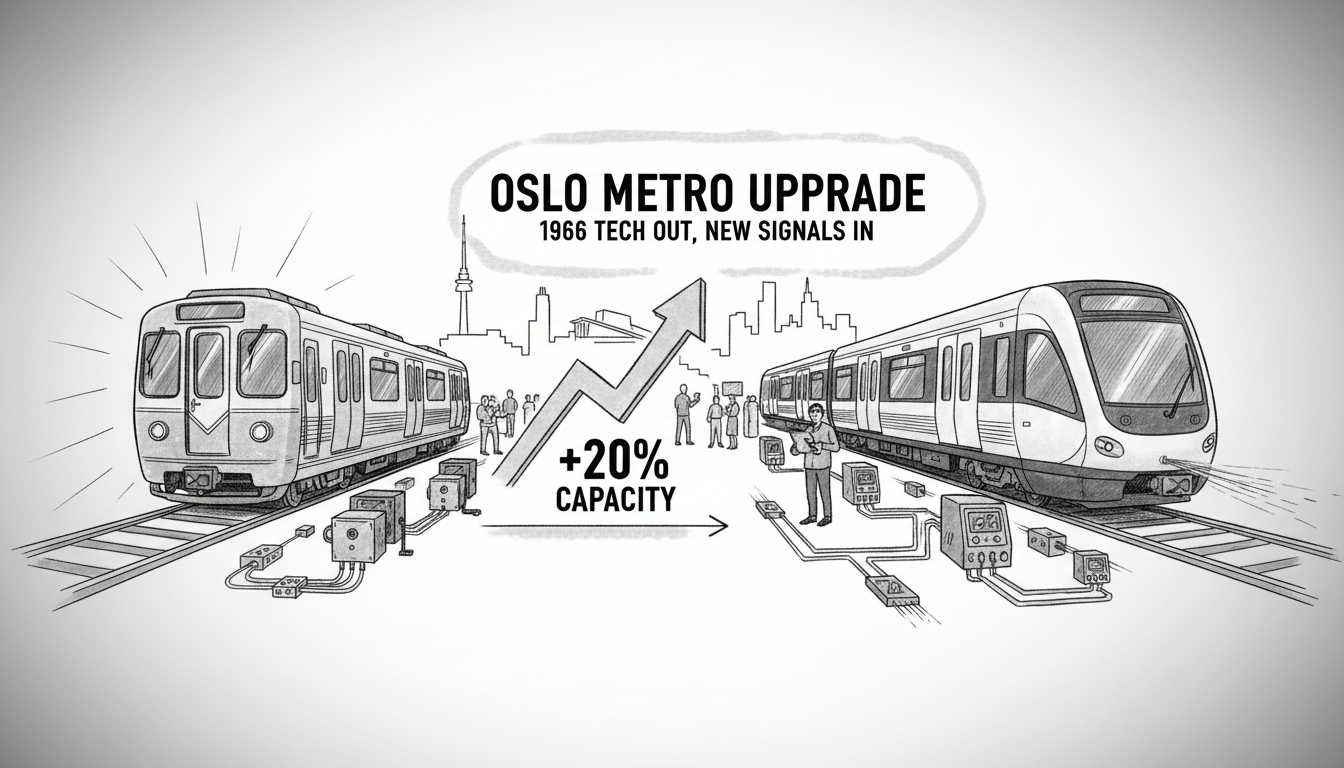
Oslo's metro system is replacing technology installed when astronauts first walked on the moon. The T-bane is phasing out a signal system from 1966. The new system promises more trains and fewer delays for its millions of annual passengers. This is a core part of a major infrastructure upgrade for the Norwegian capital.
The old system has been a frequent source of service disruptions. Commuters are familiar with announcements blaming 'signal failure' for delays. The new technology is called Communications-Based Train Control (CBTC). It allows trains to communicate their position continuously. This enables them to run closer together safely.
The rollout began on Line 4, the Lambertseter line. The entire network is scheduled for completion by 2030. 'We are replacing technology that has passed its lifespan,' said the CEO of the transit agency Sporveien. The project director noted the scale involves refitting the entire train fleet and installing new trackside equipment.
The immediate impact is increased frequency. The critical tunnel through central Oslo can currently handle 28 trains per hour. The new CBTC system raises this capacity to 36 trains. In the long term, a technical capacity for 40 departures per hour exists. This represents a potential 20% increase in passenger capacity across the network.
This signal upgrade is one of four pillars in Oslo's so-called 'Great Metro Lift.' The other elements are the new Fornebu line, the renovation of Majorstuen station, and the purchase of new trains. The total price tag for just the new signal system is approximately 6 billion Norwegian kroner. Both the signal project and the Fornebu line have faced delays from original timelines.
For passengers, the construction phase has been painful. Extensive line closures have disrupted travel throughout the current year. Officials acknowledge the short-term pain but emphasize the long-term gain. 'With better traffic management, capacity increases across the entire metro network,' said Oslo's City Councilor for Environment and Transport. She added this is essential for integrating the future Fornebu line into the central system.
The transition is not instantaneous. Trains equipped for CBTC are marked with the letters on their front. Until the whole network is upgraded, drivers must manually switch systems at boundaries between new and old sections. This Oslo project mirrors a global trend in urban transit. Major cities worldwide are upgrading to CBTC to maximize existing infrastructure. For a growing Oslo, it is a necessary digital transformation to keep the city moving. The success of this tech overhaul will be measured in reliable daily commutes for the next half-century.