
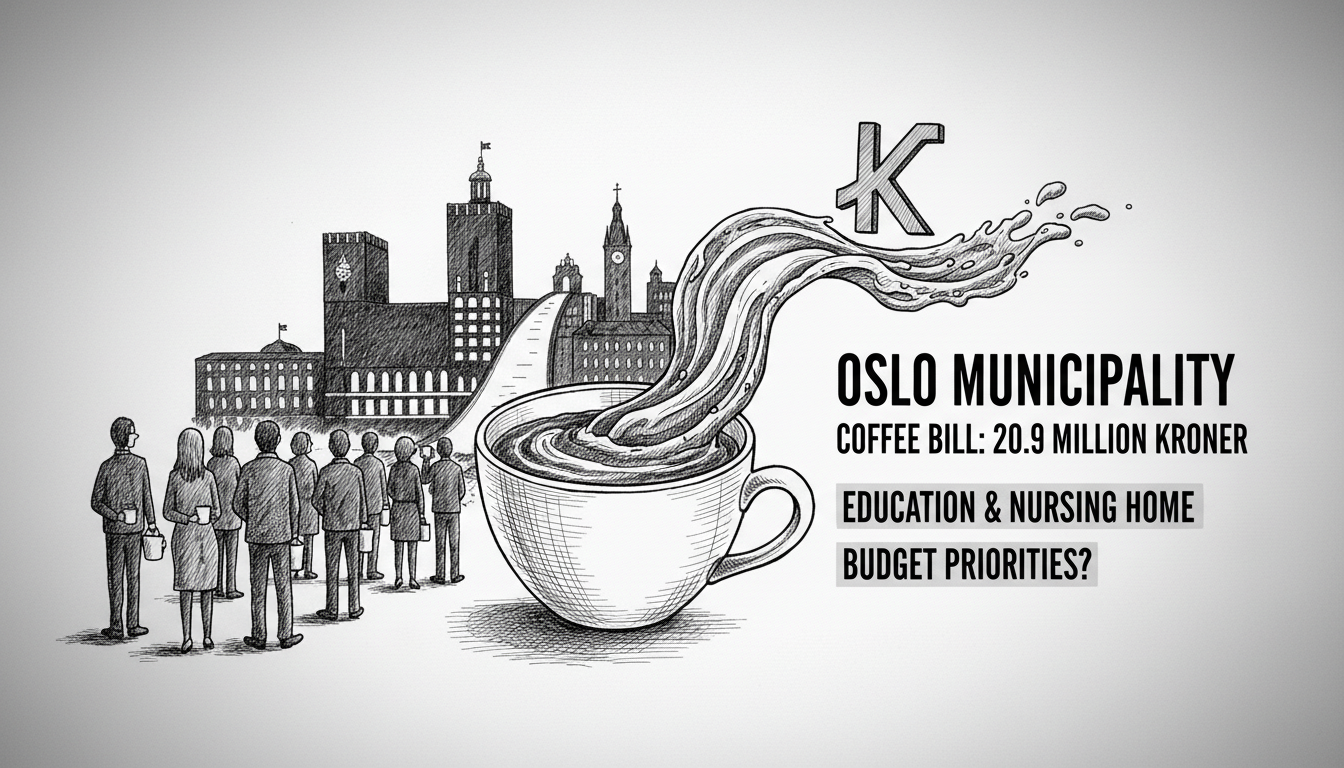
Oslo Municipality allocated 20.9 million kroner for coffee purchases across its operations. The substantial expenditure covers coffee for 55,000 municipal employees and extends to residents and service users. Nursing home residents and institutional care recipients also receive coffee through municipal services.
The municipal administration clarified they cannot estimate how many employees receive employer-covered coffee. They confirmed the Education Agency accounted for 4.7 million kroner of coffee spending. The Nursing Home Service used 3.7 million kroner for coffee provisions. The City Council leader's office and all council departments consumed 177,000 kroner worth of coffee.
This coffee expenditure represents a notable municipal operational cost that deserves public scrutiny. Norwegian municipalities face constant budget pressures across healthcare, education, and infrastructure. Coffee spending at this scale raises legitimate questions about fiscal priorities in Oslo's city budget. The distribution across multiple agencies suggests coffee has become an embedded operational expense rather than a discretionary benefit.
Norwegian workplace culture traditionally includes coffee as a fundamental social and productivity element. The famous 'kaffepause' remains deeply ingrained in Norwegian work life from government offices to private companies. This cultural context helps explain why municipalities would budget substantial amounts for coffee services. The practice reflects broader Scandinavian workplace norms where coffee breaks serve both social and functional purposes.
International readers should understand Norwegian kroner 20.9 million equals approximately $2 million USD. This puts the coffee spending in perspective for global comparison. The amount represents a small fraction of Oslo's total municipal budget but symbolizes the type of operational costs taxpayers often question. Similar debates about public sector spending priorities occur regularly in Norwegian political discourse.
The breakdown shows education and healthcare services account for the majority of coffee expenditures. This indicates coffee serves both staff and service recipients in these critical public sectors. The relatively small amount spent on political offices suggests some proportionality in the distribution. Still, critics will likely question whether all this spending represents the best use of public funds.
Norwegian municipal finance systems operate with considerable transparency compared to many countries. This coffee expenditure data became public through standard reporting procedures. The openness about such operational details reflects Norway's strong traditions of government transparency and public accountability. Similar revelations often spark productive debates about public spending efficiency.