
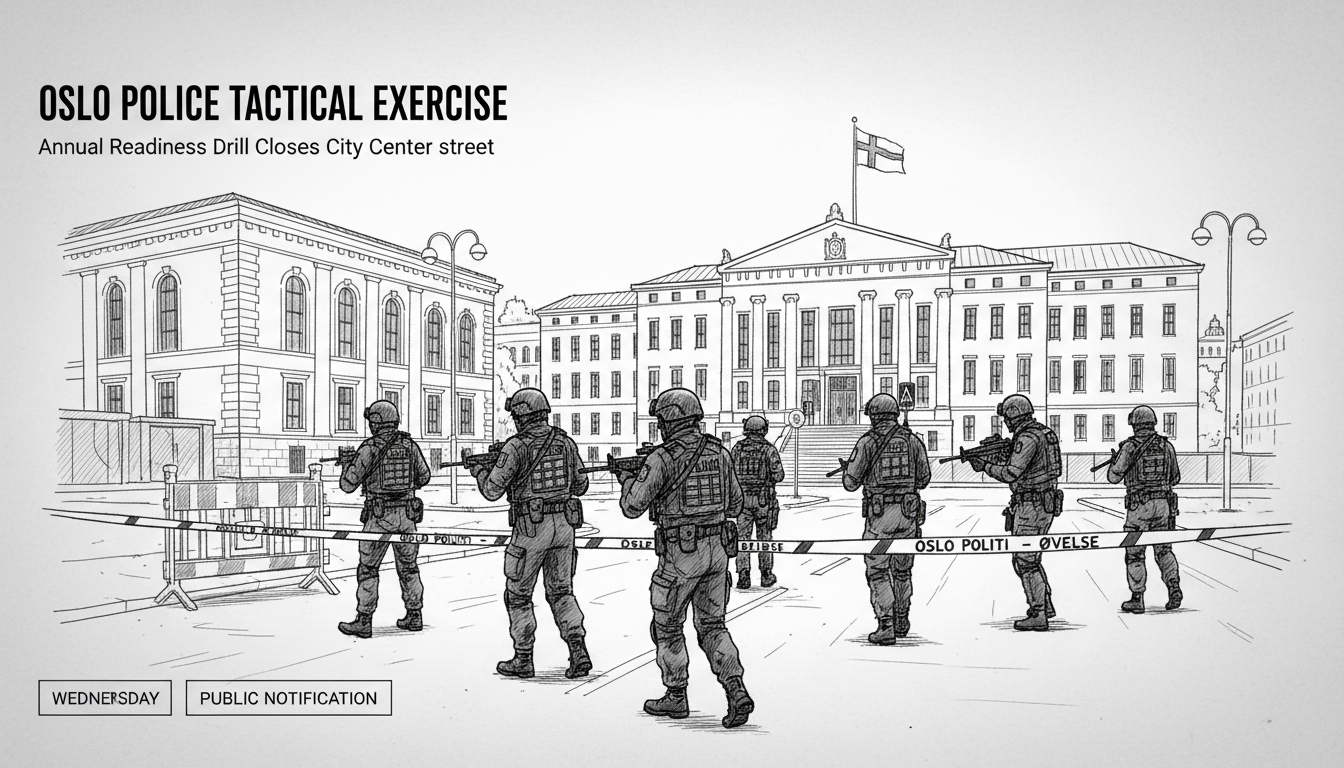
The Oslo Police District will conduct its annual mobile tactical intervention exercise in the city center this Wednesday. The drill will focus on the Mobile Intervention Concept, a specialized response framework. Parkveien, a central street near the Royal Palace and government buildings, will be closed from 11:00 to 14:30 for the operation. Police operations commander Roy Langengen confirmed the details. Residents can expect some noise during the training period.
These annual exercises are a standard part of maintaining operational readiness for Norway's police forces. The Mobile Intervention Concept is designed for rapid response to complex public order or critical incidents. Training in an urban environment like central Oslo presents unique challenges. It tests coordination and tactical deployment amidst civilians and traffic.
The choice of location is notable. Parkveien sits in the heart of Oslo's political and administrative district. Key institutions like the Storting, the Prime Minister's office, and several ministries are nearby. This area also borders the affluent Frogner neighborhood. Conducting exercises here ensures police are familiar with protecting high-value targets and navigating dense urban terrain.
For international observers, this reflects Norway's proactive security posture. The country maintains a high state of preparedness despite its generally low crime rates. These drills are not a response to any specific, immediate threat. They are part of a continuous cycle of training mandated by national police directives. The exercises often involve multiple units, including the emergency response team.
Such public notifications are standard practice. They aim to prevent public alarm and ensure smooth traffic management. The police balance operational secrecy with community transparency. Announcing the exercise prevents misinformation and demonstrates routine procedure. It is a common sight in Norwegian cities, where police and military training is integrated into the public space.
The broader context involves Norway's comprehensive approach to domestic security. The country invests heavily in police training and equipment. This is separate from, but complementary to, its significant national defense spending. The security of the capital is paramount. It houses the seat of government and critical energy policy institutions that manage the nation's vast oil and gas resources from the North Sea to the Barents Sea.
For expats and international residents, these drills are a reminder of the visible, structured security apparatus. Norway's model emphasizes prevention and readiness. The temporary inconvenience of a street closure is weighed against the benefit of a well-trained police force. The exercise will conclude by mid-afternoon, with normal traffic flow resuming shortly after.