
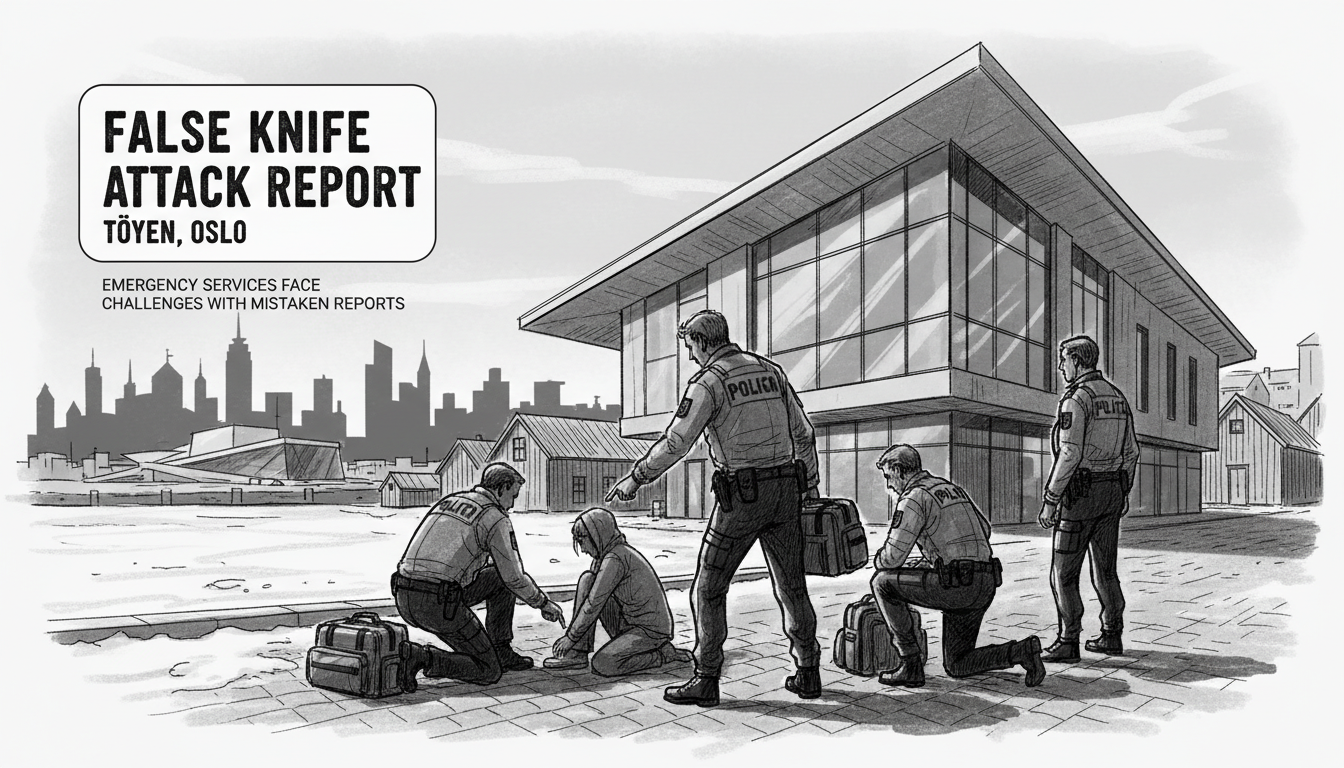
Emergency services rushed to Oslo's Tøyen neighborhood following reports of a stabbing incident. Police and ambulance crews responded immediately after receiving an emergency call about a person allegedly stabbed with a knife.
The situation turned out to be completely different from initial reports. When first responders arrived at the scene, they discovered the emergency call contained false information. Officers determined the reported victim had actually suffered an injury more than a month earlier.
Police records indicate the individual had been discussing an old wound with others present at the location. This conversation apparently triggered the mistaken emergency report that sent multiple response units scrambling.
False emergency reports create serious consequences for Oslo's public safety system. Each unnecessary response diverts critical resources from genuine emergencies across the city. Police vehicles, ambulance crews, and emergency medical teams all get pulled away from their regular patrols and standby positions.
Norway's emergency response system typically handles these situations with remarkable efficiency. The country maintains one of Europe's most advanced emergency medical response networks. Oslo's centralized emergency coordination center processes thousands of calls monthly, with most resulting in appropriate medical or police assistance.
What happens when someone makes a false emergency report in Norway? The legal system takes such incidents seriously. Norwegian law can impose significant penalties for knowingly false reports that waste public resources. These range from substantial fines to potential imprisonment depending on the severity of the disruption caused.
This incident highlights the challenges emergency services face daily. Dispatchers must make rapid decisions based on limited information. They prioritize public safety by sending responses even when some details seem unclear. This cautious approach sometimes leads to responses for situations that turn out to be less serious than initially reported.
International residents and visitors should understand how Norway's emergency system works. The universal emergency number 112 connects callers to police, fire, and medical services. Operators typically respond in Norwegian but can provide assistance in English when needed.
The Tøyen neighborhood where this incident occurred is a diverse central Oslo district. It's known for its multicultural community and proximity to major attractions like the Munch Museum and Botanical Gardens. Like many urban areas, it occasionally sees increased police activity, though serious violent crime remains relatively rare in Oslo compared to other European capitals.
Norway's approach to public safety emphasizes prevention and rapid response. The country invests heavily in emergency services training and equipment. This commitment ensures that when real emergencies occur, help typically arrives within minutes anywhere in the Oslo metropolitan area.