
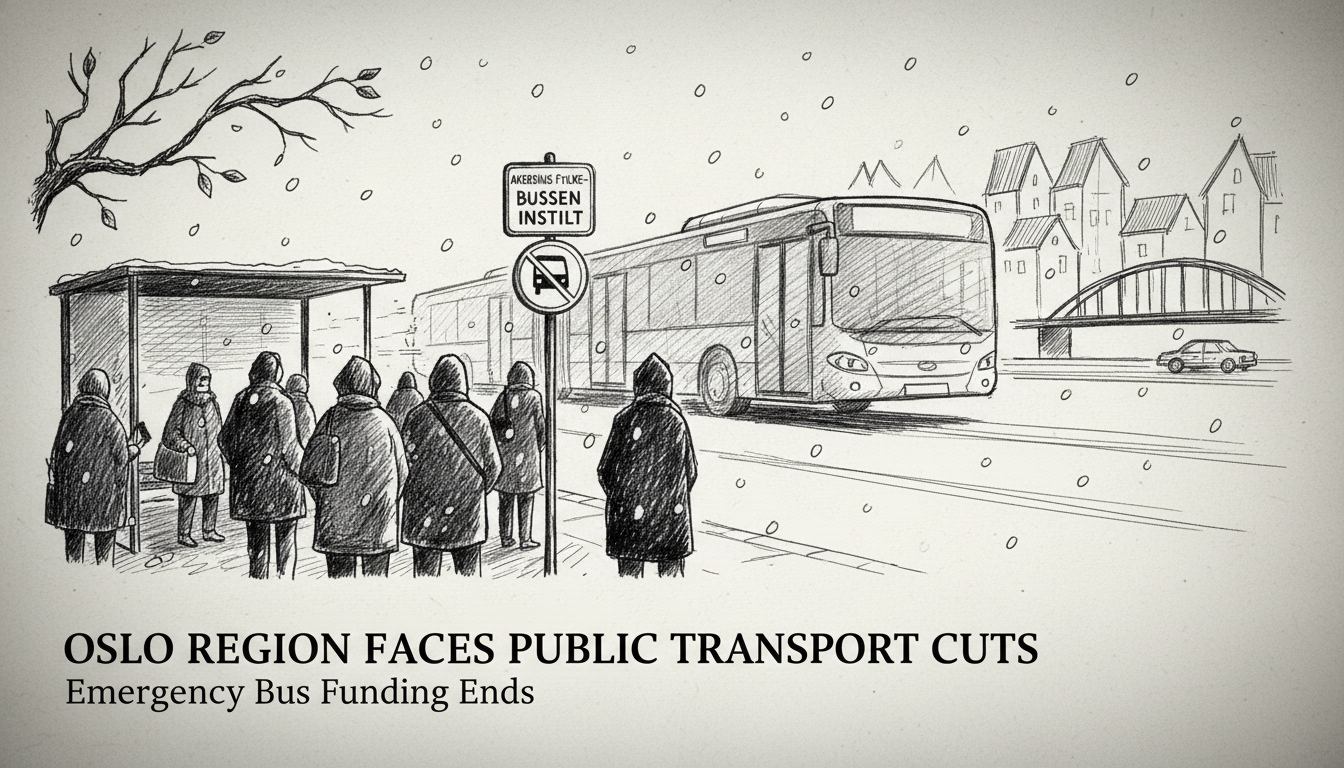
Akershus County faces potential public transport reductions as temporary funding for extra bus services nears expiration. Transportation officials warn that popular additional bus routes connecting Oslo with surrounding municipalities may face cuts in the coming months.
Håkon Snortheim, the conservative transport commissioner for Akershus, expressed deep disappointment with the national government's funding decisions. He stood at Oslo's bus terminal with clear frustration about the situation. Emergency funding that supported additional bus departures will not continue into next year.
"This funding was supposed to help us maintain good public transport services toward Oslo," Snortheim stated. The temporary measures included numerous extra bus routes between Oslo and Akershus, particularly serving areas west of the capital.
The transport crisis began when national authorities closed Ring 1, a major Oslo highway, for construction of new government quarters. To manage resulting traffic congestion, electric vehicles were banned from bus lanes. These measures created massive traffic jams on the E18 highway while trains became overcrowded.
Travelers and transport authorities reported the extra bus services proved extremely popular. Commuters faced packed trains, unreliable T-bane service, and endless car queues. Many turned to buses as their primary transportation solution.
The temporary funding arrangement required Akershus to match state contributions. The county initially hesitated about accepting the 30 million kroner package because it demanded 15 million kroner in local matching funds. Total spending on the emergency transport measures reached 45 million kroner.
Snortheim criticized the government's transportation priorities, noting that while the capital region faces service reductions, authorities are considering subsidies for empty long-distance buses elsewhere. He called this approach hopeless spending.
Government officials defended their position, stating that county municipalities hold responsibility for public transport within their boundaries. A state secretary emphasized that national government already provides substantial support through framework subsidies, urban growth agreements, and reward systems.
The political divide reflects broader tensions in Norwegian transport policy. Conservative local leaders see rising costs threatening service levels, while the national government points to increased county revenues and local autonomy.
Transport costs in the public sector are rising sharply. Maintaining current service levels requires nearly 100 million kroner more from this year to next, according to county estimates.
With parliament not prioritizing extra bus funding in the state budget, Akershus must find ways to control expenses. The reduction in support for additional buses creates particular challenges for a region already struggling with congestion.
This situation highlights the complex relationship between local and national transport planning in Norway. County authorities want stable funding for proven solutions, while national government emphasizes local responsibility and broader budget constraints.
The coming months will show whether temporary transport measures can transition to permanent solutions or if commuters will face reduced options during ongoing infrastructure projects.