
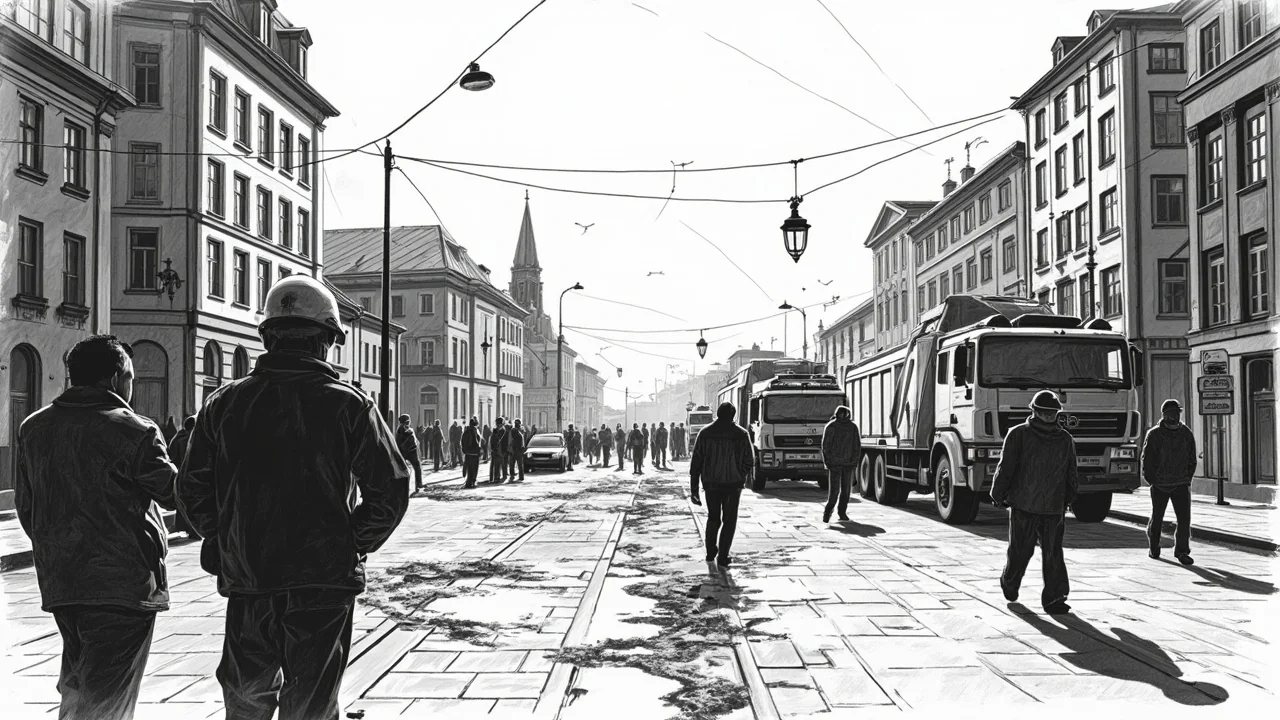
Norway's capital Oslo faces significant disruption after a suspected major water main break forced the closure of key city center streets early Sunday morning. The rupture in the Maridalsveien area below the Vulkan district triggered a rapid emergency response, with municipal crews and the fire service working to contain flooding into basements and parking garages. Police confirmed the leak was stopped by 5:02 AM, but warned closures would remain in effect for an extended period, impacting traffic across central Oslo.
Operational commander Alexander Østerhaug described the incident as a "substantial water leak." Crews from Oslo Municipality were immediately dispatched to the scene. "The fire service is working to limit damage, as water is flowing into parking cellars, among other places," Østerhaug said in a statement. The focus shifted from containment to damage assessment and infrastructure repair after the flow was halted.
A Disrupted Sunday in the Capital
The break occurred along Maridalsveien, a crucial artery connecting the bustling Grünerløkka district to the city center near the Akerselva river. Police closed the road from the roundabout at Maridalsveien and Møllerveien down to the intersection of Rosteds gate and Møllergata. This closure effectively severs a primary route for traffic moving from residential areas northeast of the city into the central business and government districts. Authorities warned that difficult driving conditions were likely due to water and weather, advising the public to avoid the area entirely.
For residents and business owners in the affected zone, the morning brought unexpected challenges. The intrusion of water into underground parking facilities poses a significant property damage risk, with potential impacts on electrical systems, vehicle storage, and building foundations. The Vulkan area, known for its food hall and cultural venues, sits at the heart of the disruption. While the incident occurred in the early hours, limiting immediate human traffic, the longer-term economic and logistical repercussions for businesses expecting Sunday trade are yet to be fully calculated.
Infrastructure Under Pressure: An Ageing Network
This incident casts a spotlight on the state of Oslo's subterranean infrastructure. While Norway invests heavily in visible public projects, the network of pipes, cables, and conduits beneath its cities faces constant pressure from age, ground movement, and corrosion. Maridalsveien is a historically significant and heavily used road, suggesting the utilities beneath it are equally critical and potentially aged. A major leak from a primary water main indicates a significant failure point, raising questions about maintenance schedules and the resilience of the city's core utilities.
Oslo Municipality, through its agency Oslo Vann og Avløpsetaten (Oslo Water and Sewage Agency), is responsible for over 1,400 kilometers of water mains. Breaks, while uncommon for major lines, are not unprecedented, especially during periods of ground freeze and thaw or due to construction activity. The speed of the response suggests protocols for such emergencies are well-established. However, the extended closure period points to the complexity of repairs. Workers must not only locate the precise fracture and replace a section of large-diameter pipe, but also ensure the surrounding ground is stable and that other parallel services—like fiber optics, electricity, and gas—are not compromised.
The Ripple Effect on Traffic and Commerce
The closure of Maridalsveien creates a domino effect across Oslo's traffic grid. Drivers and public transport are forced onto alternative routes, increasing congestion on parallel streets like Trondheimsveien and Ullevålsveien. City bus routes, particularly those servicing the Grünerløkka and St. Hanshaugen areas, require immediate diversion, causing delays and confusion for Sunday passengers. The Norwegian Public Roads Administration (Statens vegvesen) and Oslo's public transport authority Ruter will be coordinating closely to mitigate the impact.
Local commerce feels an immediate pinch. Delivery trucks for restaurants and shops face detours and delays. The accessibility of popular weekend destinations in the Vulkan and Mathallen area is reduced. While the incident happened on a weekend, minimizing commuter chaos, a prolonged closure into the workweek would present a severe test for Oslo's traffic management capabilities. It also disrupts the rhythm of city life in one of Oslo's most vibrant neighborhoods, where weekend foot traffic is a key economic driver for cafes and retailers.
Expert Perspective: The Cost of Urban Maintenance
"This type of failure is a stark reminder that a city's most vital systems are often out of sight," says Lars Holm, a civil engineer and infrastructure consultant with decades of experience in Nordic municipal projects. "Oslo generally has high standards, but water mains have a finite lifespan. The economic cost here is multi-layered: the direct repair expense, the business interruption, the property damage, and the immense societal cost of traffic disruption. Every hour a major road is closed, the price tag grows."
Holm notes that preventative maintenance and systematic pipe replacement are less politically visible than new construction projects but are crucial for long-term resilience. "A city's budget is always a balance between new initiatives and maintaining the existing foundation. Incidents like this inevitably lead to a review of inspection frequencies and replacement priorities for the surrounding network. The question for city planners is whether investment in monitoring technology and proactive renewal can prevent more costly emergency repairs in the future."
Looking Ahead: Repair and Resilience
The immediate priority for Oslo Municipality is a safe and efficient repair. This involves excavation, potentially in challenging wet conditions, to expose the damaged pipe segment. Specialized crews will then work to install a replacement. Following the physical repair, the road surface must be restored to a safe standard for reopening. The police's warning of a "longer time" closure suggests this is not a simple fix; it could span several days.
Beyond the physical repair, the incident will likely trigger internal reviews. Data on the pipe's age, material, and previous inspection reports will be analyzed. The event may accelerate discussions within the city council about increasing the capital budget for water infrastructure renewal. For Oslo's residents, it is a temporary inconvenience that underscores their dependence on the complex, hidden machinery of urban life. For the city's administration, it is a practical test of emergency response and a case study in the ongoing challenge of maintaining a world-class city beneath the surface. The true measure of success will be how quickly normalcy returns and what lessons are learned to prevent a repeat.