
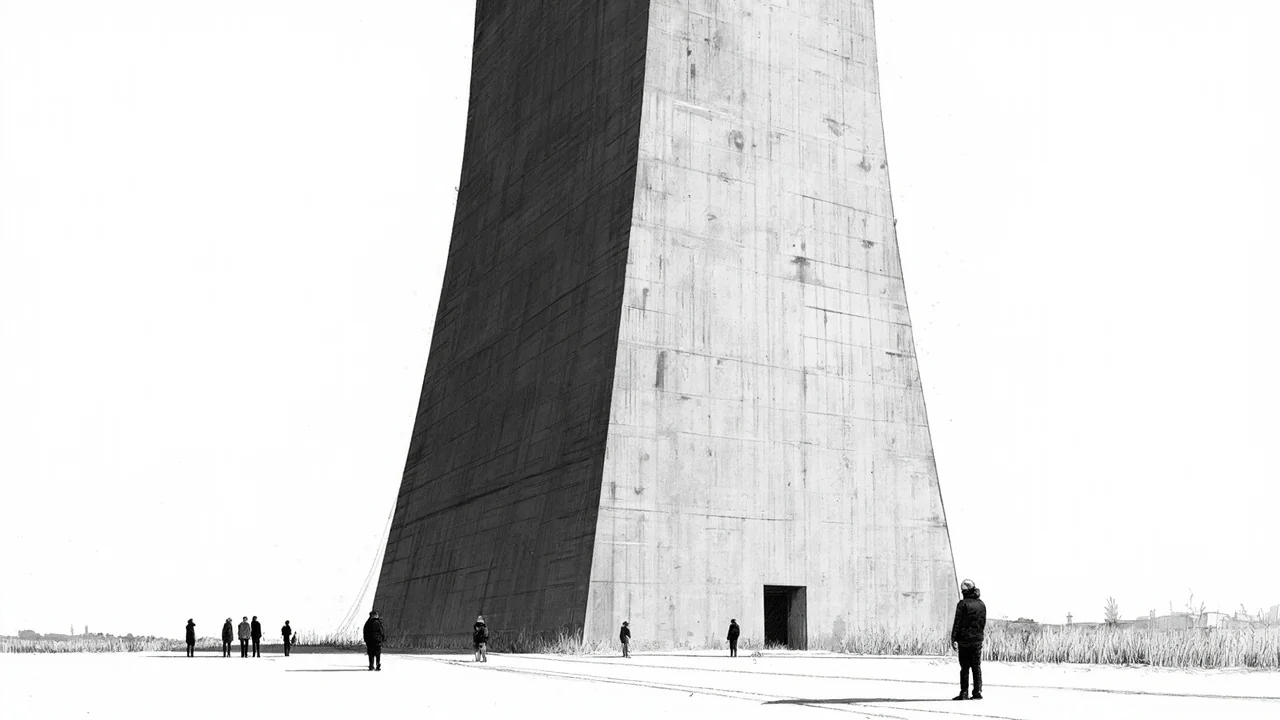
Norway's most debated industrial relic receives 120,000 tons of grain annually while Oslo debates its future. The concrete silo at Vippetangen has become a monument to stalled urban ambition. For over two decades, architects and politicians have proposed transforming the waterfront giant into luxury hotels, cinemas, and planetariums. Inside, Kristian Thunes and his team continue the steady work of receiving and processing European grain, largely unaware of the external noise. "We have heard it so many times," Thunes said. "No one believes anything is actually happening here."
A Timeline of Unrealized Visions
Since the early 2000s, the silo's future has been a recurring topic in Oslo's city planning debates. Proposals have emerged with predictable regularity, often coinciding with election cycles or new cultural strategies. Design competitions have been held, and glossy architectural renderings have been published in newspapers. These visions typically share a common theme: erasing the building's industrial function to create a new public or commercial space. The sheer scale of the structure—its monumental concrete cylinders dominating the harbour entrance—makes it an irresistible canvas for reimagining. Each new proposal generates brief excitement before fading from public discussion. The cycle repeats, leaving the silo's daily operations untouched. This pattern reveals a significant gap between visionary city planning and the practicalities of ownership, economics, and existing commercial leases.
The Persistent Beat of Industry
Within the cavernous hall, the operation managed by Strand Unikorn is straightforward and vital. Grain cultivated in Sweden and other European nations arrives by ship. It is unloaded, stored, and then transported the short distance to the Bjølsen Valsemølle for processing. This supply chain is a small but integral part of Norway's food security infrastructure. The work is not glamorous, but it is consistent. For the employees, the silo is not a dormant relic awaiting rebirth; it is a workplace defined by routine and tangible output. The contrast between internal reality and external perception could not be starker. Outside, the building is a symbol of potential. Inside, it is a functional machine, its value measured in tons processed and logistics managed. This disconnect lies at the heart of the two-decade impasse.
Expert Analysis: Why Oslo's Grand Projects Stall
Urban planning experts point to several factors that explain the silo's stalled transformation. "This is a classic case of the 'vision gap,'" said Dr. Ingrid Moe, a professor of urban sociology at the University of Oslo. "Norway, and Oslo in particular, excels at creating beautiful conceptual futures for post-industrial sites. However, we often struggle with the execution phase, where cost, regulatory hurdles, and pre-existing commercial interests converge." She notes that Norway's strong property rights and lengthy democratic consultation processes can slow or halt major redevelopments. Furthermore, the existing operation provides steady jobs and serves a national need, complicating any simple argument for change. Another analyst, real estate economist Per Jakobsen, highlights the financial realities. "The cost of retrofitting a heavy-industrial concrete structure for public use is astronomical," Jakobsen explained. "Unless there is a clear and highly profitable end use—like ultra-premium housing—the business case often falls apart under scrutiny. The proposals for a public cultural space were likely never financially viable without massive public subsidy."
The Ripple Effects on Harbour Development
The silo's limbo status has implications for the broader development of Oslo's harbourfront, a prime area undergoing rapid transformation. Major projects like the Opera House, the Munch Museum, and the new National Museum have reshaped the Bjørvika area to the east. Vippetangen, where the silo stands, represents the next frontier. Its development is seen as key to connecting the city center with the southern fjord areas. The unresolved fate of such a prominent structure creates planning uncertainty for adjacent plots and infrastructure projects. It acts as a bottleneck, both physically and in the municipal planning process. City planners must account for multiple potential futures for the site, making coherent long-term strategy difficult.
A Look Ahead: Is Permanent Closure Finally Near?
Recent reports suggest a new chapter may be opening. The phrase "varig opphold"—meaning permanent cessation—is now in circulation regarding the silo's operations. While concrete details and timelines remain scarce, this indicates that commercial negotiations or lease arrangements may be reaching a conclusion that could finally end the grain receiving activity. If this occurs, the dynamic will shift fundamentally. The building will transition from an active industrial site to a true development-ready shell. This will force a reckoning on the previous proposals. Will a past vision be revived, or will a new, more financially pragmatic plan emerge? The answer will tell us much about Oslo's current priorities: whether it seeks architectural statements, community spaces, or maximum fiscal return from its prized waterfront.
The Silo as a Cultural Mirror
The enduring silo is more than a planning dilemma; it reflects Norway's relationship with its industrial heritage. The country has rapidly transitioned from an economy based on shipping, fishing, and manufacturing to one dominated by knowledge industries, services, and energy. Preserving or repurposing industrial monuments forces a conversation about this transition. Should every functional structure be adaptively reused, or is there value in letting some age and decay naturally? The silo, in its current state, represents a third path: accidental preservation through ongoing use. It is a living artifact. Its eventual fate—whether it becomes a design hotel or is simply demolished—will be a powerful statement about what Oslo values in its urban landscape and what it chooses to leave behind.