
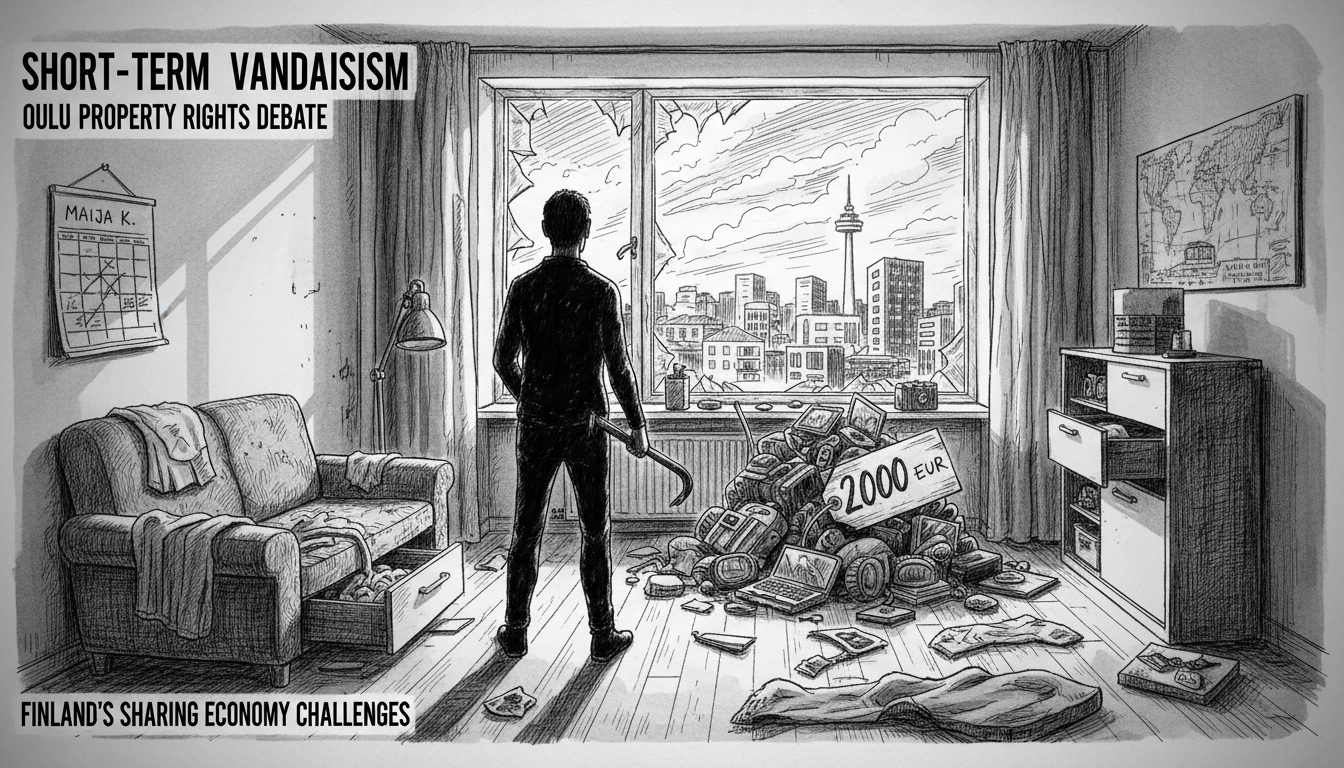
A wave of destructive vandalism targeting short-term rental properties in Oulu has exposed growing tensions in Finland's sharing economy landscape. Property owner Maija Kentala discovered her city-center apartment thoroughly ransacked after hosting guests through Booking.com, with thieves making off with television sets, kitchen appliances, and household items while deliberately smashing interior doors. The estimated damage reaches approximately 2,000 euros according to Kentala's assessment, prompting an official police report that authorities have confirmed receiving. This incident represents just the latest in an annual pattern of property damage affecting Kentala's three short-term rental units, raising fundamental questions about regulatory gaps in Finland's rapidly expanding tourism accommodation sector.
Kentala described finding the apartment in complete disarray with stolen items ranging from basic tableware to bedding, while broken furniture and leftover food created additional cleanup challenges. She noted the particular senselessness of destroying a closet door when simpler entry methods existed, suggesting deliberate malice rather than practical theft motivation. The timing proved especially disruptive as Kentala needed to cancel subsequent bookings while repairing the extensive damage, creating both immediate revenue loss and long-term maintenance burdens. This marks the second major incident within twelve months across her property portfolio, with a previous vandalism case involving similar destruction though without actual theft of pre-packed items.
Finland's short-term rental market operates within a complex regulatory environment where traditional tenant protections often don't apply to temporary accommodations. The Nordic welfare state typically maintains strong property rights safeguards, yet the sharing economy's rapid growth has created jurisdictional gray areas regarding liability and enforcement. Oulu's position as a growing university city and regional hub creates particular pressure on temporary housing availability, with Kentala noting that local hotel capacity frequently proves insufficient for visitor demand. This supply-demand imbalance creates economic opportunity for property owners while simultaneously increasing vulnerability to exploitation.
Kentala and her husband now face a critical business decision about continuing short-term rentals versus transitioning to traditional long-term tenants. They acknowledge that most guests maintain properties respectfully, yet the financial impact of annual vandalism incidents threatens operational sustainability. The couple plans one final restocking of stolen items while establishing clear thresholds for potentially exiting the short-term market entirely. Their experience reflects broader Nordic challenges balancing tourism growth with community stability, particularly in university cities experiencing seasonal population fluctuations.
The incident highlights how Finland's renowned social trust model faces stress tests in increasingly commercialized sharing economy contexts. While Nordic countries typically report lower property crime rates than European averages, the anonymous nature of platform-based rentals creates different vulnerability patterns. Kentala observed that basic consideration for others' property appears diminished in temporary accommodation contexts, with even inexpensive household staples regularly disappearing between guest rotations. This case exemplifies how digital platform intermediation can sometimes erode the interpersonal accountability that traditionally characterized Nordic rental markets.
Local authorities continue investigating the specific Oulu incident while broader policy discussions about short-term rental regulation continue at municipal and national levels. The situation demonstrates how global platform economies interact with distinctive Nordic social models, creating both economic opportunities and new forms of community friction. For international observers, this case offers insights into how even highly functional societies struggle to adapt established legal frameworks to emerging digital business models while maintaining quality of life for residents.