
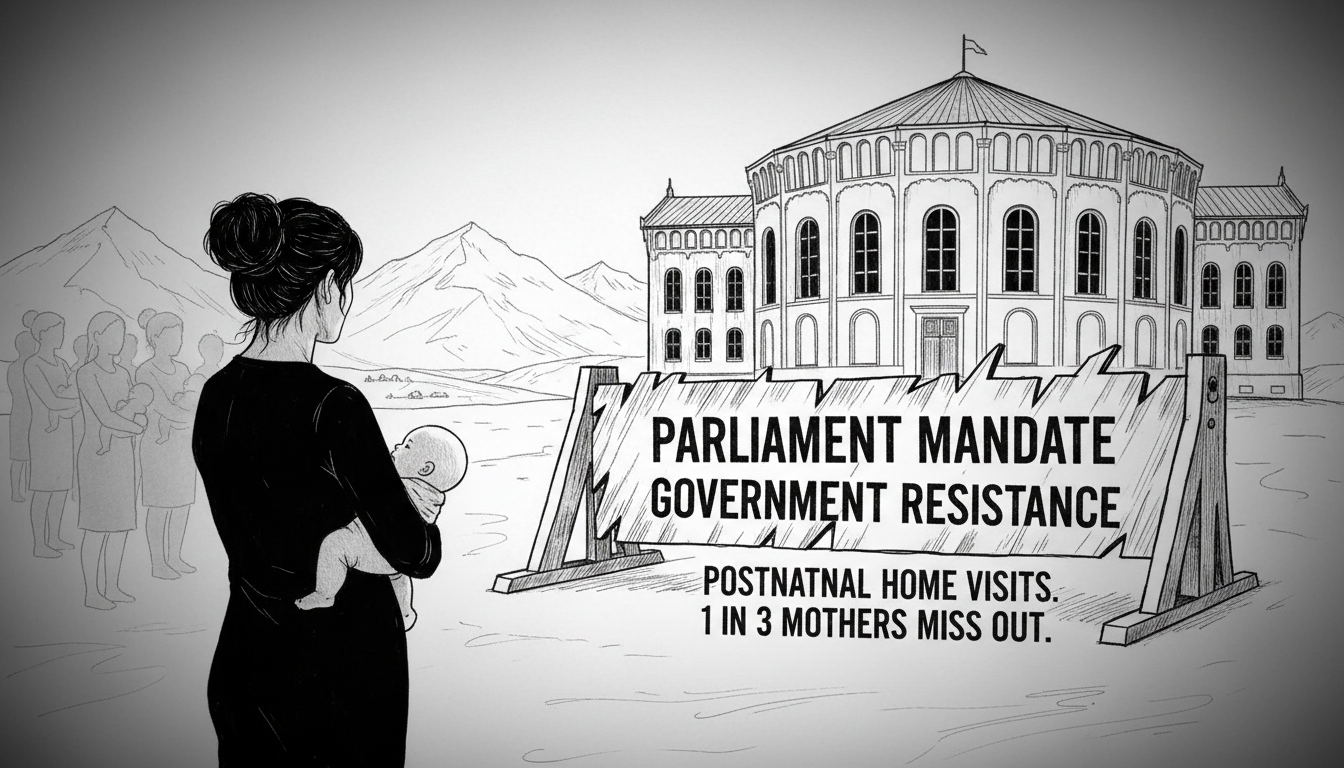
A parliamentary decision to guarantee home visits for all new mothers is now facing opposition from the government. This creates a direct conflict between the legislative and executive branches in Oslo. The Storting had previously passed a measure to ensure universal access to a midwife visit after birth. Government officials now say they cannot implement the rule due to budget constraints and staffing shortages. The disagreement highlights a growing tension in Norwegian healthcare policy between mandated services and practical capacity.
For Sarah Elise Frogner, a mother from Oslo, a home visit was critical. Her daughter developed newborn jaundice shortly after birth. Jaundice causes a yellowing of the skin and eyes from excess bilirubin. It is common but requires monitoring. 'For me, it was extremely important to get a home visit,' Frogner said. The midwife assessed the child's condition during the visit. Frogner believes the situation could have become serious without that professional check. Her story is not unique. Current data shows one in three new mothers in Norway does not receive a postnatal home visit. This gap exists despite the recognized benefits for maternal and infant health.
The core of the dispute lies in resource allocation. The Storting, Norway's parliament, views the visits as a non-negotiable standard of care. They argue it is a preventative measure that saves long-term costs. Government ministries counter that mandating the service without providing specific funding is unrealistic. They point to existing pressures on municipal health services and a national shortage of midwives. This standoff reflects a classic Scandinavian welfare state dilemma. How does a nation maintain universal, high-quality services amid rising demand and finite resources? The answer often involves difficult political choices.
From a policy perspective, this is more than a healthcare debate. It touches on regional equality, a cornerstone of Norwegian governance. Access to consistent postnatal care can vary significantly between urban centers like Oslo or Bergen and remote fjord communities. A universal mandate aims to bridge that gap. The government's reluctance suggests some regions may continue to face disparities. For international observers, this conflict demonstrates that even well-funded Nordic systems face operational challenges. Political promises must eventually align with practical realities on the ground.
The immediate outcome remains uncertain. Storting members from several parties have expressed frustration with the government's position. They may seek to force the issue through budgetary amendments or new legislation. The government, for its part, has proposed alternative solutions. These include bolstering digital consultation options and strengthening follow-up at child health centers. Many healthcare professionals argue these cannot fully replace an in-person assessment in the home environment. The debate will likely continue as Norway balances its renowned social safety net with fiscal and logistical limits. The wellbeing of new families hangs in the balance of this political calculation.