
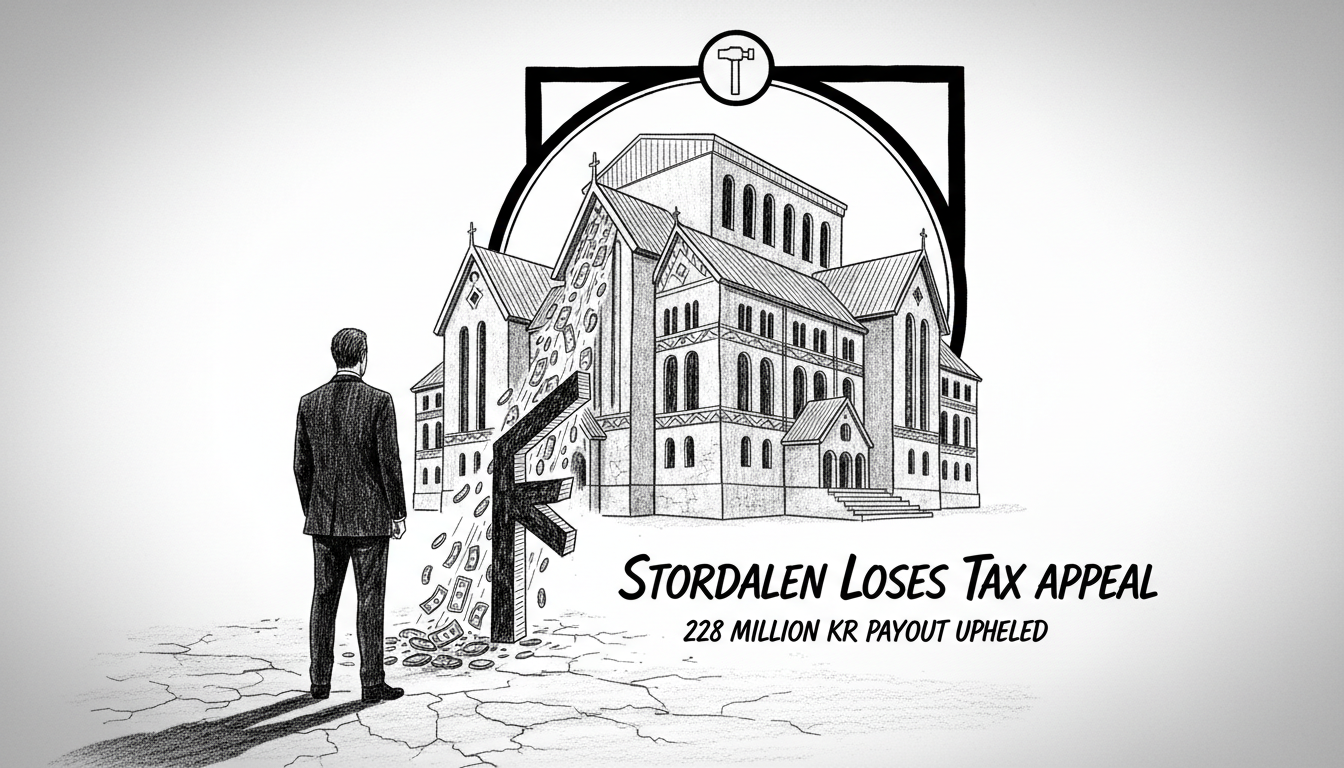
Prominent Norwegian investor and hotel magnate Petter Stordalen must pay 228 million kroner to the national tax authority. The Court of Appeal ruled against his challenge of tax assessments from his property company Strawberry Fields AS. This decision validates all original tax determinations against the high-profile businessman.
The legal dispute centers on 795 million kroner in dividends Stordalen withdrew from Oslo Properties. He acquired this real estate firm in 2013 before restructuring it into Strawberry Fields. The court stated clearly that neither Stordalen's appeal nor his company's separate challenge succeeded.
This ruling carries substantial implications for Norwegian tax enforcement. The case demonstrates tax authorities' increasing scrutiny of high-wealth individuals and complex corporate structures. Norway maintains progressive tax rates and strict compliance requirements for major financial transactions.
Stordalen's legal defeat reflects broader trends in Norwegian tax policy. The government has intensified efforts to ensure proper taxation of substantial corporate dividends and international business operations. This approach aligns with Norway's commitment to fiscal fairness and revenue collection.
The court's decision establishes important precedent for similar cases involving corporate restructuring and dividend payments. Legal experts anticipate this will influence how wealthy Norwegians structure their financial affairs. The ruling may prompt revised approaches to tax planning among business leaders.
Norway's tax system relies heavily on voluntary compliance with robust verification mechanisms. This case shows the system's capacity to handle complex financial arrangements across multiple entities. The outcome reinforces the principle that all citizens must meet their tax obligations regardless of wealth or status.
Stordalen's hotel empire includes numerous properties across Scandinavia and Europe. His business interests span real estate development, hospitality, and environmental initiatives. The tax payment represents a substantial financial impact but won't critically affect his diversified holdings.
The case originated when tax authorities questioned the dividend payments' timing and structure. They examined whether proper taxes were assessed and paid according to Norwegian law. The Court of Appeal's thorough review upheld the original determinations after considering all arguments.
This development comes amid ongoing discussions about wealth distribution and tax fairness in Norway. The country balances entrepreneurial freedom with social welfare funding through its taxation system. Cases like this test that balance and demonstrate its practical application.