
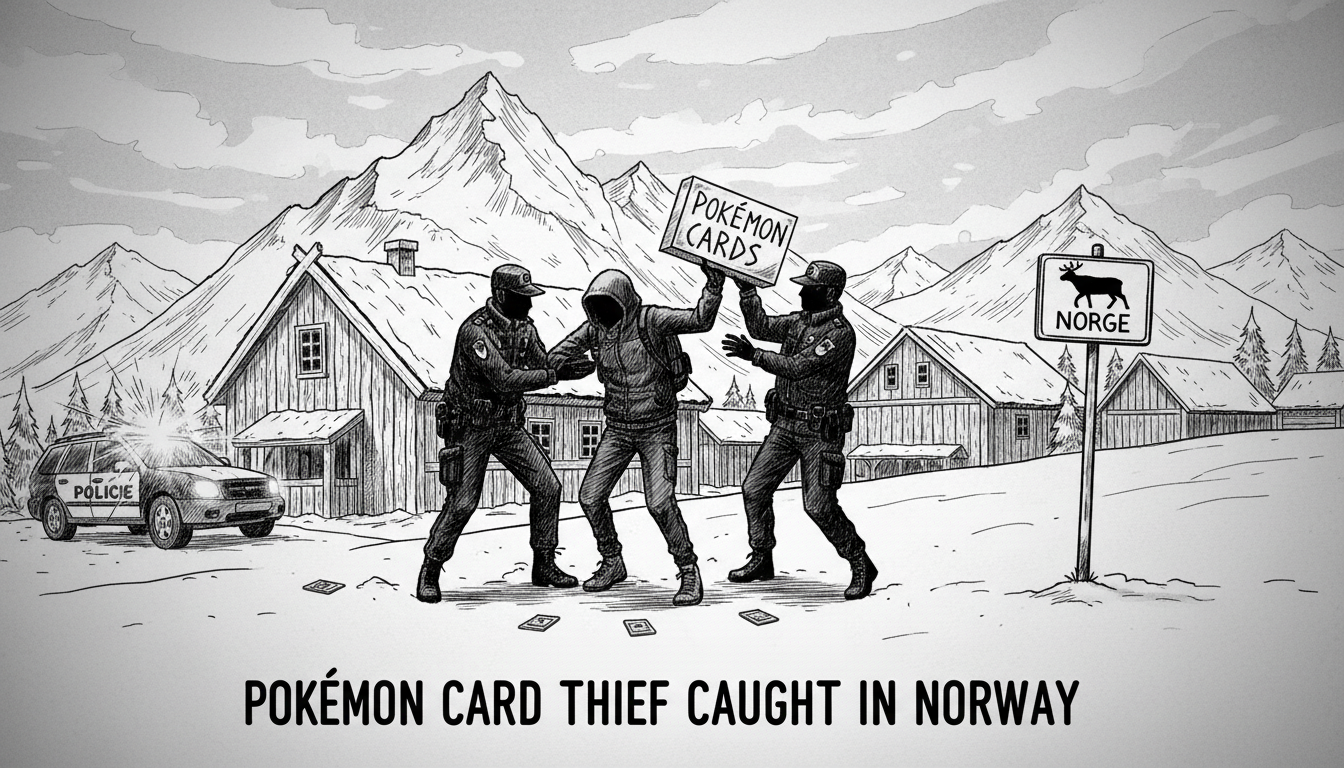
Norwegian police in Ski apprehended a Pokémon card thief within hours after surveillance footage revealed his workplace details. The swift arrest and recovery of stolen Japanese cards valued at 10,000 kroner highlight the serious commercial value now attached to modern collectibles.
A man fled a specialty store in Ski on Thursday afternoon with two collector boxes. The boxes contained rare Japanese Pokémon cards. Police initially logged the incident with no immediate suspect. Investigators reviewed store security footage later that evening. They identified company information displayed on the suspect's work clothing.
Police tracked down and arrested a Polish citizen based on this visual evidence. The suspect confessed to the theft upon apprehension. He also returned the stolen cards to authorities. Police have not released further personal details about the man. The case was resolved quickly without the cards leaving the town.
A New Class of High-Value Theft
This incident in Akershus county reflects a global trend. Collectible trading cards, particularly rare Pokémon editions, have transformed into significant assets. The estimated 10,000 kroner (approximately $950 USD) value for two cards is not exceptional. Graded first-edition cards have sold at auction for hundreds of thousands of dollars internationally. This economic shift turns hobby shops into potential targets for low-level crime seeking high reward.
The store in Ski specializes in collectible items. Such niche retailers often hold significant, concentrated value in small, easily portable items. This presents a unique security challenge. Unlike electronics or jewelry stores, collectible shops may not have the same public perception of being high-risk targets. Yet their inventory can be equally valuable.
The Investigation: Work Clothes and Digital Footprints
The investigation's success hinged on a simple oversight by the suspect. His work attire bore a company logo or name visible to security cameras. Police used this information to trace him. This method highlights the continued importance of basic investigative work alongside digital tools. Surveillance technology provided the clue, but police work connected it to an identity.
“The suspect acknowledged the crime and returned the cards,” police stated. The straightforward confession likely resulted from the clear evidence. This case did not require complex forensic analysis. It was a matter of connecting visible information from the footage to an individual. The speed of the resolution prevented the potential resale of the cards on online secondary markets.
The Booming Market for Pokémon Cards
Analysts point to a pandemic-fueled resurgence in the collectible card market. Nostalgia, investment speculation, and high-profile celebrity collectors have driven prices upward. The cards referenced in the theft were Japanese versions, often prized by serious collectors for their quality and authenticity. The Norwegian market, while smaller, mirrors international trends where sealed product boxes and rare singles command premium prices.
“What looks like a child’s toy to some is a blue-chip asset to others,” says Lars Holen, a Oslo-based culture market analyst. “The theft in Ski is a local symptom of a global market reality. Stores are adapting to the fact that their inventory is no longer just toys, but a form of luxury goods.” Holen notes that security protocols in specialty retail are evolving rapidly. Many stores now keep high-value singles in locked displays or safes, similar to jewelry stores.
Implications for Retail Security in Norway
This theft, though minor in scale, serves as a cautionary tale for small businesses across Norway. Retailers dealing in high-value, low-volume items must evaluate their security. Visible surveillance cameras are a primary deterrent. The Ski case proves they are also a critical investigative tool. Proper lighting and store layout that minimizes blind spots are essential basic measures.
Employee training is another key factor. Staff should be aware of the specific high-value items in stock. They can monitor for suspicious behavior focused on particular products. Establishing relationships with local police, as seen in this efficient response, is also beneficial. Reporting theft immediately with detailed descriptions and prepared footage aids quick recovery.
Beyond the Crime: The Cultural Value of Collectibles
The incident underscores how cultural phenomena like Pokémon evolve. The franchise remains a powerful force decades after its launch. Its secondary market has matured into a structured economy with price guides, grading services, and dedicated marketplaces. This economy exists physically in shops like the one in Ski and digitally on global platforms.
For collectors, the theft is a violation of both property and passion. Collecting is often deeply personal, tied to childhood memories or meticulous investment strategies. The quick return of the cards in this case likely preserved their condition and value. Cards that pass through criminal hands can be damaged, compromising their grade and worth.
A Swift Resolution with a Clear Message
The Ski police department’s efficient work closed the case in under a day. It sends a clear message to would-be thieves targeting niche markets. Modern retail security, even in smaller towns, can be effective. The combination of technology and traditional police work remains powerful. The suspect’s decision to wear identifiable clothing was a critical mistake.
This small-scale crime offers a clear snapshot of larger trends. The global collectibles market influences local community safety considerations. Retail theft is no longer just about everyday consumer goods. It encompasses items whose value is cultural, speculative, and immense. Stores must adapt their defenses accordingly. As the market for collectible cards shows no sign of slowing, security and awareness will continue to be paramount for Norwegian retailers.
Will other specialty stores in Norway now audit their security through the lens of high-value collectibles? The theft in Ski provides a compelling case study in both vulnerability and effective response.