
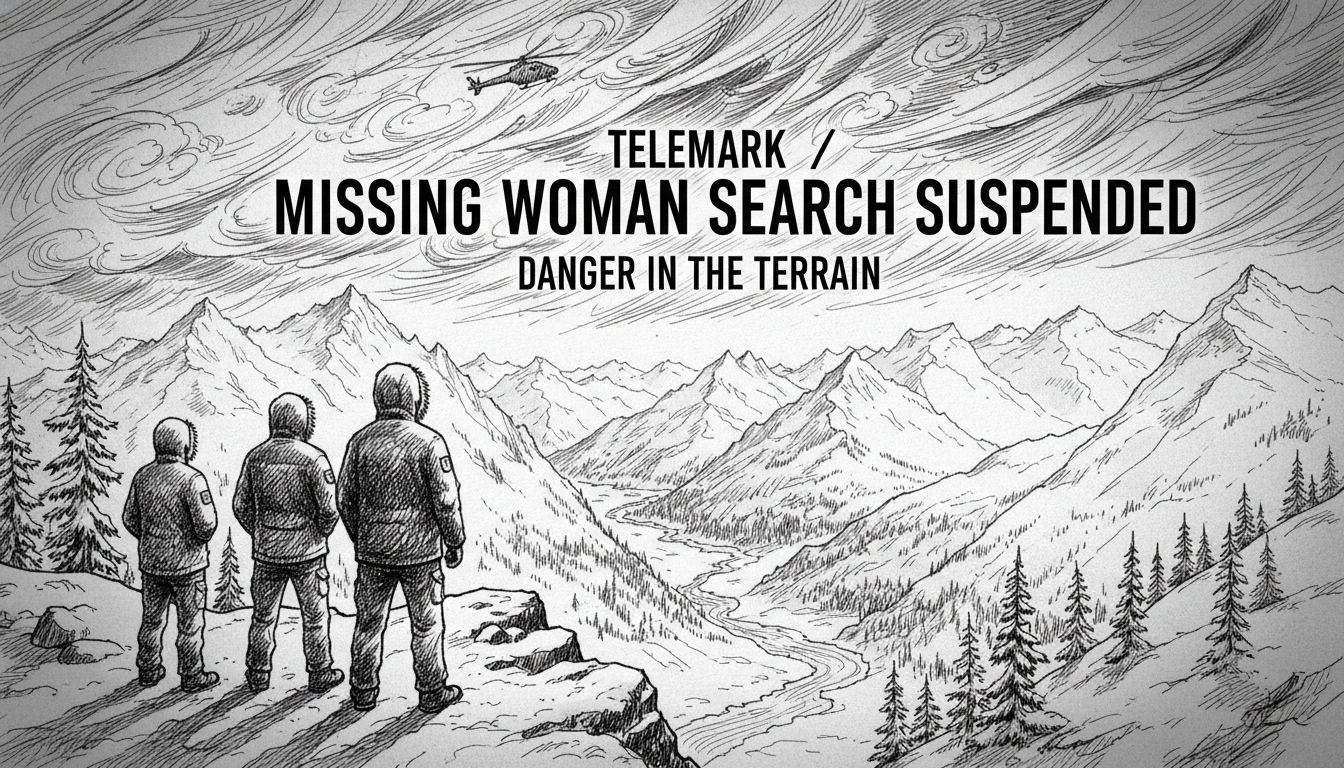
Norwegian police have made the difficult decision to call off the active ground search for a woman missing in Telemark. The operation, which lasted several days, was conducted in what rescue officials described as exceptionally dangerous and steep terrain. Authorities are now warning the public against initiating their own searches in the area.
Police Inspector Sigrid Dahl issued a direct appeal to the public. She acknowledged the high level of public engagement but urged extreme caution. The terrain where the woman from Skien disappeared contains massive boulders the size of houses, deep crevices, and countless hidden caves. Rescue leader Thomas Horgen of the Norwegian Alpine Rescue Group stated the landscape made systematic searching nearly impossible. He noted the gradual erosion of hope among search teams is a painful process, making the police decision to halt necessary.
The search required significant resources from police and volunteer rescue teams. It also resulted in multiple injuries among participants, including three fractures and sprains. Dahl confirmed the choice to end the active search was based on a medical assessment. This assessment drastically reduced the hope of finding the missing woman alive and in good health. The police premise throughout the operation was that they were searching for a living person.
The woman's car was found parked in the area, but the site now stands empty and quiet. A dense fog continues to blanket the valley, adding to the somber atmosphere. Police will now review all collected information to determine the next investigative steps. They emphasize the investigation remains open and they will follow any new, concrete leads. The woman is reportedly in good physical condition and, if not injured, could have traveled a considerable distance.
This incident highlights the inherent dangers of Norway's wilderness, even in regions not considered high alpine. Telemark's fjord landscapes, while beautiful, can present sudden and severe hazards. Norwegian search and rescue operations are typically robust, involving coordinated efforts between police, volunteer groups like the Alpine Rescue Group, and sometimes military resources. The decision to scale back an operation is never taken lightly and follows strict protocols balancing risk to rescuers with diminishing probability of success.
Public cooperation remains vital. Police continue to ask anyone with information to come forward. The case shifts from a large-scale rescue mission to a missing person investigation. This tragic situation serves as a stark reminder of the respect required for Norway's natural environment. It also underscores the challenging decisions faced by emergency services when hope conflicts with operational reality and safety.