
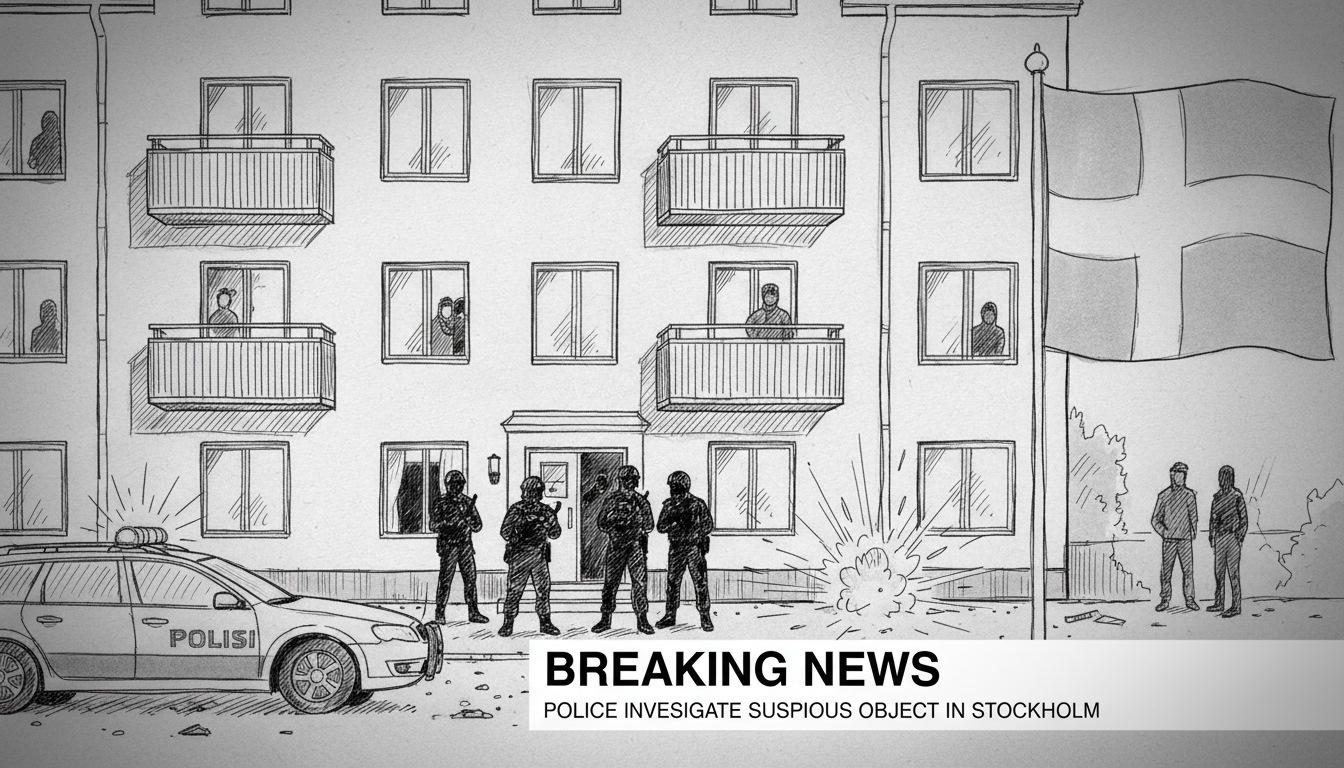
Residents of a Solna apartment building received an unexpected and unsettling disruption on Monday evening. A loud bang echoed through a stairwell around 5:15 PM, prompting immediate concern. Police arrived swiftly, launching an operation that continued into the night. Officers observed an object they could not immediately identify. Authorities treated it as potentially dangerous as a precaution. Susanna Rinaldo, a police press spokesperson, explained the situation. She said officials could not assess the item on sight. It was therefore considered hazardous for the time being. Police instructed all residents to remain inside their apartments. They needed to stay put until experts examined and secured the object. No injuries or property damage were reported. The incident caused a significant but contained disruption in the northern Stockholm suburb.
Solna is a densely populated municipality just north of Stockholm city. It is known for its mix of residential areas, the Friends Arena stadium, and the Karolinska Institute. Events like this are rare but prompt a major response. Swedish police protocols for suspicious items are strict and safety-focused. They prioritize civilian protection over rapid resolution. This often means extended cordons and patient investigation. For the residents, it meant an evening of uncertainty confined to their homes. They waited for the all-clear from authorities outside.
This incident touches on broader themes in Swedish society. It highlights the balance between public safety and daily disruption. Sweden maintains a generally low crime rate, especially for violent incidents. Yet, police preparedness for potential threats remains high. The response in Solna reflects standard procedure for any unidentifiable risk. It is not indicative of a wider trend. But it does show how quickly a normal evening can change. Life in Stockholm's suburbs is typically calm and predictable. This kind of police action stands out precisely because it is so unusual.
For international readers and expats, understanding this context is key. Swedish authorities are methodical and transparent in these situations. They communicate clearly, as seen with the spokesperson's direct statement. The system is designed to avoid panic and ensure thoroughness. Similar events have occurred in other Swedish cities in past years. They are almost always resolved without incident. The object often turns out to be harmless debris or a misplaced item. Yet the procedure must always assume the worst-case scenario. This cautious approach defines Sweden's public safety strategy.
What happens next? The bomb squad or a technical unit likely conducted a controlled examination. Once deemed safe, the cordon would lift. Residents would receive a brief explanation and life would return to normal. The story would fade from the news cycle by the next day. These events are brief interruptions, not signs of deeper instability. They are reminders of the apparatus that works quietly to maintain Sweden's famous sense of security. The real story is not the suspicious object itself. It is the predictable, professional, and uneventful resolution that follows.