
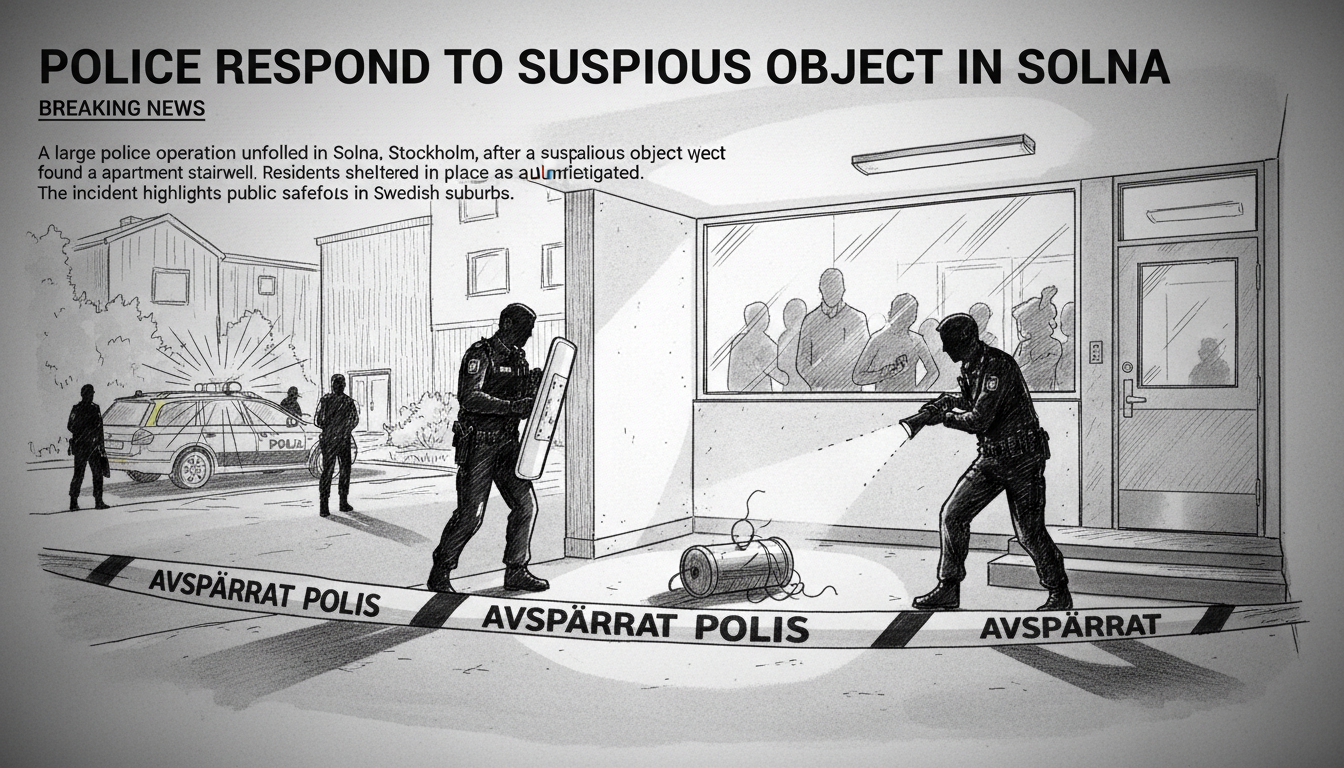
A quiet afternoon in Solna, a municipality just north of Stockholm's city center, was disrupted by a significant police operation. Residents of an apartment building reported hearing a loud bang in a stairwell, prompting an immediate emergency call. Police spokesperson Susanna Rinaldo confirmed the response. "We received an alarm about a loud noise in a stairwell," she said. "When the patrol arrived, they found an object considered to be a suspicious and potentially dangerous item." The discovery led to a large-scale police deployment, a sight that draws attention in Sweden's generally low-crime residential areas.
Officers secured the scene and instructed residents to shelter in their apartments. No injuries were reported during the incident. The exact nature of the object remains unclear, and police have not confirmed if an explosion actually occurred. "It is currently unclear whether something actually exploded or not," Rinaldo added, highlighting the cautious approach taken by authorities. Such incidents, while rare, trigger standard protocols focused on public safety above all else.
This event touches on broader themes in Swedish society. Solna is a diverse suburb, part of the greater Stockholm urban area experiencing steady growth. It represents the blend of traditional Swedish residential life with modern, international influences. Police responses to potential threats are typically swift and methodical, reflecting a society that prioritizes security but is unaccustomed to high levels of public violence. For international readers and expats, it's important context. Sweden's reputation for safety is strong, but like any nation, it is not immune to isolated security scares. These events are handled with transparency and a focus on minimizing public disruption.
What does this mean for Stockholm's northern suburbs? Life will likely return to normal quickly once the all-clear is given. These neighborhoods, from Helenelund to Huvudsta, are known for their green spaces, like the famous Haga Park, and family-friendly atmosphere. The response shows the system works as intended—public reports are taken seriously, and resources are deployed to investigate potential threats thoroughly. It also serves as a reminder of the everyday work of emergency services in maintaining the peaceful Swedish lifestyle that defines the region. The outcome, with no injuries, is the best possible scenario in such uncertain situations.