
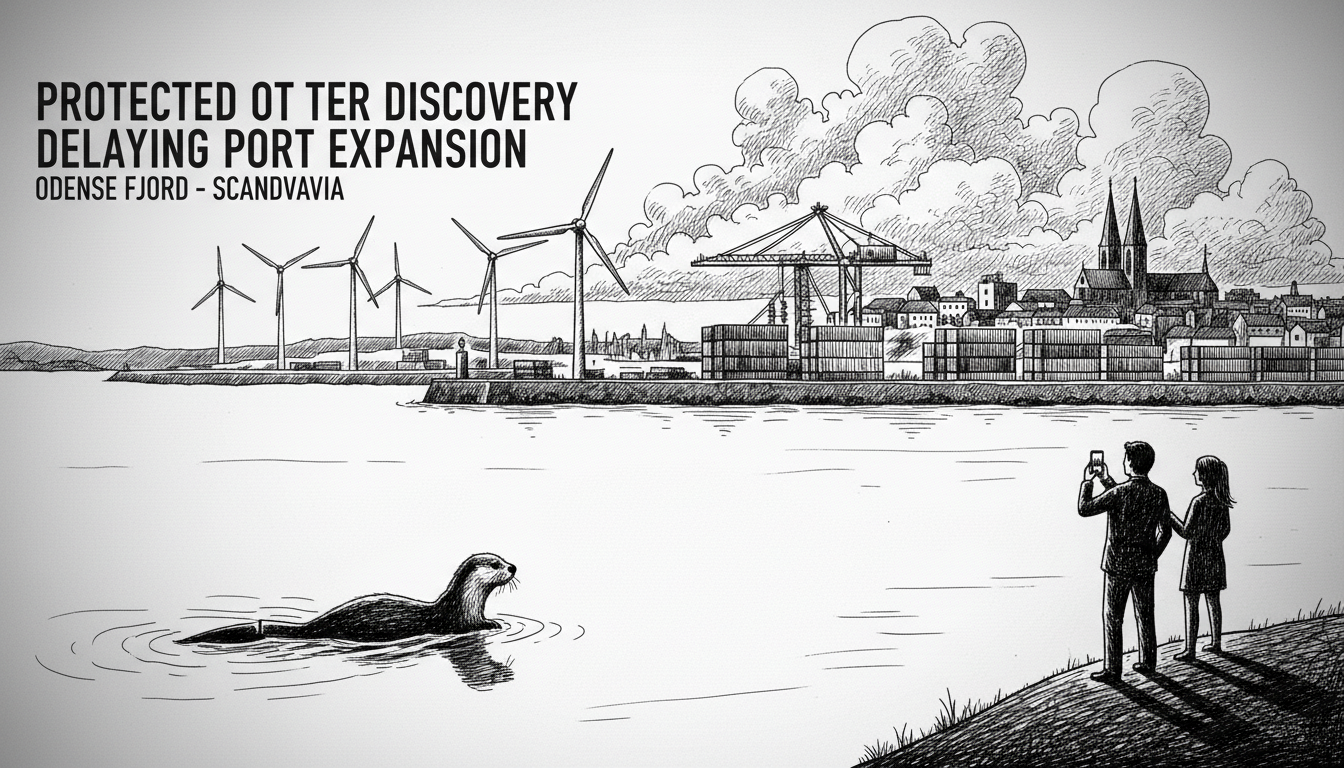
Video evidence of an otter in Odense Fjord threatens to disrupt a major port expansion project. The footage shows a protected species that enjoys the European Union's strictest environmental safeguards. Port authorities must now address the otter's habitat requirements before proceeding with their development plans.
Heiko Buch-Illing from research center Fjord & Bælt confirmed the animal's identity. His organization specializes in marine mammal research and conservation. The discovery carries legal weight under Denmark's environmental protection laws.
Odense Port has initiated the mandatory environmental impact assessment process. This standard procedure examines how construction affects local ecosystems. Officials from Kerteminde Municipality and the Environmental Protection Agency will review the findings.
EU habitat protection rules require special consideration for endangered species. The regulations mandate that breeding areas and living conditions remain undisturbed. Project developers must either avoid impacting protected animals or implement compensatory measures.
Morten Elmeros, a researcher from Aarhus University, explained the potential consequences. He noted authorities might require project modifications or mitigation efforts. These changes could affect the port expansion's timeline and budget.
Denmark maintains strong environmental protections that sometimes conflict with development goals. The country has previously delayed or modified projects due to wildlife concerns. This reflects Scandinavia's balanced approach to economic growth and nature conservation.
The situation illustrates how EU environmental directives influence local development. Denmark implements these regulations through its own legal framework. The process demonstrates Scandinavia's methodical approach to sustainable development.
International readers should understand this represents normal procedure in Nordic countries. Environmental assessments routinely influence major projects. The system aims to balance economic development with ecological preservation.
Port expansions typically face multiple regulatory hurdles in Denmark. The country prioritizes sustainable development alongside economic growth. This case shows how environmental protections function in practice within the Nordic regulatory framework.
What happens next depends on the environmental assessment's findings. Authorities might approve the project with conditions or require significant changes. The port expansion's future now hinges on demonstrating compatibility with wildlife protection requirements.