
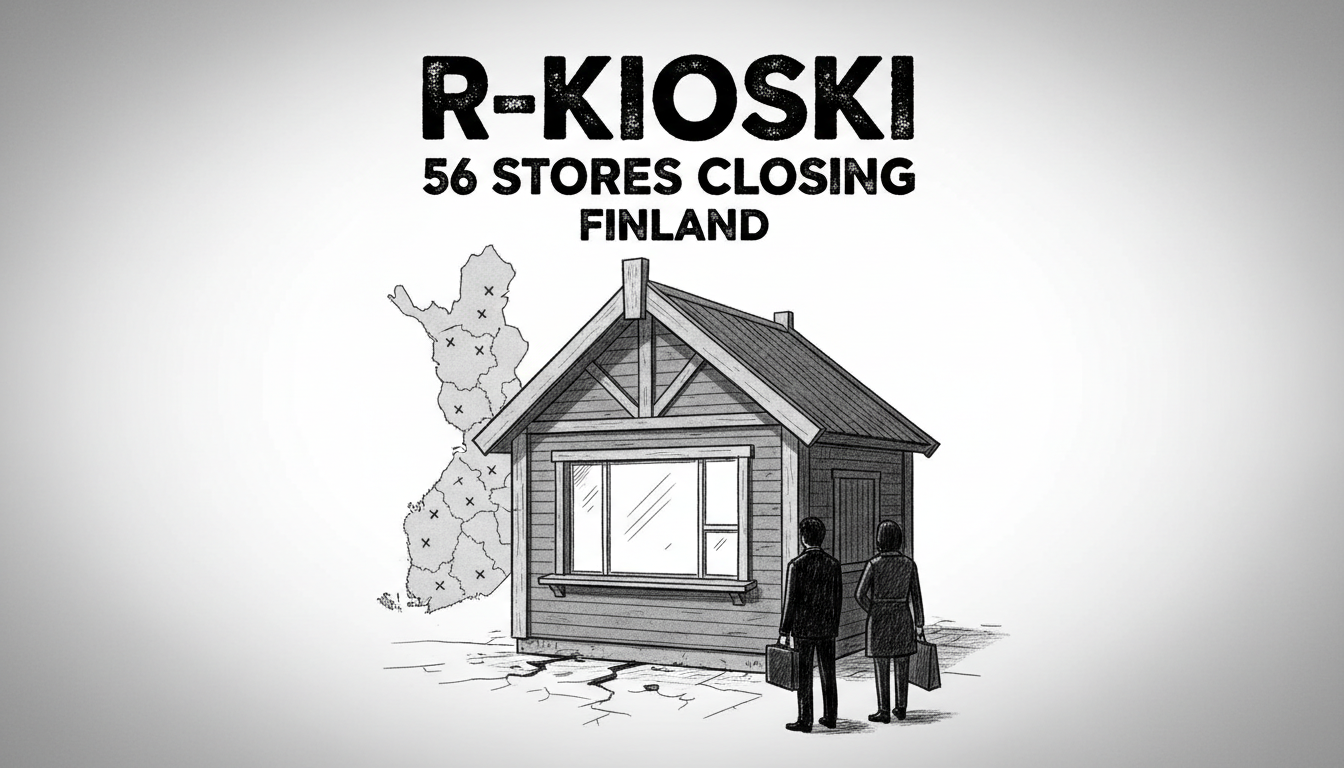
The Finnish retail chain R-Kioski will close 56 of its 338 stores nationwide, according to a list published by the company. The final sales dates for the affected locations vary, with some shutting their doors as early as this December and others remaining open until the same month next year. The closure in Keuruu, for example, is scheduled for August. This move represents a significant contraction for one of Finland's most recognizable retail brands, impacting communities across the country. The decision follows earlier reports from the autumn indicating the chain was considering even more aggressive cuts, with plans initially targeting up to 70 store closures. The scaling back reflects persistent challenges in the traditional convenience retail sector, which faces intense pressure from changing consumer habits and increased competition from grocery stores and digital services.
R-Kioski's network currently consists of 338 stores, with the vast majority operated by franchise entrepreneurs. Only about one-fifth of the outlets are directly run by the chain itself. This business model means the closures will directly affect numerous small business owners and their employees, not just a corporate entity. In October, the company's CEO, Niklas Lilja, stated the trigger for closures was unprofitable kiosks, with location being a primary determining factor. This straightforward economic rationale highlights the harsh realities of maintaining a physical retail footprint in less trafficked areas. The closures are geographically dispersed, affecting towns and cities throughout Finland, indicating the challenge is not regional but systemic.
This restructuring is part of a broader trend affecting brick-and-mortar retail across the Nordic region. For decades, R-Kioski has been a staple of the Finnish urban and suburban landscape, offering newspapers, magazines, snacks, and basic necessities. Its iconic green signage is a familiar sight. However, like many newsstand-based models globally, it has been hit hard by the digitalization of media and the consolidation of consumer spending into larger retail outlets. The Finnish government has historically supported small retail through various measures, but market forces are proving difficult to counter. Analysts note that while the chain has diversified into lottery services, parcel pick-up points, and mobile subscriptions, these additions have not been sufficient to offset core declines.
The implications extend beyond retail into the social fabric of many neighborhoods, particularly in smaller towns. A local kiosk often serves as a minor social hub and a provider of essential services for those without easy access to larger supermarkets. Its loss can contribute to a sense of dwindling local amenities. For international observers and expats in Finland, this shift is a tangible example of the rapid changes in Nordic commerce, where efficient digital solutions and large-scale retail often outcompete traditional, smaller-scale models. The next steps for R-Kioski will likely involve further investment in its remaining profitable locations and its digital offerings. The success of this retrenchment strategy will be closely watched as a bellwether for the future of convenience retail in a high-cost, digitally advanced economy like Finland's.