
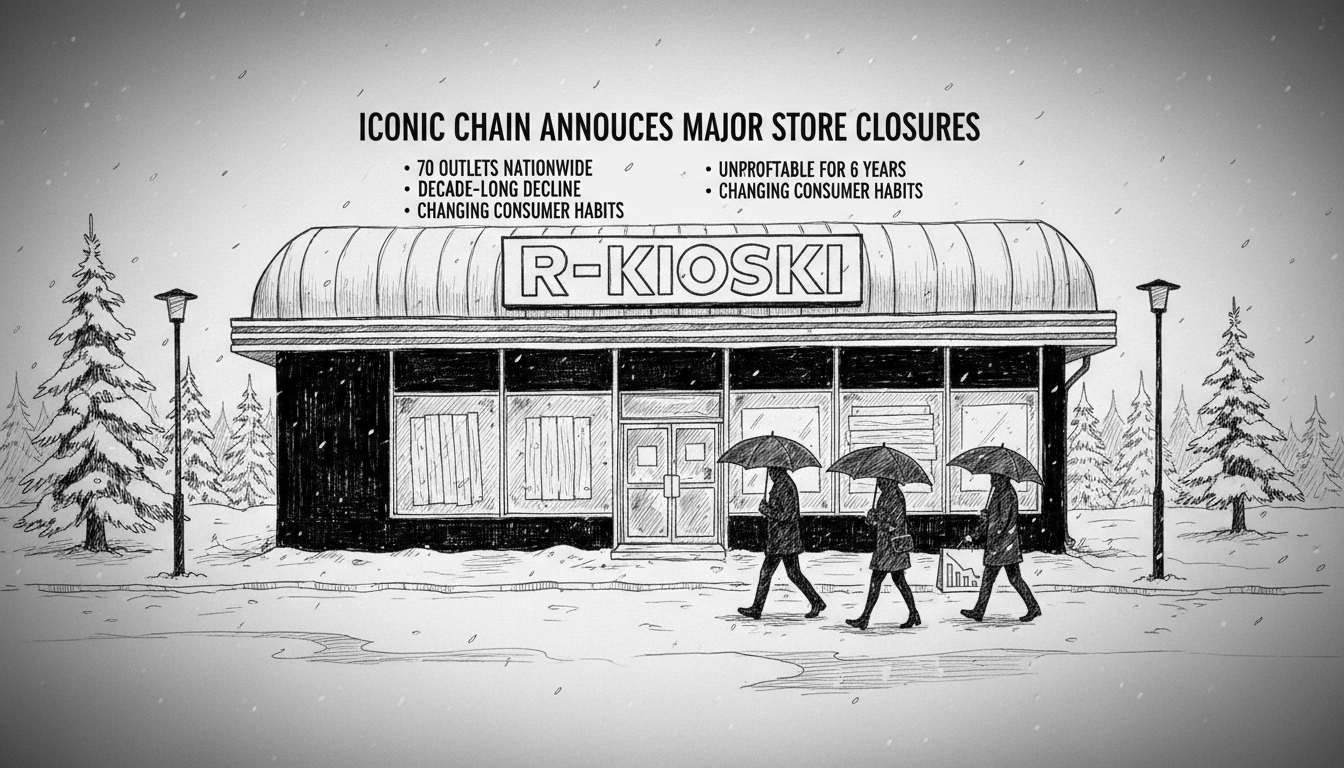
The R-Kioski retail chain will close approximately seventy of its stores across Finland, a decision confirmed by the company's leadership. This move affects roughly one-fifth of the chain's current network of 338 outlets. The closures target locations that have been consistently unprofitable, with some already shuttered and others scheduled to close in early 2026. The company has stated it will not publish a detailed list of the affected stores, focusing instead on a strategic restructuring of its physical footprint.
This latest downsizing continues a stark trend for the familiar convenience brand. A decade ago, the R-Kioski network boasted over 600 locations. That number had already dwindled to just over 451 stores two years ago, illustrating a rapid and sustained contraction. The chain has now reported losses for six consecutive years, posting an operating loss of 4.9 million euros on a turnover of 220 million euros in its most recent fiscal year.
The closure of these stores represents more than a simple business adjustment. It signals a profound shift in Finnish consumer habits and the economics of neighborhood retail. R-Kioski stores have long been fixtures in urban centers, train stations, and suburban areas, serving as essential hubs for newspapers, magazines, snacks, and basic necessities. Their gradual disappearance reflects broader pressures from changing media consumption, increased competition from larger grocery chains extending their hours, and the relentless growth of digital and e-commerce alternatives.
For international observers, the decline of R-Kioski offers a clear case study in the challenges facing traditional brick-and-mortar retail across the Nordic region. Finland's high operating costs, including wages and commercial rents, place intense pressure on low-margin businesses. The company's strategy now appears to be a retreat to its most viable urban cores, abandoning smaller markets where foot traffic can no longer sustain a physical presence. This mirrors similar struggles seen with newsstand and convenience models in other European countries, though the cultural impact in Finland is particularly acute given the brand's historical ubiquity.
The practical implications are immediate for employees and neighborhoods. Dozens of jobs will be lost, and many communities will lose a convenient, often centrally located service point. The move also raises questions about market diversity, as the shuttering of these stores often leaves larger supermarket chains as the only local retail option, especially outside of major city centers. The company's opaque communication regarding specific closure locations adds uncertainty for customers and municipal planners alike.
What comes next for the brand remains an open question. A survival strategy based solely on closing loss-making stores has clear limits. The chain must now demonstrate it can reinvent its remaining outlets with a compelling product mix that justifies a physical visit in an increasingly digital world. The success or failure of this retrenchment will be closely watched as a bellwether for the future of small-format retail in Finland's evolving economy.