
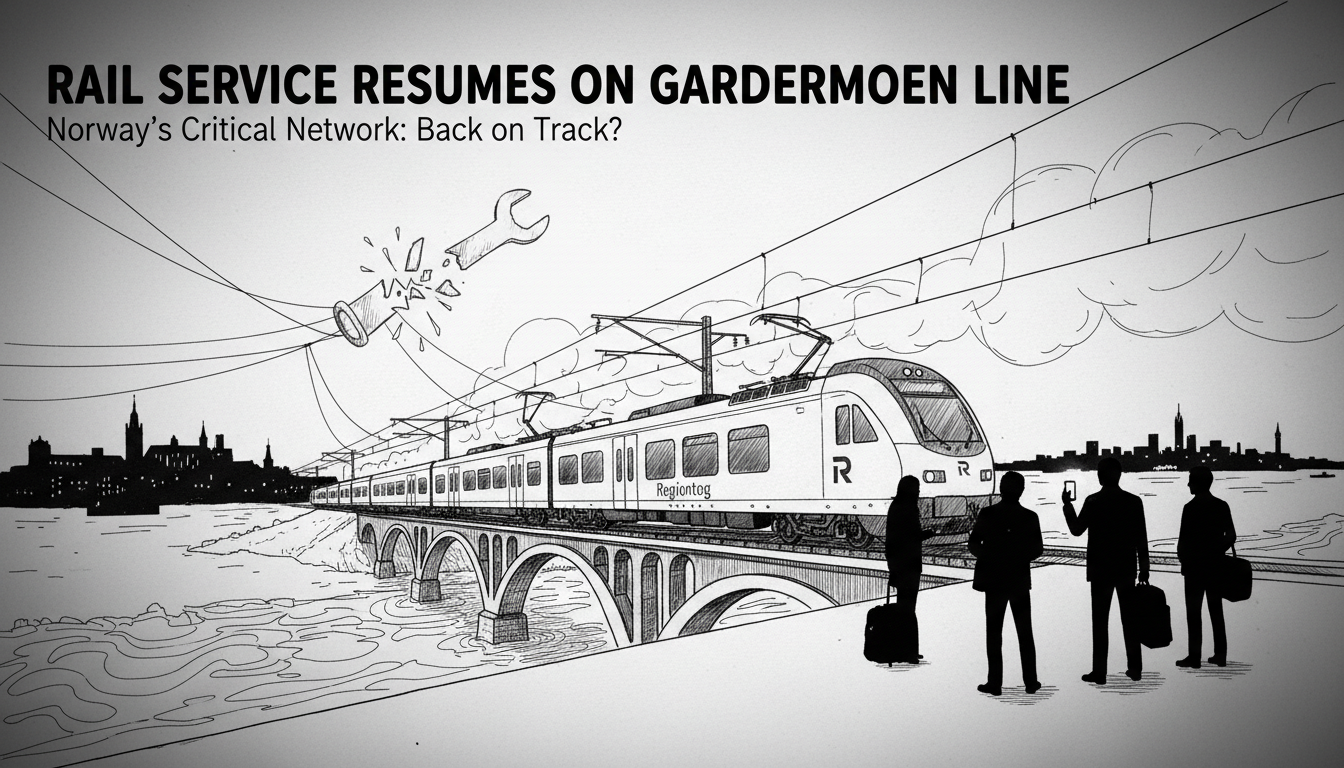
Train traffic has resumed on the Gardermoen Line following a track incident that halted all service between Lillestrøm and Oslo Airport. The disruption lasted over an hour and affected multiple key routes across eastern Norway's rail network. Passengers experienced significant delays as services gradually returned to normal operations.
Rail operator Vy confirmed trains are running again but warned travelers to expect continued delays and potential cancellations. The company stated it will take time to restore full schedule reliability across all affected routes. This incident demonstrates the vulnerability of Norway's critical transportation infrastructure.
The disruption impacted the Flytoget airport express service along with regional lines RE10, RE11, R13, and F6. These routes connect major population centers including Drammen, Hamar, Lillehammer, Eidsvoll, and Trondheim to the capital region. The Gardermoen Line serves as a vital transportation artery for both commuters and international travelers accessing Scandinavia's second-busiest airport.
Norway's railway system faces particular challenges maintaining reliability during extreme weather conditions. The country's mountainous terrain and harsh winters create unique operational difficulties. This latest incident raises questions about infrastructure resilience as Norway continues investing in sustainable transportation alternatives to reduce oil dependency.
The temporary shutdown of such a critical route highlights broader transportation policy considerations. Norway's government has prioritized rail investment through its National Transport Plan, aiming to shift freight and passenger traffic from roads to more environmentally friendly options. Incidents like this underscore the importance of maintaining existing infrastructure while expanding capacity.
International visitors and business travelers should note that Norway's rail system generally maintains high reliability standards despite occasional disruptions. The country continues to modernize its railway network, with recent investments in new signaling systems and expanded capacity on key corridors. The quick restoration of service following this incident demonstrates the system's overall robustness.
Transportation infrastructure reliability remains crucial for Norway's economy and international connectivity. As the country balances its oil industry commitments with climate goals, efficient rail service becomes increasingly important for sustainable mobility. The government's ongoing rail investments reflect this strategic priority across political parties in the Storting.