
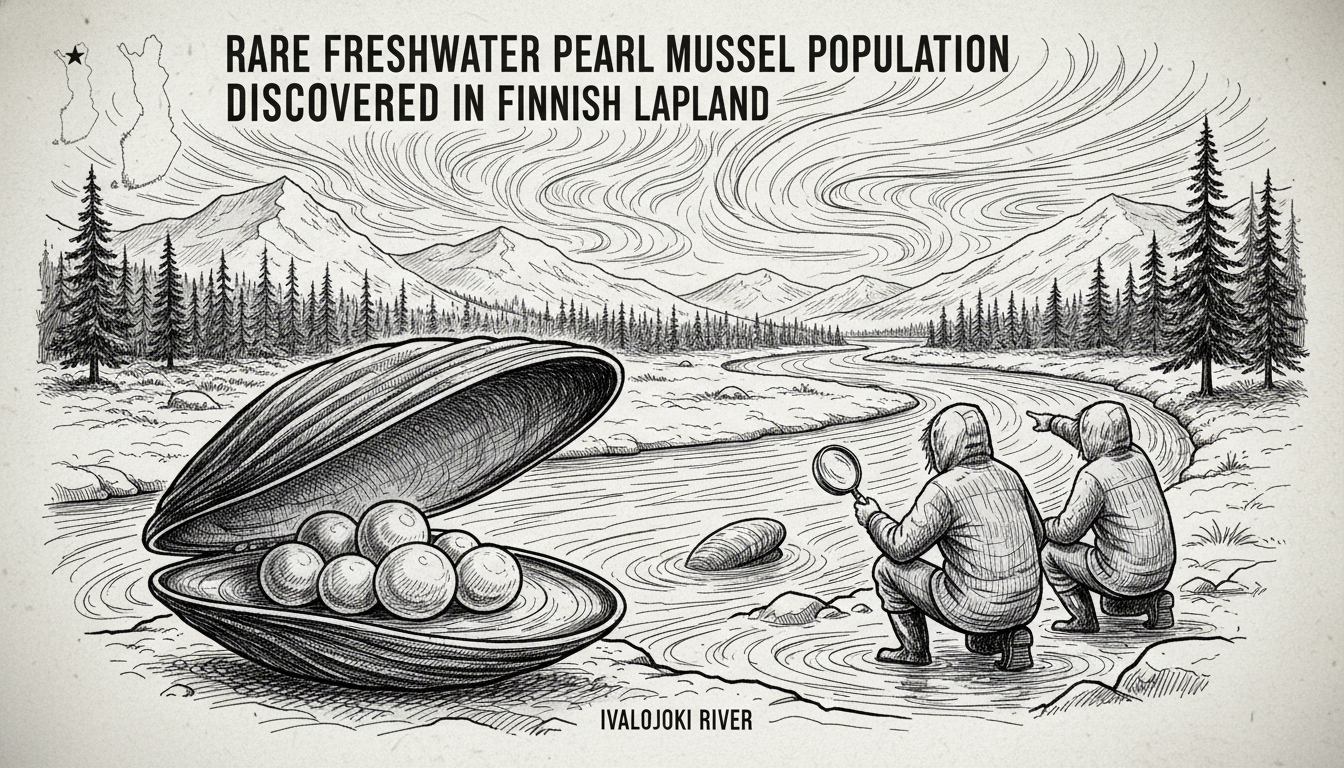
A vital new population of critically endangered freshwater pearl mussels has been discovered in Finland's northern Ivalojoki river during late summer surveys. Researchers documented 735 individual mussels in this significant find, though the total population likely extends much higher according to field experts. The riverbed contains multi-layered stones that probably conceal additional mussels beneath them, suggesting an even larger colony than initially observed.
This discovery represents the only known freshwater pearl mussel population within the Finnish portion of the Paatsjoki water system, making its protection both essential and urgent. The finding occurred during field research focused on restoring the traditional homeland areas of the Sámi people, with both Metsähallitus and Lapland's Centre for Economic Development confirming the population's existence. Current threats to these fragile habitats include industrial land use practices like intensive forestry operations, drainage ditching, bridge and road construction, and mechanical gold mining activities.
Freshwater pearl mussels now survive in only 120-150 Finnish rivers, a dramatic decline from historical numbers. Even more concerning, these mollusks can successfully reproduce in just 48 Finnish waterways today. Most of these remaining populations cannot maintain sufficient reproduction rates to ensure their long-term survival according to biological assessments. The species has been legally protected since 1955 yet continues to face severe decline across all its Finnish habitats.
Industrial activity recently caused massive mussel mortality when forestry machinery repeatedly drove through a prime mussel habitat in Hukkajoki river. This incident killed thousands of freshwater pearl mussels and highlighted the ongoing vulnerability of these protected species. The Ivalojoki river currently falls outside any specific protection program, leaving this newly discovered population particularly exposed to potential threats from development projects and land use changes.
Conservation experts have not disclosed the precise location following official guidelines to prevent disturbance. The discovery's significance extends beyond immediate conservation concerns, representing an important indicator of water quality and ecosystem health in Lapland's river systems. This find underscores the ongoing tension between industrial land use and biodiversity protection in Finland's northern regions, where natural resource extraction often conflicts with environmental conservation goals.