
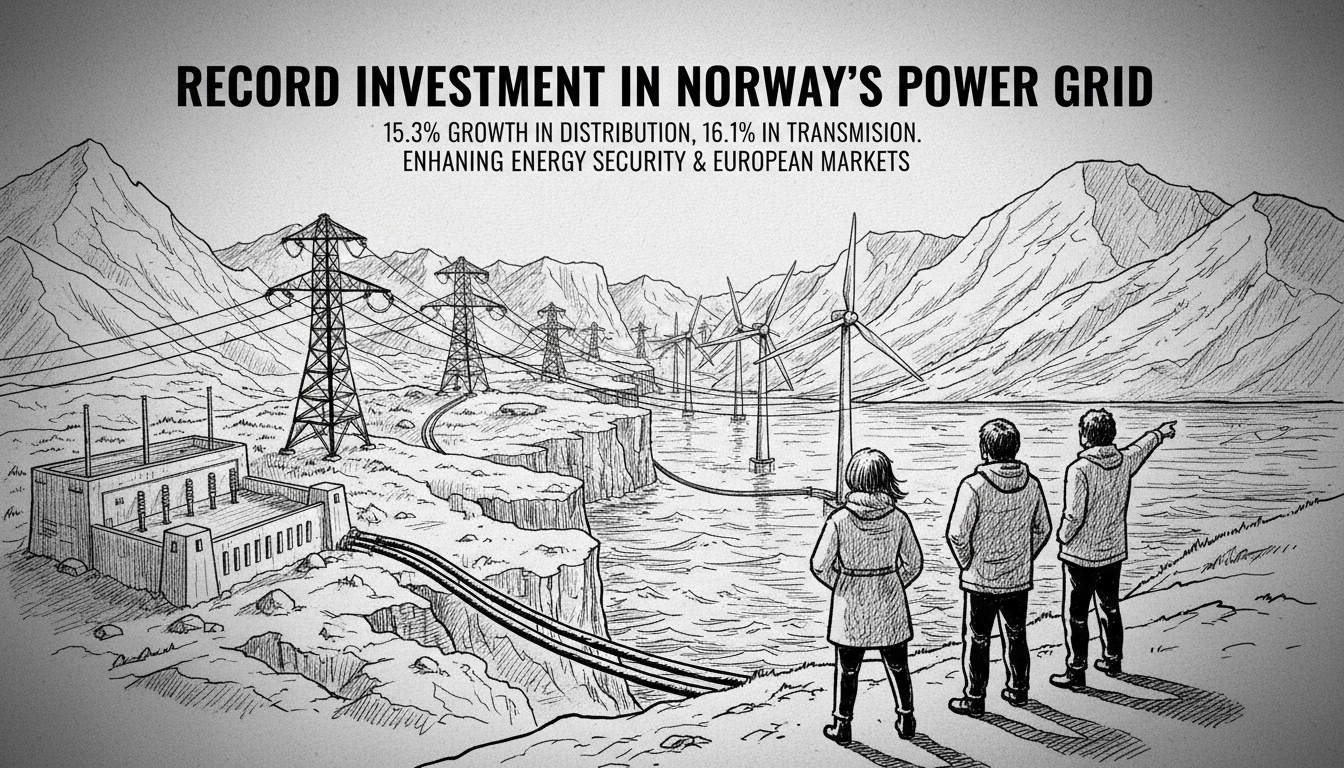
Norway's electricity grid investments surged by 15.3 percent last year according to national statistics. Transmission facility investments grew even more dramatically at 16.1 percent. These figures represent the highest regional and distribution network spending since measurements began in 1973.
Senior advisor Tom Jonas Billit confirmed these record numbers in an official statement. He noted the unprecedented scale of current infrastructure development. The central grid handles long-distance high-energy transmission across Norway's challenging terrain. Distribution networks deliver electricity directly to households and businesses throughout Norwegian communities.
This massive infrastructure push addresses Norway's evolving energy needs. The country faces increasing electricity demand from both population growth and industrial expansion. New data centers, manufacturing facilities, and electric vehicle adoption all strain existing capacity. Grid modernization becomes essential for maintaining Norway's competitive energy advantage.
Norwegian policymakers recognize reliable electricity as fundamental to economic stability. The Storting has prioritized energy security in recent parliamentary sessions. Several government ministers emphasized infrastructure resilience during recent energy debates. They understand that power disruptions could impact Norway's industrial output and household comfort during harsh Nordic winters.
These investments carry significant implications for Norway's energy markets. Improved transmission capacity enables better utilization of renewable resources. Hydroelectric power from mountainous regions can reach coastal population centers more efficiently. Wind energy from northern areas gains access to southern markets through enhanced grid connectivity.
The upgraded infrastructure supports Norway's position as Europe's potential battery. Norwegian hydropower reservoirs offer unique energy storage capabilities. Enhanced transmission networks allow greater electricity exports during European peak demand periods. This creates new revenue streams while supporting regional energy security.
Regional development patterns will shift with these infrastructure improvements. Northern Norway traditionally faced transmission limitations despite abundant renewable resources. New investment reduces these constraints and could stimulate economic activity in less populated regions. Local municipalities along the grid expansion routes anticipate positive economic spillover effects.
Environmental considerations remain central to Norway's energy policy. The government balances infrastructure development against landscape preservation concerns. New transmission lines often face scrutiny regarding visual impact and ecosystem effects. Norwegian regulators work to minimize environmental disruption while meeting energy security objectives.
International observers watch Norway's grid expansion with keen interest. The country's approach to energy infrastructure could influence other nations facing similar challenges. Norway's combination of public ownership and market mechanisms offers a unique model for study. The current investment surge demonstrates Norway's commitment to maintaining its energy leadership position.
Future electricity prices and reliability will reflect these infrastructure decisions. Norwegian households and businesses should benefit from more stable power delivery. Industrial consumers gain confidence in long-term energy availability for expansion plans. The entire Norwegian economy stands to gain from this strategic infrastructure commitment.