
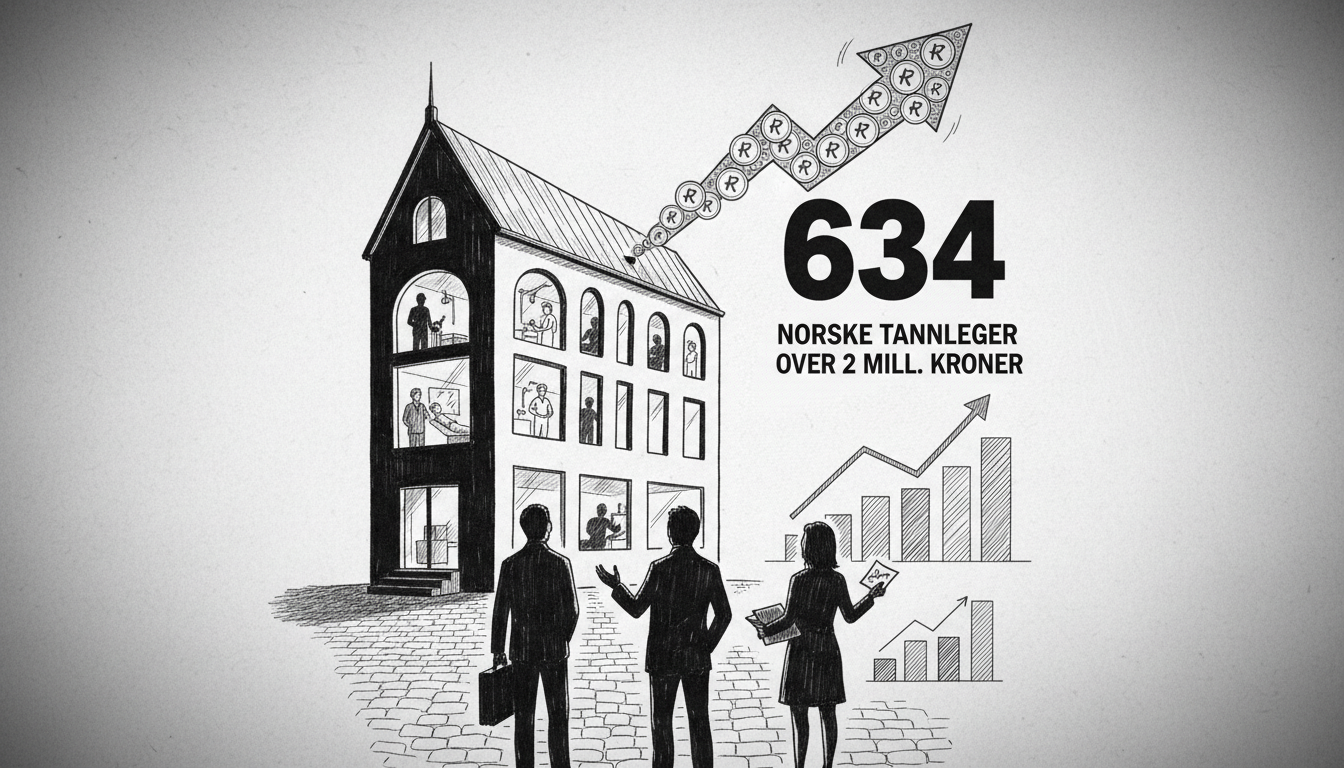
A new report reveals a sharp rise in high-earning dental professionals in Norway. The number of dentists reporting incomes exceeding two million kroner has increased significantly. This year, 634 dentists crossed that threshold, compared to 560 the previous year. That represents an addition of 74 high-earning practitioners in just one year. The highest-earning dentist in the country reported an income surpassing thirty million kroner.
The data points to a rapidly changing economic landscape within Norway's healthcare sector. Dental care in Norway operates under a mixed public-private model. Many dentists run private practices while also participating in the National Insurance Scheme for basic care. This system allows for substantial private billing, which can lead to high incomes for established practitioners in affluent areas. The concentration of such high earners raises questions about equitable access to dental services across different regions of the country.
From a policy perspective, this trend intersects with ongoing debates about income equality and public service funding. The Storting frequently reviews healthcare financing, including patient co-payments and state subsidies for dental care. High reported incomes in the sector may influence future political discussions. Some parliament members have previously called for greater transparency in healthcare pricing. This new data provides concrete figures for those debates.
The earnings also reflect broader economic conditions. Norway's strong economy and high cost of living contribute to elevated service prices, including healthcare. Dentists with specialized skills or those operating in high-demand urban centers like Oslo command premium rates. The report does not distinguish between practice owners and associates, which is a key detail. Practice owners typically earn more due to business profits, not just clinical work.
What does this mean for the average Norwegian? High dentist incomes can correlate with higher patient costs. While the public scheme covers some expenses for children and certain groups, adults often face considerable bills for advanced procedures. This financial reality can deter regular dental visits for some citizens. The government must balance supporting a quality healthcare workforce with ensuring services remain accessible. This report will likely fuel further analysis on whether the current model serves all population segments effectively.
The regional distribution of these high earners is another critical factor. It is probable that a majority are concentrated in and around major cities like Oslo, Bergen, and Stavanger. Rural areas often struggle with practitioner shortages, which this income data may indirectly highlight. The challenge for health authorities is to incentivize dental work in less populated regions without compromising service quality or professional earnings potential. This is a complex policy puzzle with no simple solution.