
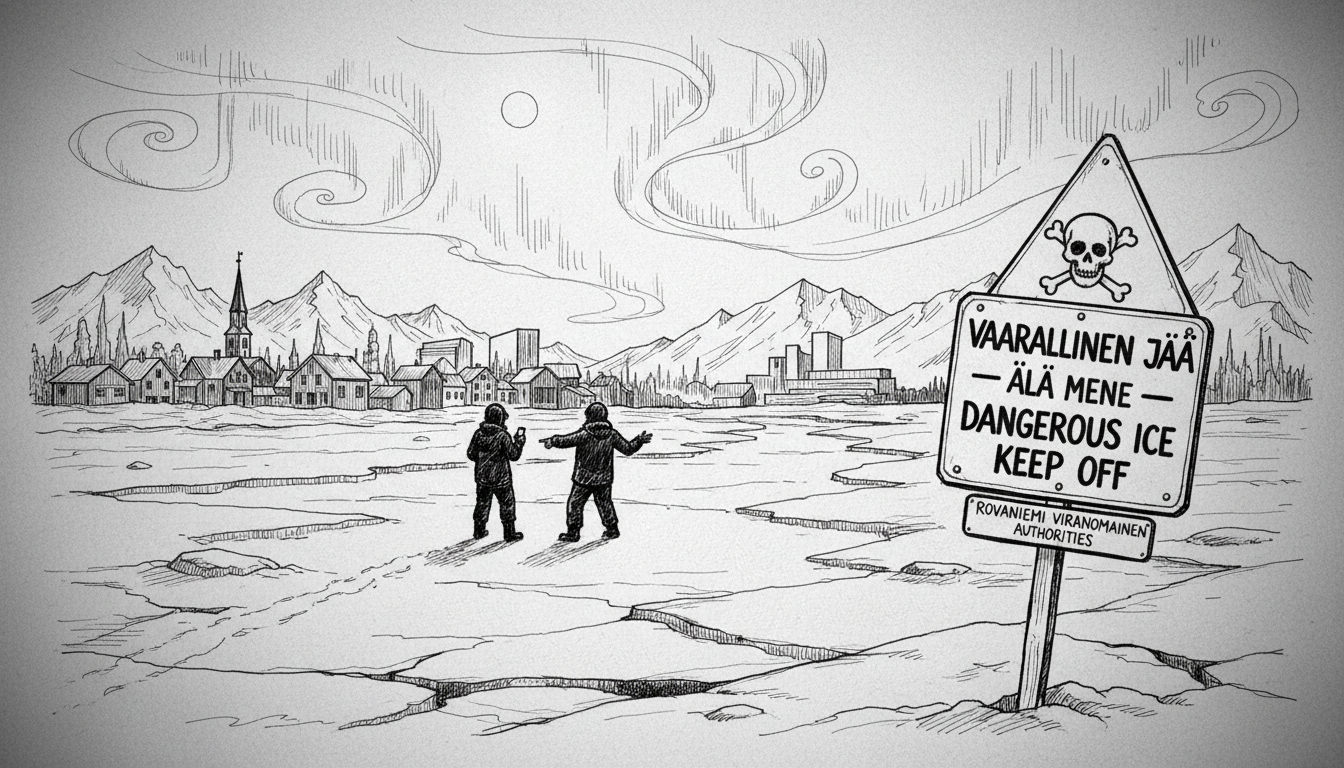
The City of Rovaniemi and the Lapland Rescue Department have issued a stark joint appeal to residents and local tourism businesses. They warn that the current ice conditions on rivers near the city center present a severe and immediate life-threatening danger. Visible tracks have been observed on the ice of the Ounasjoki River, misleading people into believing it is safe to walk or drive on. The authorities state the ice is critically weak and cannot support any weight.
Several tourism companies have already marked snowmobile routes on the Ounasjoki ice, despite official assessments confirming it is not yet safe for such activity. The ice on smaller streams and marshes is also too thin to withstand snowmobiles or pedestrians. This situation creates a major public safety challenge, particularly given Rovaniemi's status as the official hometown of Santa Claus and a premier Arctic destination. The city hosts a large number of tourists unfamiliar with the specific dangers of Nordic winter conditions.
The joint statement makes a direct plea for shared responsibility. It urges locals and businesses not to set a bad example by venturing onto the ice themselves. Tourism operators are reminded of their legal duty of care to ensure clients do not access weak ice. Businesses must also manage safety on roads and road shoulders, ensuring tourists have adequate reflective gear. Accommodation providers are asked to brief their guests on these critical safety protocols.
A specific area between the Jätkänkynttilä bridge and the railway bridge in downtown Rovaniemi is highlighted as perpetually dangerous. Ice conditions there remain hazardous throughout the entire winter season. The authorities advise that anyone seen on the ice in this zone must be instructed to move toward the shore immediately, regardless of the time of year.
The city promises to issue separate notifications once it has officially marked safe ice routes and trails for snowmobiling. This incident underscores a recurring tension in Finnish Lapland between a booming tourism economy and the immutable risks of the Arctic environment. Local municipalities bear the ultimate responsibility for public safety, but they must contend with commercial interests eager to capitalize on the short winter season. The Finnish Rescue Act places clear obligations on both authorities and businesses to prevent accidents.
This is not an isolated warning. Similar advisories are common in early winter across Finnish Lapland, but the explicit call-out to tourism companies in Rovaniemi is notable. It points to potential gaps in risk communication and compliance within the industry. For international visitors, this serves as a crucial reminder that the Arctic winter, while beautiful, demands respect for local expertise and official warnings. A misstep on thin ice can have fatal consequences in minutes, given the freezing water temperatures.
The effectiveness of this appeal now depends on cooperation from the entire community. The city and rescue services have drawn a clear line, placing the onus on businesses to act responsibly. The coming weeks will test whether commercial pressures can be balanced effectively with the non-negotiable priority of human safety in Finland's fragile northern ecosystems.