
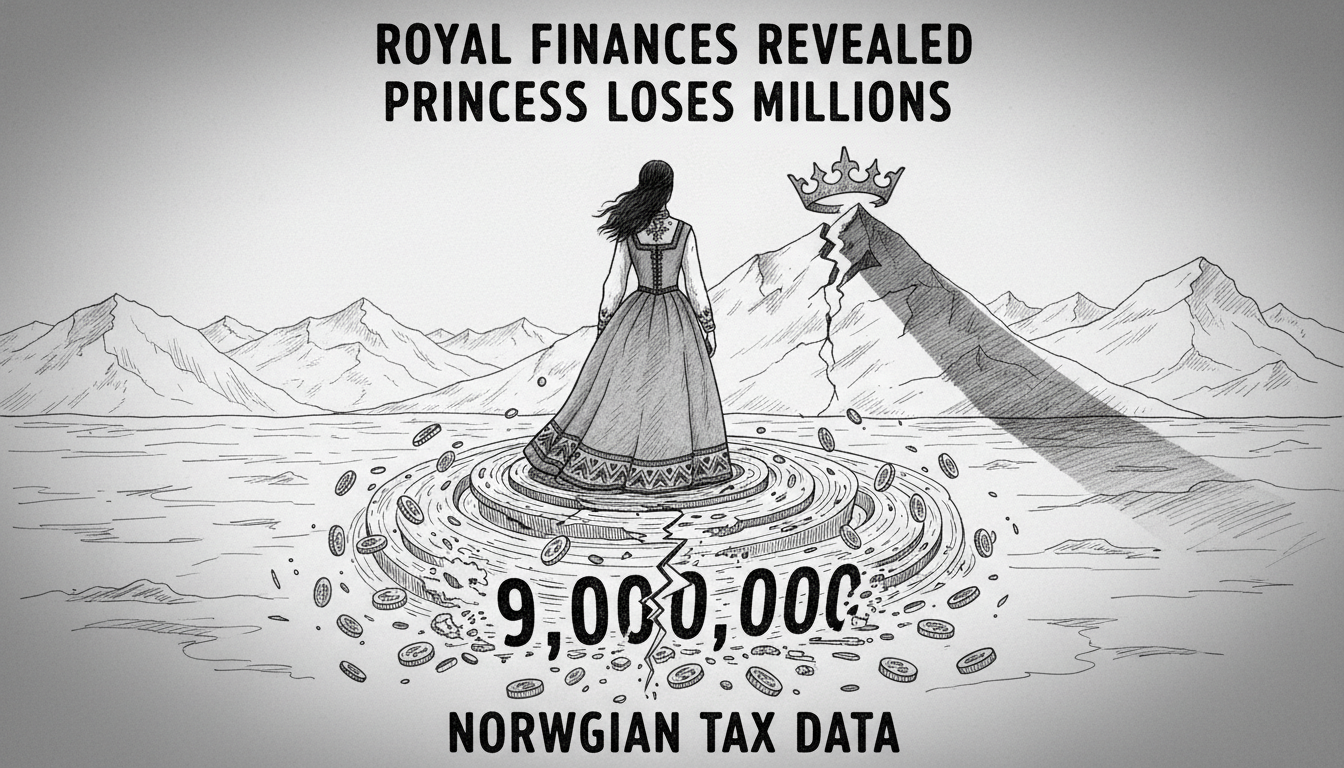
The annual publication of Norwegian tax assessment data offers a rare glimpse into the private finances of the royal family. While the King, Queen, Crown Prince, and Crown Princess are exempt from taxation and do not appear on public lists, two princesses have consented to disclosure. This transparency reveals a substantial financial downturn for Princess Märtha Louise, whose commercial ventures have faced significant challenges.
Official figures show Princess Märtha Louise's fortune declined by over nine million kroner in a single year. Her wealth fell from approximately 29.2 million kroner to just over 20 million kroner. Her annual income also dropped by more than half a million kroner, landing at 1.4 million kroner. The figures for Princess Astrid show her income fell drastically from five million kroner to 1.46 million kroner, though her fortune remained relatively stable at 37.1 million kroner.
A primary cause of the deficit is the poor performance of Princess Märtha Louise's business projects. Reports confirm she recently dissolved another company, Hest360 AS, after efforts to find new partners proved too difficult. This followed the closure of H360 Norway AS in late October due to financial trouble. The company's financial statement acknowledged challenges with profitability and operations, noting active work to identify new areas for sustainable growth.
This financial disclosure occurs within Norway's unique constitutional monarchy framework. The royal household receives an annual stipend from the Storting, Norway's parliament, to cover official duties. However, individual members pursuing private commercial activities face public scrutiny, especially when ventures fail. The situation highlights the delicate balance between royal privacy, public transparency, and personal enterprise in modern Norway.
The financial losses raise questions about the commercial risks taken by royals. Norway maintains a tradition of a working royal family, but business failures can attract negative attention. The public data provides concrete numbers for a debate often based on perception. It shows the tangible consequences of business decisions, even for those with privileged starting points.
For international observers, this story illustrates Norway's high level of fiscal transparency. The annual tax list publication is a major public event. While the core royal family remains exempt, the voluntary disclosure by other members is a notable act. It demonstrates a cultural expectation of accountability, even within the monarchy's upper echelons. The financial downturn serves as a stark reminder that commercial ventures carry real risk, regardless of one's status.