
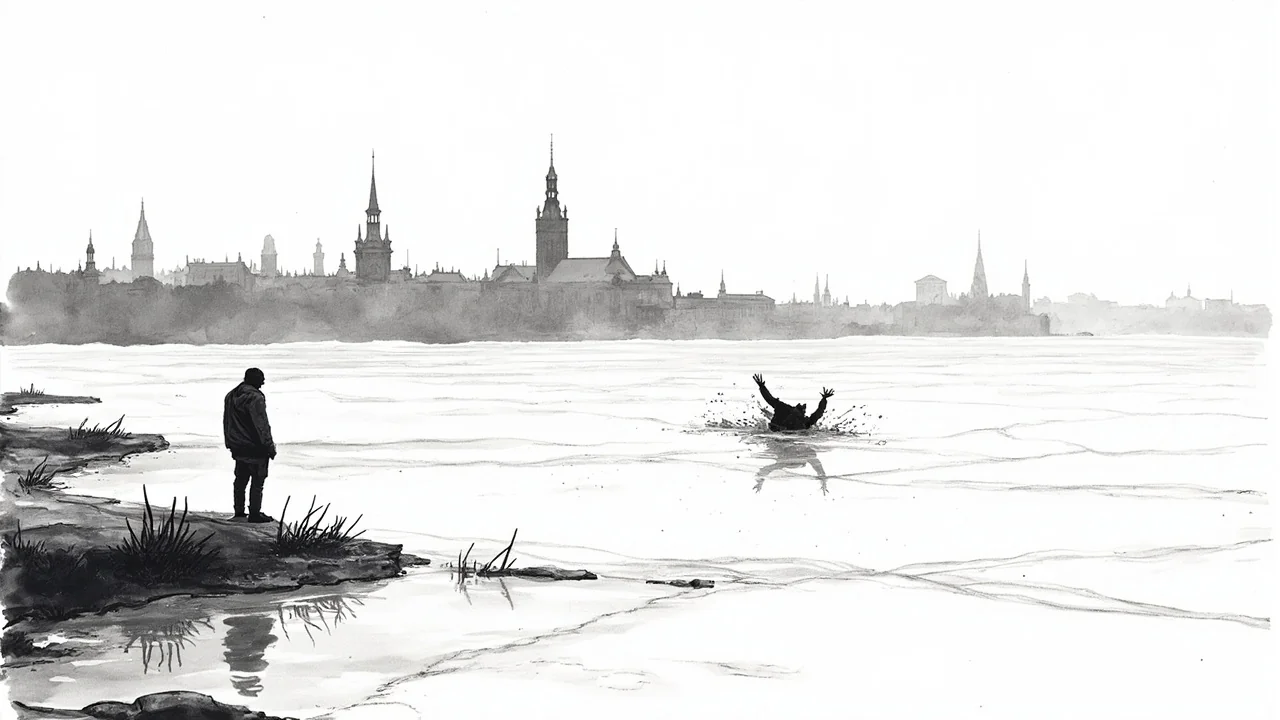
Swedish police have issued an urgent warning to stay off frozen lakes after two separate incidents where people fell through the ice in Stockholm within 24 hours. On Monday, a man and a woman fell through the ice on Lake Mälaren in the Hässelby villastad area around lunchtime. Rescue services pulled them from the water and they were taken to hospital by ambulance, with their conditions still unclear according to police spokesperson Daniel Wikdahl.
This alarming event followed another on Sunday when two people went through the ice at Karlbergskanalen in the city. Police had already warned the public about unsafe ice conditions after that first incident, a warning they strongly reiterated on Monday. The repeated accidents in the capital's popular winter landscapes have shaken the local community and prompted a wider conversation about risk during the Swedish winter.
A Dangerous Pattern Emerges
The back-to-back emergencies have created a clear pattern that authorities say cannot be ignored. Daniel Wikdahl's message was unequivocal. 'It can be repeated today. The ice is not safe,' he stated bluntly after the second rescue operation. His words carry the weight of professional experience, reflecting the grim reality that early winter and late thaw periods often present the most deceptive and dangerous ice conditions. While Stockholmers traditionally embrace the frozen waterways for skating and ice fishing, this year's conditions appear particularly treacherous.
These incidents occurred in areas where people often venture onto the ice. Karlbergskanalen, near the historic military academy, and the shores of Lake Mälaren in suburban Hässelby are both spots where locals and visitors alike are drawn to the winter scenery. The quick succession of accidents suggests that despite warnings, the perceived beauty and tradition of being on the ice are overriding safety concerns for some.
Understanding the Winter Hazard
The fundamental problem, according to rescue professionals, is the inconsistency of ice formation. Ice thickness can vary dramatically over short distances due to underwater currents, springs, or runoff from surrounding land. What looks like a solid, white surface from shore can hide dangerously thin spots. Early in the season, ice often forms in patches, creating a mosaic of stable and unstable areas that are impossible to judge with the naked eye.
The response to these incidents highlights Sweden's robust rescue infrastructure. The Swedish Sea Rescue Society (Sjöräddningen) was central to both recoveries, demonstrating their critical role not just along the coasts but on inland waters as well. Their rapid intervention likely prevented more tragic outcomes, but their work underscores the severe risk involved when individuals misjudge the ice.
A Cultural Conversation on Risk
This spate of accidents touches on a deep aspect of Swedish culture: the relationship with nature and winter. Activities on ice are woven into the national identity, from long-distance skating tours on the archipelago's frozen waters to simple afternoon walks on a local lake. The annual wait for 'safe ice' (gångbar is) is a common topic of conversation in cafes and offices across Stockholm. This cultural comfort can, at times, breed complacency.
Local authorities and organizations like the Swedish Civil Contingencies Agency (MSB) routinely publish ice safety guidelines. They advise that clear, blue ice is generally the strongest, that ice should be at least 10 centimeters thick for walking, and to never go out alone. They also stress that snow-covered ice should be avoided, as the insulating snow layer can prevent proper freezing underneath. Yet, as this week's events show, guidelines are not always followed.
The Human Cost and Community Response
While the physical conditions of the four individuals involved remain undisclosed, the psychological impact on the rescue teams and the wider community is palpable. Each emergency call represents a potential tragedy, a life-altering event for the victims and their families. For neighbors in areas like Hässelby, it is a stark reminder that danger can lie close to home, in familiar and seemingly peaceful settings.
The incidents have sparked discussions on parenting forums and local community Facebook groups, with many residents sharing the police warnings and reminiscing about safer winters in the past. Some long-time Stockholm residents note that changing climate patterns have made ice less predictable, with warmer periods interrupting steady freezing.