
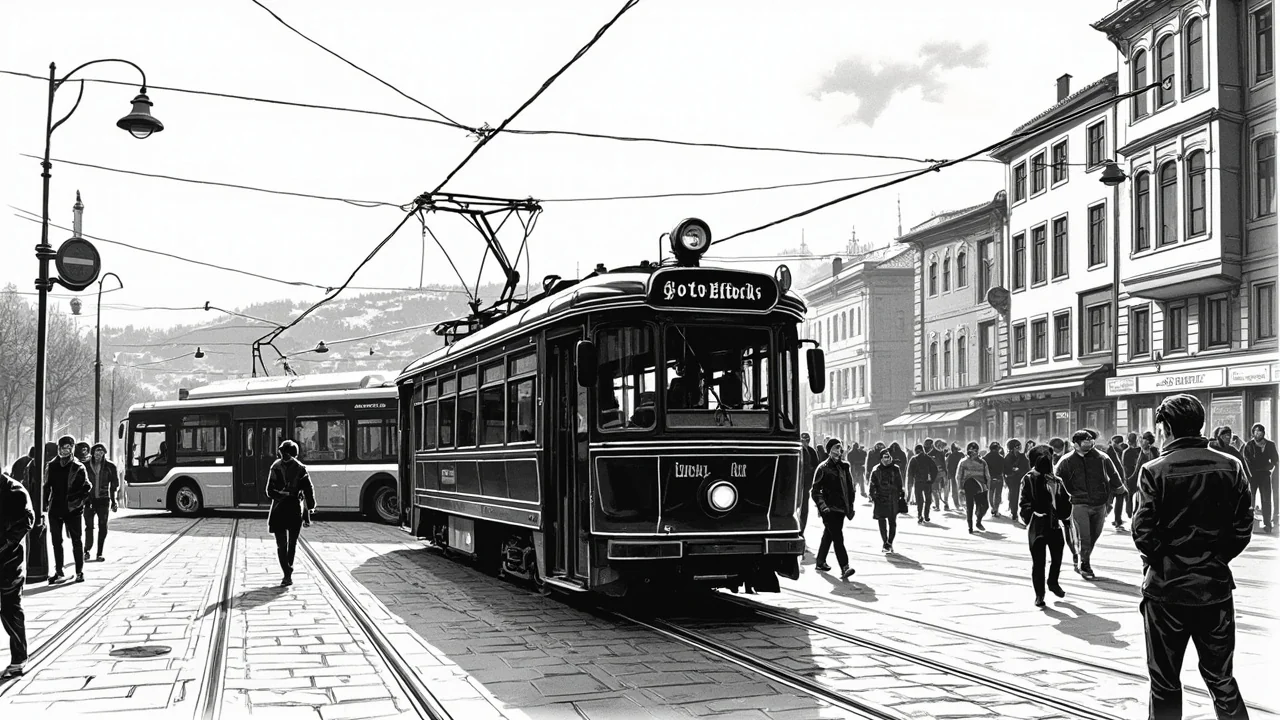
Sweden public transport in Gothenburg is slowing down—average speeds for buses and trams have dropped steadily in recent years, according to a new report from Västtrafik. The agency estimates that delays now cost the system nearly 500 million kronor annually compared to an ideal, disruption-free scenario.
The findings confirm what many daily commuters already feel: getting around Sweden’s second-largest city by bus or tram takes longer than it used to. Traffic congestion, road construction, and bottlenecks are increasingly disrupting schedules, especially during rush hours. For residents who rely on public transit—not just for convenience but as their only viable option—the slowdowns mean more time waiting, more missed connections, and growing frustration.
A Growing Problem with Real Costs
Västtrafik, the public transport authority for western Sweden, has identified traffic flow—or lack thereof—as its single biggest operational challenge. “The report is really no surprise,” said Västtrafik CEO Lars Backström. “We’ve been grappling with this for years.”
What’s changed is the scale. Since the pandemic, car traffic in Gothenburg has rebounded sharply, squeezing buses and trams into narrower windows of reliable movement. Unlike trains, which often run on dedicated tracks, much of Gothenburg’s bus network shares roads with private vehicles. Spårvägen (the tram system), while partially separated, still contends with intersections, turning cars, and delivery trucks double-parked in lanes.
The financial impact is stark. The 500 million kronor annual loss isn’t just about fuel or overtime—it reflects reduced service efficiency, lower ridership potential, and increased operational complexity. Every minute lost adds up across thousands of daily trips.
Measuring the Slowdown
To better understand where and when delays occur, Västtrafik has launched an annual mobility assessment. The first edition, released this month, tracks changes in average speed and journey time reliability over recent years. The data shows a clear downward trend: vehicles are moving slower, and arrival times are becoming less predictable—particularly during morning and evening peak periods.
This isn’t just about inconvenience. Unreliable transit discourages people from choosing it over cars, creating a feedback loop: more cars lead to worse traffic, which further slows buses and trams, pushing even more people toward driving. In a city striving to meet climate goals and reduce emissions, that cycle is deeply concerning.
Gothenburg has long prided itself on walkability and sustainable urban planning. Neighborhoods like Majorna, Linnéstaden, and Haga were designed before the car era, with narrow streets that now struggle to accommodate modern traffic volumes. Meanwhile, major arteries like Kungsportsavenyn and E6 corridors face constant pressure from through-traffic, freight, and local deliveries.
Why This Matters Beyond Commute Times
For many Gothenburg residents, especially students, seniors, and low-income households, public transport isn’t optional—it’s essential. Maria Lindström, a home care worker in Angered, depends on the number 16 bus to reach her clients across northeastern Gothenburg. “If the bus is late, I’m late,” she says. “And if I’m late too often, I risk losing my job. There’s no backup plan.”
Her experience echoes across the city. Delivery drivers, retail workers, hospital staff—all rely on predictable transit to maintain their livelihoods. When schedules slip, the ripple effects touch schools, healthcare, and local businesses.
Moreover, Sweden’s national sustainability targets hinge on shifting travel behavior away from private vehicles. If public transport becomes less competitive in terms of time and reliability, those goals become harder to reach. Gothenburg’s ambition to be fossil-free by 2030 depends not just on electric buses, but on ensuring they can actually move efficiently through the city.
What’s Being Done—and What’s Needed
Västtrafik isn’t standing still. The agency has begun advocating for traffic-priority measures, such as dedicated bus lanes, signal prioritization at intersections, and stricter enforcement against illegal parking in transit lanes. Some pilot projects are underway in central districts, but implementation remains patchy.
City planners acknowledge the challenge. “We’re trying to balance housing needs, commercial access, cycling infrastructure, and transit flow—all on streets that haven’t fundamentally changed in a century,” said a municipal transport official who asked not to be named. Coordination between Västtrafik, the City of Gothenburg, and regional road authorities is improving, but progress is slow.
Meanwhile, road construction continues. Major projects like the West Link tunnel aim to relieve pressure on the rail network, but surface-level roadworks often create temporary chaos that lingers for months. Detours reroute buses onto unfamiliar paths, increasing travel times and confusing passengers.
Critics argue that short-term fixes won’t suffice. Long-term solutions may require rethinking street design—reallocating space from cars to transit, expanding tram-only corridors, and integrating real-time traffic management systems that give priority to high-capacity vehicles.
Read more: Sweden Rate Cut Delivers Instant Relief to Floating Mortgage....
Read more: Water Leak Floods Nordstan Mall in Gothenburg.