
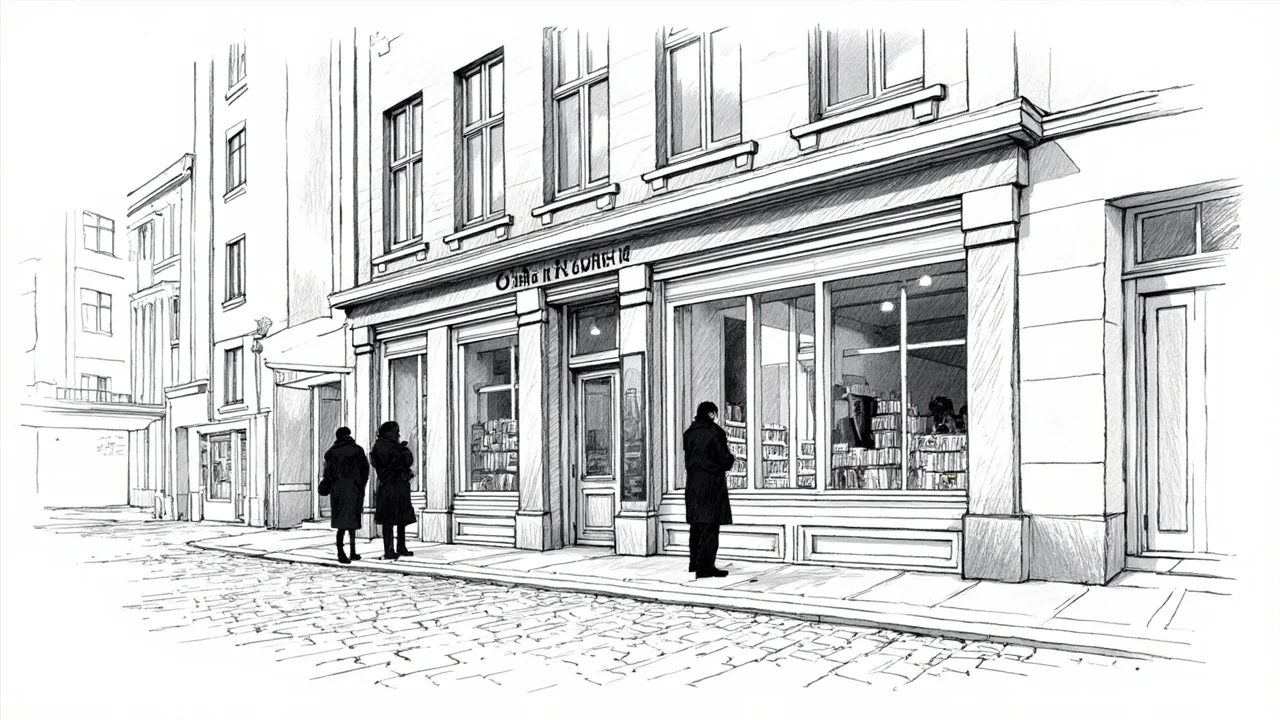
Sweden's retail landscape shifted as Akademibokhandeln at Odenplan closed its doors for good on January 18. The bookstore, a fixture in the Läkarhuset building's ground floor for decades, served its final customers, leaving only a couple of antiquarian booksellers in the immediate neighbourhood. This closure was driven by the impending demolition of its long-time home.
An Enduring Presence Fades
Micha Borg, a bookseller at the location, confirmed the closure was inevitable. 'It's really sad, but we had no choice since the building is going to be demolished,' Borg said. 'It feels strange, this shop has been here since the 60s.' The staff had long been aware of the redevelopment plans for the site, but repeated delays in the final decision made the reality feel distant until the final weeks. The closure marks the end of a specific chapter for Stockholm's Norrmalm district, removing a familiar destination for generations of students, academics, and casual readers from the fabric of Odenplan.
A Community's Reaction
In the days following the public announcement of the closure, the staff fielded numerous reactions from a disappointed clientele. Borg noted that while she had experienced a bookstore closure before, the public response to this one was significantly greater. This underscores the store's role as more than a retail outlet, it functioned as a community hub and a landmark. Mia, a colleague who had worked at the Odenplan branch for roughly 29 years, represents the deep personal and professional ties formed over the shop's long operation. Her tenure, spanning nearly three decades, highlights the stability and continuity the store provided in a rapidly evolving city centre.
The Forces of Urban Development
The shutdown of Akademibokhandeln at Odenplan is not an isolated incident but part of a broader pattern affecting physical bookstores and established retail spaces across Stockholm. Urban redevelopment, driven by high land values and demand for new residential and commercial spaces, frequently displaces long-term tenants. The Läkarhuset building's fate is a microcosm of this trend. While the promise of new construction brings modernization, it often comes at the cost of erasing localized history and reducing the diversity of street-level commerce. The loss of such stores alters the character of neighbourhoods, shifting them from eclectic collections of specialised shops towards more homogenised commercial offerings.
The Broader Context for Swedish Bookselling
Analysts observing the Swedish retail sector note that physical bookstores face a multifaceted challenge. The rise of online retail giants has transformed consumer habits, offering convenience and often lower prices. Simultaneously, changing reading habits and competition for leisure time present ongoing hurdles. While larger chain bookstores or niche independents in high-footfall areas may adapt, branches in locations undergoing significant physical transition are particularly vulnerable. The closure at Odenplan reflects these compounded pressures: a sector-wide adaptation coinciding with a specific, localised redevelopment project. The store's longevity, from the 1960s until 2024, speaks to a previously sustainable model that has now collided with contemporary economic and urban planning realities.
Looking Beyond the Empty Shelves
The departure of Akademibokhandeln raises questions about what fills the void in evolving urban centres. As Stockholm continues to grow and densify, city planners and developers face the challenge of balancing progress with preservation. Community value, historical continuity, and cultural accessibility are intangible assets not easily captured in property development models. The strong customer reaction reported by staff suggests a public awareness of these losses. The future of the site itself will be closely watched by former patrons and local residents. Will the new development include space for a cultural anchor like a bookstore, or will that function be permanently lost? The answer will help define the next chapter for Odenplan.
A Personal and Professional Ending
For the employees, the closure is both a professional and personal transition. Mia's 29-year career at that single location represents a significant life chapter. Such long tenures are becoming rarer in the modern retail economy. The process of winding down operations, managing final inventory, and saying goodbye to regular customers is a poignant task. Borg's observation about the scale of the public response likely provided a bittersweet validation of the store's importance to the community. Their experience mirrors that of countless retail workers in similar situations, where global trends and local decisions culminate in a deeply personal job change.
The Evolving Meaning of Place
Ultimately, the story of this bookstore's closure is about how cities change and what they choose to retain. Odenplan will continue to be a bustling transit hub and residential area, but its identity will be subtly altered. Physical bookstores serve as quiet sanctuaries and spaces for serendipitous discovery in an increasingly digital and fast-paced world. Their gradual disappearance from central urban locations changes how people interact with knowledge and culture in public spaces. While the business reasons for the closure are clear, the cultural and social implications are more diffuse. The finality of the demolition means there is no possibility of return, the specific ambiance, layout, and memories tied to that particular shop are now part of Stockholm's history. The city moves forward, but the question remains: what essential qualities are left behind in the rubble of progress?