
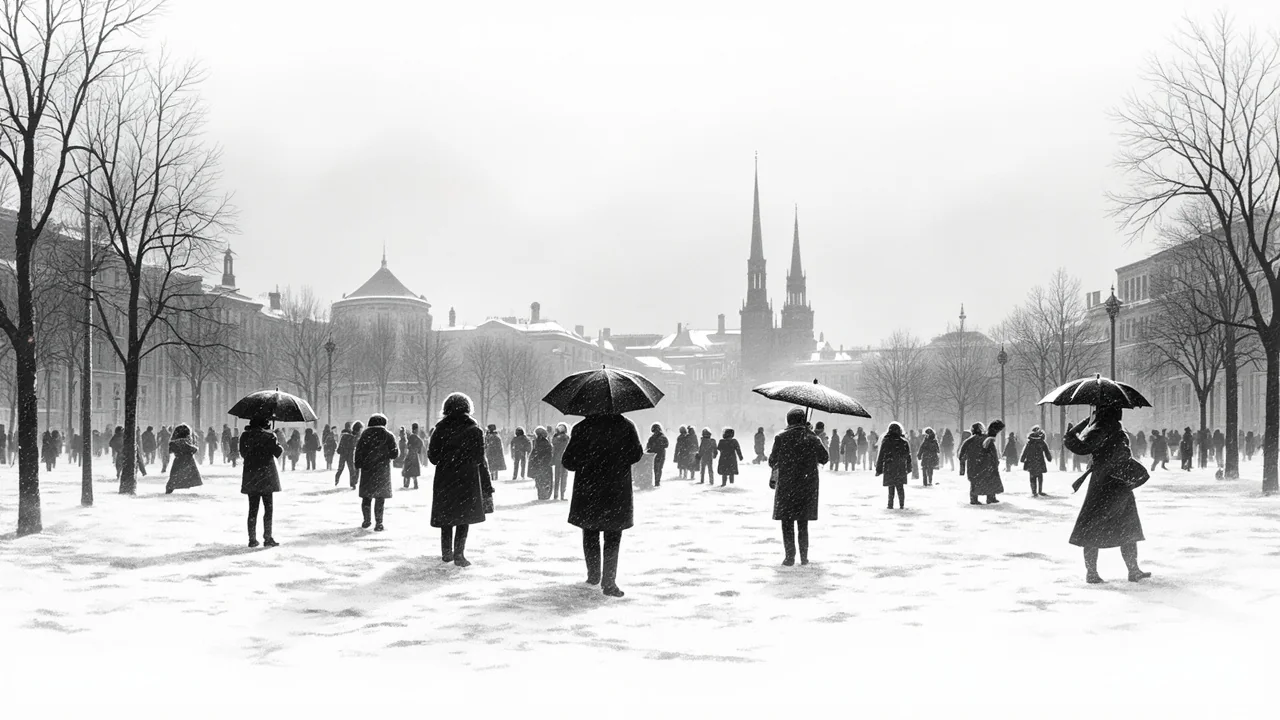
Sweden's Meteorological and Hydrological Institute (SMHI) has issued yellow warnings for significant snowfall across large parts of the country, with Stockholm bracing for 5-10 centimeters of fresh, heavy snow. The capital, along with eastern Svealand and parts of Gävleborg county, is under alert from midday until 9 PM Wednesday, transforming the city's early spring landscape back into a winter scene. This sudden shift comes as milder air pushes in, threatening to turn precipitation to rain and create sudden icy patches across southern Sweden.
For Stockholmers, the warning interrupted a week of tentative spring optimism. Cafés on Södermalm had begun setting out sidewalk tables. People in Kungsträdgården were enjoying the first faint warmth of the sun. Now, winter coats are back out, and the city's efficient but weary snow-clearing teams are on standby once more. "You could feel the change in the air this morning," said Erik Lund, a barista at a popular spot in Vasastan. "It had that wet, heavy smell. We just put the winter grit back by the door."
A Capital Braced for Winter's Return
The yellow warning, the second of three alert levels, indicates conditions that could cause significant disruption. For Stockholm, the forecast of "periodically heavy snowfall" of 5-10 cm, combined with milder temperatures, creates a specific set of challenges. The snow is expected to be wet and dense. This is the type that clogs tram lines, weighs down tree branches, and turns to slippery slush almost underfoot. It's a far cry from the light, dry powder of mid-winter.
Public transport agency SL has advised travelers to expect potential delays on bus and tram routes, though the metro system is expected to run normally. The city's streets and parks department has its fleet of plows and gritters ready. For many residents, the response is a familiar, weary routine. "I just swapped my winter tires last weekend," sighed Lena Forsberg, a teacher from Älvsjö. "It feels like a betrayal by the season. We've earned our spring."
The Ripple Effect Across Southern Sweden
While Stockholm captures the headline, the SMHI warnings paint a broad picture of a country in meteorological transition. A separate yellow warning for snow covers a vast swathe of central Sweden from 5 AM to 6 PM, affecting counties including Värmland, Örebro, and parts of Dalarna. Here, up to 10 cm of snow could accumulate, impacting road travel across the region.
Perhaps more treacherous is the concurrent yellow warning for sudden icy conditions across the entire south of Sweden. This alert, valid through Wednesday morning and into the afternoon, stretches from Skåne and Blekinge up through the Gothenburg region and into parts of Småland and Östergötland. The cause is classic early spring weather: precipitation falling on frozen ground as temperatures hover around zero. This creates a thin, often invisible layer of black ice, a major hazard for pedestrians and drivers alike.
The Cultural Rhythm of Swedish Weather
This late-season snow is more than an inconvenience; it taps into a deep-seated cultural relationship with weather in Sweden. The concept of "vårvinter" (spring-winter) is a recognized, if grudgingly accepted, part of the annual cycle. It tests the famous Swedish principle of "lagom"—moderation and balance—as patience wears thin. After the long darkness of winter, the collective craving for light and warmth is palpable. A snowstorm in April feels like a step backwards.
Yet, there is also a form of resilience. Weather events like this become shared experiences, topics of conversation in queues and over fika. They highlight the efficiency of municipal services and the social contract of preparedness. "It's a reminder that we don't control nature, even in a modern society," noted cultural commentator Maja Pettersson. "We have this collective memory of coping. We check the SMHI app, we dig out the proper boots, we help a neighbor push a car. It's a very practical form of community."
For newer residents, particularly those from milder climates, such abrupt changes can be startling. "Where I'm from, a forecast like this would shut down the city," said Anya Patel, who moved to Stockholm from London two years ago. "Here, it's a Wednesday. The plan is to carry on, just with more layers and maybe leaving ten minutes earlier. It's impressive, but I'm still not used to it."
Navigating the Wet Snow and Icy Patches
The practical advice from authorities is clear and pragmatic. For drivers in the warning zones, SMHI recommends increased caution, greater following distances, and ensuring vehicles are equipped for winter conditions—a legal requirement in Sweden that remains in effect in many areas. For pedestrians, the threat is the dual one of slippery snow and hidden ice. The heavy, wet snow can obscure icy patches underneath, making every step a potential hazard.
This is where local knowledge comes in. Stockholmers know which sidewalks are slow to be cleared. They know the corners where wind funnels down and creates drifts. They understand the importance of proper footwear, not just for warmth but for grip. The sight of people switching to ice grips on their shoes is a common one. This event is a test of both infrastructure and individual preparedness, a core aspect of Swedish society where personal responsibility is emphasized.
Looking Beyond the Immediate Forecast
While the focus is on Wednesday's disruption, the larger question is what this means for the rest of the spring. A single late snowstorm is not uncommon. A prolonged return to winter conditions, however, can have broader effects. It delays the start of outdoor dining and the vibrant street life that defines Stockholm in the warmer months. It impacts retail as spring clothing collections sit untouched. It can even affect mood, with studies linking prolonged winter weather to seasonal affective disorder.
For now, the city and much of southern Sweden are in a holding pattern. The snow will fall. It will be cleared. Life will adapt, as it always does. The promise of spring is merely postponed, not cancelled. The real cultural marker will come after the snow melts. When the sun returns and the temperatures climb again, the collective sigh of relief and the rush to soak up the light will be all the more intense. The contrast between the gray, snowy Wednesday and the hopeful, bright day that follows is the essence of a Nordic spring—a season earned, not given.
As the afternoon light fades over a snow-dusted Gamla Stan, the city will carry on. Trams may run slower. Bicycles will be fewer. But the cafés will be warm, the streets will be cleared, and the SMHI app will be refreshed, looking for the next change on the horizon. Winter's last stand is always a memorable, if challenging, chapter in the Swedish year.