
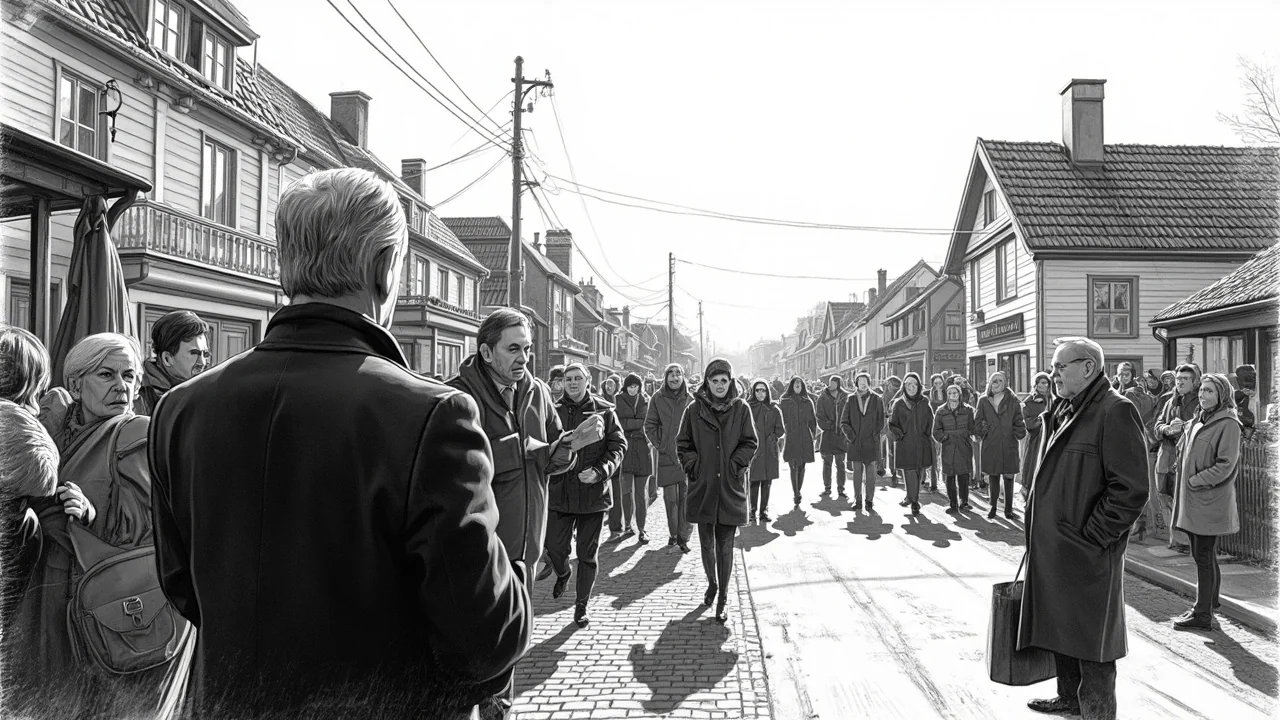
Swedish Prime Minister Ulf Kristersson personally knocked on a voter's door in Västerås this week, an unusual move for a sitting head of government. The visit to resident Fredrik's home was part of a coordinated three-day tour by senior ministers aiming to connect directly with citizens ahead of key parliamentary sessions.
From Rosenbad to Doorsteps
Prime Minister Ulf Kristersson was accompanied by Finance Minister Elisabeth Svantesson and Justice Minister Gunnar Strömmer, both fellow Moderate Party colleagues. Their presence marked a significant deployment of political capital outside the government offices in Stockholm's Rosenbad district. Fredrik, the Västerås resident, recounted the unexpected meeting, noting he even took a picture with the Prime Minister. This direct, unscripted interaction represents a strategic shift in how the Swedish government is engaging with the public between formal Riksdag decisions.
A Three-Day Conversation
The door-knocking in Västerås was one of several stops on the ministers' three-day tour across communities. The initiative is designed to move beyond the debating chamber of the Riksdag building and into neighborhoods where government policy has its ultimate impact. While specific policy details were not disclosed in the brief report, the presence of both the Finance and Justice ministers suggests conversations likely touched on economic security and law and order. These are central themes for the current government coalition and frequent subjects of intense debate in the Swedish Parliament.
Policy at the Doorstep
During the conversation, Prime Minister Kristersson revealed the most common question he receives from the public on such visits. Although the exact question was not specified in the available material, such feedback is often funneled back into policy discussions within the government districts of Stockholm. This grassroots intelligence can occasionally influence the framing of legislative proposals or public communications strategies before they are formally presented to the Riksdag. The tour's timing is not coincidental, as it builds a narrative of public engagement to support the government's upcoming legislative agenda.
Historical Context of Direct Engagement
While modern Swedish politics is often characterized by digital campaigns and media appearances, physical door-knocking has a long, if intermittent, history. It recalls a more traditional form of retail politics that has become less common among top-tier national figures. For a Prime Minister to participate so visibly signals a deliberate attempt to project approachability and to gather unmediated opinions. The action stands in contrast to the highly formalized processes that typically govern interactions between the Swedish government and its citizens, which usually flow through administrative agencies or elected representatives.
The Ministers' Roles and Signals
Finance Minister Elisabeth Svantesson's participation underscores the economic dimension of the conversations. As the minister responsible for the state budget, her direct listening provides context for fiscal decisions made in Stockholm. Similarly, Justice Minister Gunnar Strömmer's presence highlights the government's focus on crime and legal policy, areas frequently subject to local concerns. Their joint appearance with the Prime Minister demonstrates a unified government front, taking its key messages directly to voters rather than relying solely on press conferences from the capital.
The Impact on Stockholm Politics
Events like the Västerås visit are more than photo opportunities. They are a component of political strategy that can shape the tone of debates in the Swedish Parliament. Anecdotes and concerns gathered from citizens can be cited during Riksdag speeches to ground policy arguments in real-world experiences. This effort to bridge the gap between the political establishment in Stockholm and voters in municipalities like Västerås is a continuous challenge for any administration. The current government's decision to invest three days in this tour indicates it is a priority.
A Personal Moment in a Political Process
For Fredrik in Västerås, the moment was personal. He mentioned bringing his son down to meet the unexpected visitors, a human detail that frames the political event within the context of family and daily life. These interactions, however brief, temporarily dissolve the formal barrier between the highest officials of the Swedish government and the citizens they serve. They serve as a tangible reminder that behind every government policy Sweden enacts and every vote in the Swedish Parliament, there are individuals and households experiencing the consequences. The success of such tours is not measured in immediate political gains but in the gradual accumulation of public trust and understanding, which remains the currency of effective governance.