
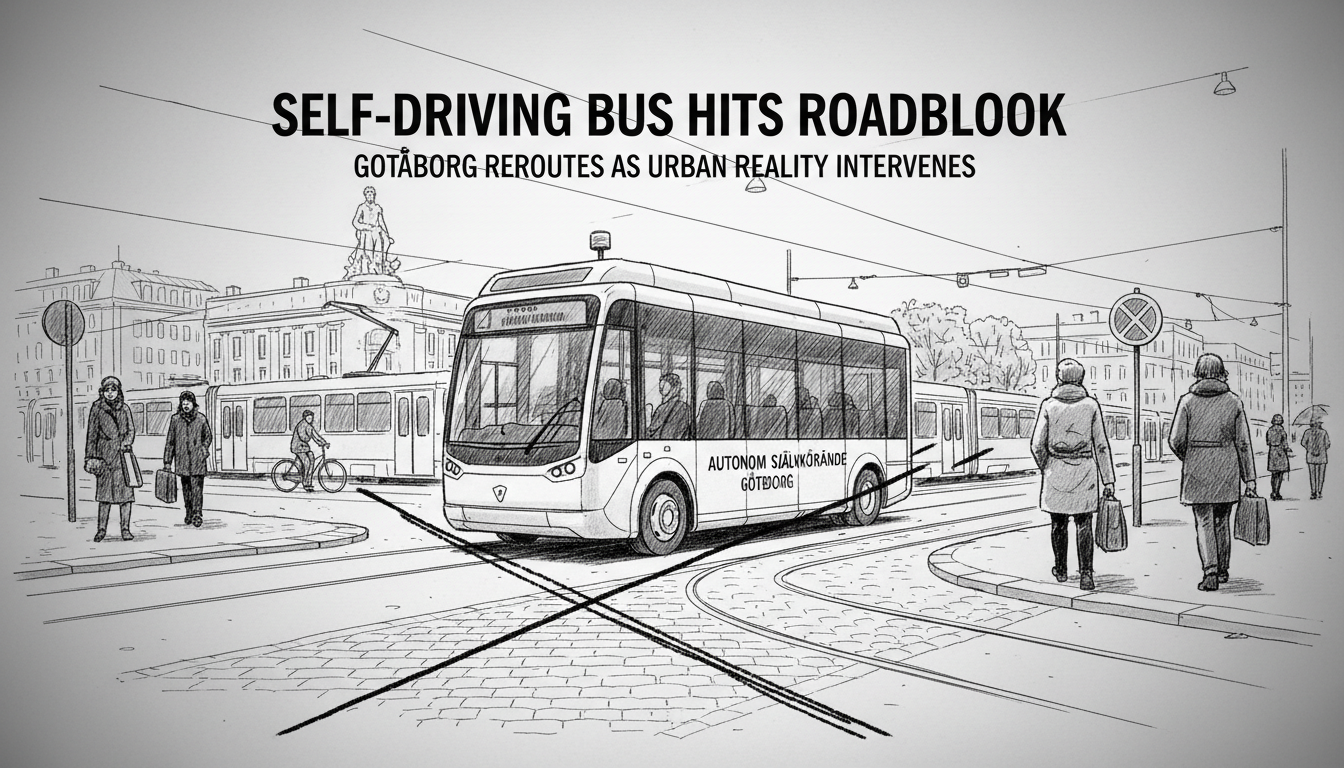
If you have been waiting to hop on that self-driving bus in Gothenburg, you will need to wait a bit longer. The autonomous vehicle pilot in the city has hit a major snag. The complex road layouts in the Gårda area and the traffic chaos at Polhemsplatsen proved too difficult for the technology to handle. Transport authority Västtrafik now must make a U-turn and find a new route for training.
This is not just a minor technical hiccup. It is a reality check for Sweden's ambitious plans for automated public transport. The pilot, which aimed to test driverless shuttles in real urban conditions, has stumbled on the very unpredictability of city life. The decision to move the bus highlights a core challenge. Can artificial intelligence truly navigate the organized chaos of a Swedish city center?
Polhemsplatsen is a notorious junction. It is a confluence of trams, buses, cars, bicycles, and pedestrians all moving in a complex dance. For a human driver, it requires constant vigilance and split-second decisions. For a sensor-driven vehicle, the density of moving objects and the lack of perfectly predictable patterns creates a maze of potential conflicts. The system, it seems, was overwhelmed.
This setback speaks to a broader trend in Swedish society. There is a strong push for technological solutions to modern challenges, from climate goals to public services. Yet this story shows the gap between controlled testing environments and the messy reality of urban spaces. Sweden is a leader in innovation, but its cities are living ecosystems, not laboratories.
What does this mean for the future? Västtrafik officials said they remain committed to the project. They will now search for a less demanding route, likely a more controlled environment like a business park or a university campus with lighter traffic. This is a pragmatic step, but it also delays the dream of seeing these buses integrate into the heart of the city's transport network.
For international observers, this is a familiar story playing out in cities from San Francisco to Singapore. The promise of autonomous vehicles is immense, but the path is littered with unexpected obstacles. In Sweden, known for its orderly traffic and high-tech adoption, this pause is particularly telling. It proves that some human skills, like navigating social spaces and interpreting ambiguous situations, are incredibly hard to replicate with code.
The bus will roll again, just on a simpler path. The journey toward a driverless future in Swedish cities continues, but it just got a little longer and more complicated. The technology must learn to read the city, not just the road.