
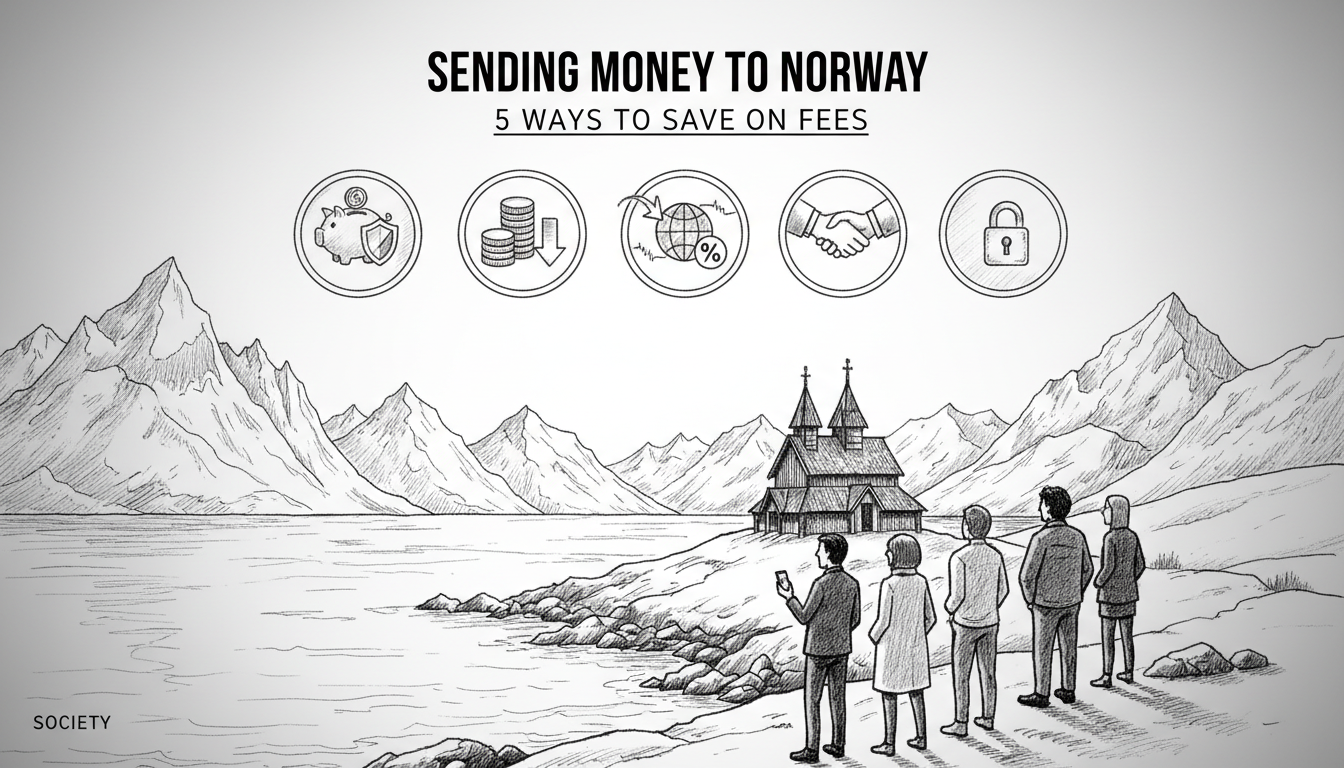
Sending money to Norway costs international workers and businesses millions in hidden fees each year. A 10,000 euro transfer can lose 400 euros before it reaches a Norwegian bank account. This financial drain occurs through layered banking fees and marked-up exchange rates, often erasing around 5% of the total sent. For a country with a strong economy and a high standard of living, attracting expats and global freelancers, optimizing these cross-border payments is crucial. Norway maintains its own currency, the Norwegian krone (NOK), managed by Norges Bank, which adds a layer of complexity for senders using euros, dollars, or pounds.
The Hidden Cost of Traditional Banking
International money transfers typically move through correspondent banking networks. Each bank in the chain deducts a fee for processing. The sender's bank also often applies a hidden markup of 3-4% on the exchange rate. This means the rate a customer sees is worse than the real interbank rate traded on global markets. For someone transferring 10,000 euros at an average 2023 rate of 1 EUR to 11.5 NOK, a 4% markup could mean receiving over 4,600 NOK less than expected. Traditional banks rarely show this cost clearly, presenting only a flat transfer fee while profiting on the currency conversion.
“Customers focus on the stated transfer fee, but the exchange rate margin is where the real cost lies,” explains a financial analyst specializing in cross-border payments. “It’s an opaque practice that digital platforms have successfully challenged by offering transparency.”
Digital Challengers Versus Traditional Banks
The solution for many is to bypass traditional banks entirely. Digital money transfer services operate on different models. Companies like Wise built their system on currency matching. They use local bank accounts in multiple countries to hold currency pools. When you send euros to Norway, Wise matches your transfer with someone needing to send kroner out of Norway. This peer-to-peer model often avoids international wire transfers altogether, allowing the company to offer the real mid-market exchange rate and charge a single, transparent fee.
For euro-to-krone transfers, Wise charges an average fee of 0.5%. Transfers usually complete within one business day. The platform shows the exact fee and the final amount in NOK before the user confirms the transaction. This transparency has forced larger banks to re-evaluate their pricing, though many still retain complex fee structures.
Comparing Your Transfer Options
Beyond Wise, other specialized services cater to different needs. Revolut, a digital banking app, offers fee-free international transfers during weekdays using the interbank exchange rate. This makes it excellent for smaller, regular transfers. However, for transfers over 10,000 euros monthly or for transactions on weekends, a 1% fee applies. Its app-based model is popular with tech-savvy users and freelancers managing multiple currencies.
For large transfers, such as property purchases or business transactions, services like OFX are tailored for high-value moves. They provide locked-in exchange rates for transfers over 10,000 euros, protecting against market swings. OFX assigns a personal dealer to handle complex transfers, offering a level of service similar to a traditional bank but with more competitive pricing. They make money on a smaller exchange rate margin rather than high fees.
| Service | Best For | Key Feature | Typical Speed |
|---|---|---|---|
| Wise | Everyday Transfers | Transparent, low-cost model | 1 Business Day |
| Revolut | Small, Regular Transfers | Free weekday transfers | Instant-1 Day |
| OFX | Large Amounts (>€10k) | Rate locking, personal dealer | 1-2 Business Days |
Strategic Timing and Avoiding Pitfalls
Currency markets fluctuate constantly. The Norwegian krone's value changes against the euro, dollar, and pound daily. Transferring 10,000 dollars on a Tuesday versus a Thursday could result in a difference of 500 kroner or more at the receiving end. Experts recommend using tools to monitor these movements. Apps like XE Currency can send alerts when your target exchange rate is hit, allowing you to execute a transfer at an optimal time.
Financial analysts also advise against transferring on weekends or holidays when markets are closed. Rates can be less favorable, and processing is delayed. For very large sums, a strategy called ‘averaging’ can help. This involves splitting the transfer into several smaller amounts sent over a period of time. This averages out the rate volatility, ensuring you don’t send the entire amount at a temporary low point.
“Norway’s krone can show seasonal trends, often influenced by energy markets and central bank policy,” says a market strategist. “Being aware of these broader patterns, like potential strengthening in autumn, can inform timing for larger planned transfers.”
Another common mistake is forgetting the recipient’s bank fees. While Norwegian banks like DNB or Nordea often receive international payments via the efficient SWIFT network, they may still deduct a small incoming fee, sometimes around 75 NOK. Always confirm this with the recipient and factor it into your total cost calculation.
The Expert Perspective on Saving
The consensus among financial experts is clear: never use your home bank’s standard international transfer service without checking alternatives. Major global banks often have the highest total costs. The first step for anyone sending money to Norway should be to use an independent comparison tool.
Websites like Monito or SaveOnSend aggregate real-time costs from over 20 providers. You enter the amount you’re sending and your currencies, and the tool shows the total NOK that would arrive at the destination, including all fees and exchange rates. This provides a true cost comparison that bank websites seldom offer.
For those making regular transfers, such as expats sending salary or freelancers paying invoices, setting up scheduled payments is a smart move. Most digital platforms allow you to automate monthly transfers. This not only saves time but can also secure consistent rates through standing orders, protecting you from forgetting and making a rushed, expensive transfer later.
Norway’s economic landscape, powered by its vast sovereign wealth fund and energy sector, continues to attract international capital and talent. As money flows into the country, the methods for sending it are undergoing a digital transformation. The old, costly corridors of correspondent banking are being replaced by transparent, efficient digital pathways. For individuals and businesses, understanding this shift is the key to ensuring more of your money arrives where it’s supposed to be—in your Norwegian krone account, ready to use.