
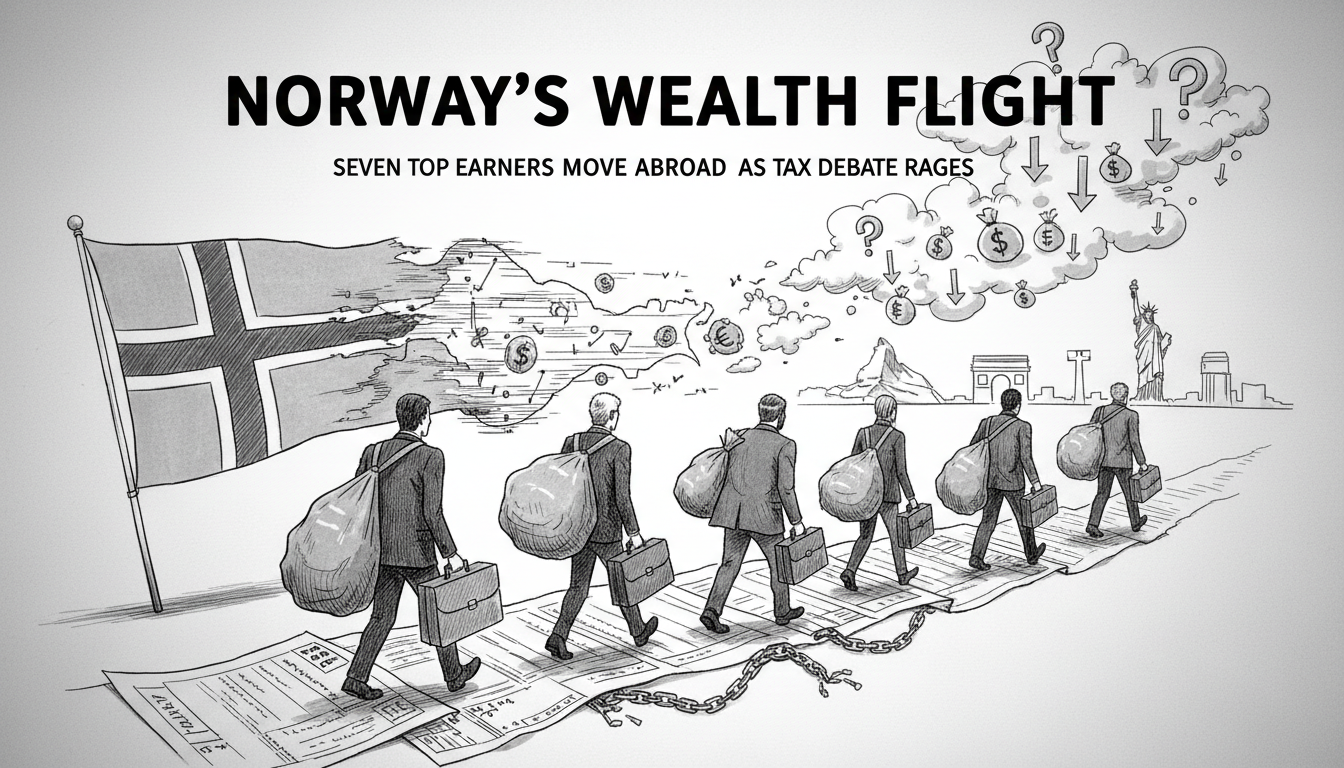
New tax data reveals a striking trend among Norway's highest earners. Seven of the ten individuals with the largest reported incomes last year no longer reside in the country. This exodus of top-tier wealth raises immediate questions for Norwegian tax policy and economic planning. The figures show a clear pattern of high-net-worth individuals relocating to nations with different fiscal regimes.
Carl Ove Utkilen, a 34-year-old heir to the Bergen-based shipping company Utkilen AS, topped the income list. He reported earnings of 1.84 billion Norwegian kroner. He has since moved to Milan, Italy. In second place was Kjetil Strand from Harstad, with 910 million kroner in income. He relocated to Switzerland. Shipping heir Peder Ludvig Monrad-Hansen Lorentzen, who earned 765.5 million kroner, also now lives in Switzerland.
The most prominent name on the list is industrialist Kjell Inge Røkke. He earned 518.8 million kroner, placing fourth. Røkke moved abroad in the previous year and now has no registered fortune in Norway. Other departures include tech entrepreneur Andre Backen, who moved to California, and Ståle Schumacher of Domeneshop, who relocated to Switzerland. Pig farmer Ove Henrik Mørk Eek now resides in Latvia.
Only three of the top ten earners remain in Norway. All three are heirs to major family fortunes. Oscar Alexander Garmann Wilhelmsen of the Wilhelmsen shipping dynasty earned 504.3 million kroner. Else Helene Sundt, a shipping heiress, earned 302.5 million kroner. Katharina Kvasnes Andresen of the Ferd investment group earned 259 million kroner.
This trend directly impacts Norway's tax base. The individuals who left paid substantial sums before their departure. Røkke paid 90.5 million kroner in tax, Utkilen paid 694.8 million, and Strand paid 337.7 million. Their future contributions will be collected by other jurisdictions. The debate over wealth taxation and competitiveness is not new in Norwegian politics. These figures provide fresh fuel for that discussion in the Storting.
Some politicians argue high tax rates drive away the talent and capital needed for investment. Others contend that a fair society requires a progressive tax system. The loss of such significant declared income poses a practical challenge for long-term fiscal forecasts. It also touches on national sentiment regarding commitment to the Norwegian social model.
The data underscores a global reality. Extreme mobility of capital and talent allows the wealthy to choose their tax domicile. For a nation like Norway, with a robust welfare state funded by high taxation, this creates a persistent tension. The government must balance equity with economic dynamism. This latest tax list makes that balancing act more visible than ever. The policy implications will be debated in committee rooms in Oslo for months to come.