
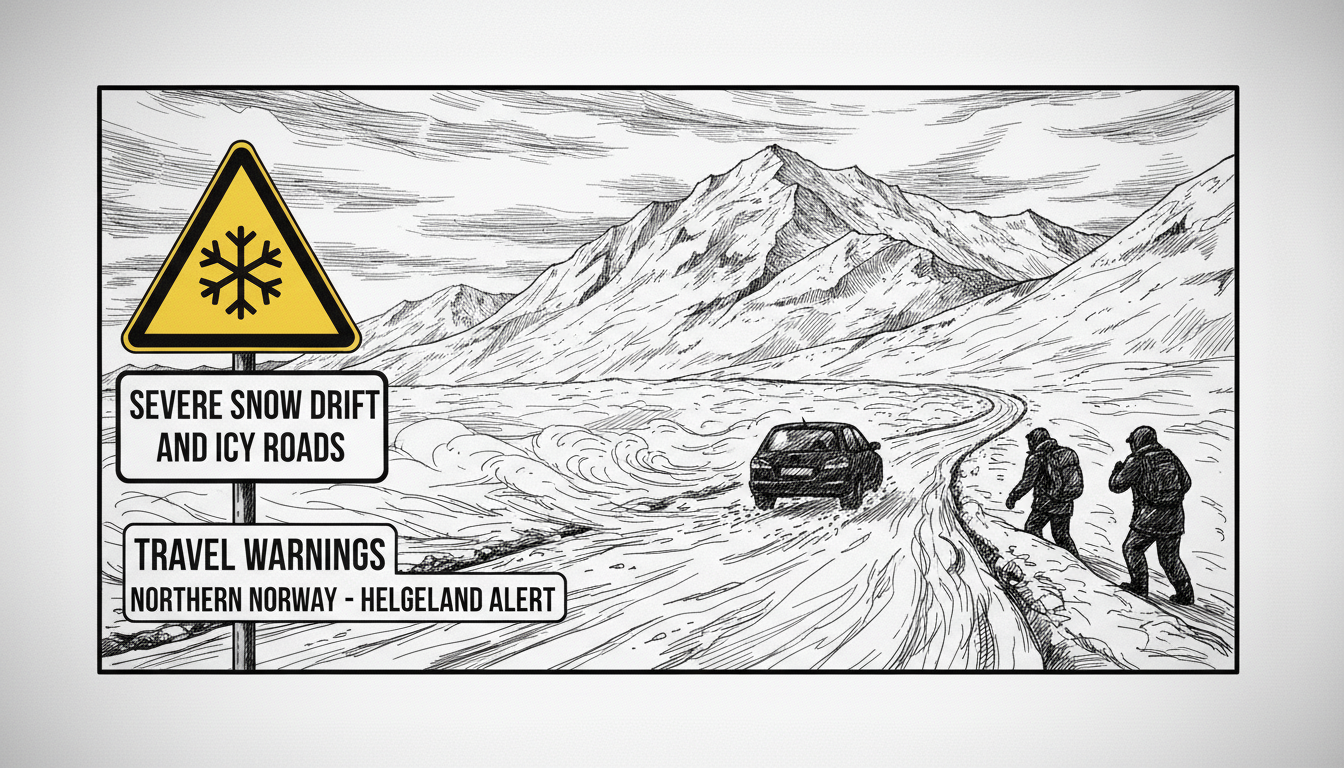
The Norwegian Meteorological Institute has issued a yellow-level danger warning for parts of Helgeland in Nordland county. A severe snow drift is expected in mountain areas overnight into Tuesday. The warning combines heavy snowfall with easterly gales in inland regions, including the critical Saltfjellet mountain plateau. Authorities are urging people to avoid unnecessary travel in exposed areas. The warning remains in effect through Tuesday afternoon.
Later in the afternoon, a local danger of ice is forecast for large parts of Helgeland. Freezing rain, beginning in southern areas, could create extremely difficult driving conditions. This type of precipitation, known as 'hålkeføre' in Norwegian, creates a nearly invisible and treacherous layer of ice on road surfaces.
This weather event highlights the persistent infrastructure challenges in Norway's northern regions. The Saltfjellet plateau, a key transport corridor for the E6 highway, is notoriously vulnerable to rapid weather shifts. Road closures here can sever the vital land connection between southern and northern Norway, disrupting freight and passenger travel for days. The warning system's activation reflects a standard but critical protocol for Arctic nations, where weather directly impacts public safety and economic activity.
For international observers, this news underscores a fundamental reality of life and commerce in the High North. Norway's economy, particularly its offshore oil and gas sector centered further north in the Barents Sea, relies on predictable logistics and safe transit for personnel and equipment. While the direct impact of this specific warning is localized, it serves as a microcosm of the broader environmental pressures facing Arctic operations. The government's consistent investment in weather monitoring and public alert systems is a non-negotiable cost of operating in this climate.
The immediate policy implication is straightforward: heed the warnings. The longer-term analysis points to the need for continued resilience planning. As climate patterns shift, the frequency and intensity of such events may change, requiring adaptive strategies for Norway's northern communities and industries. The direct, no-nonsense communication from meteorologists—telling people to stay off the roads—is a pragmatic response to a clear and present danger. It is a reminder that in Norway, nature often has the final say, regardless of human schedules or economic plans.