
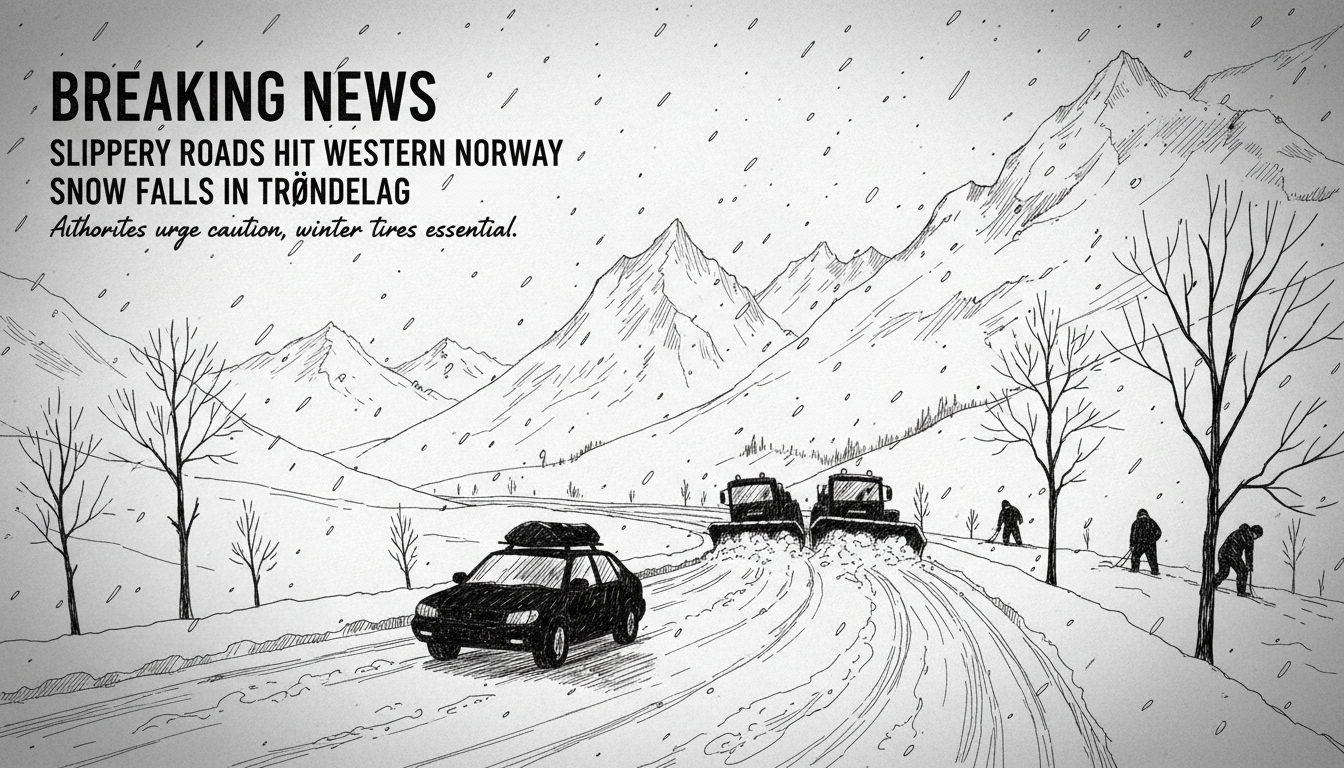
Drivers across western Norway face hazardous conditions Tuesday morning. Icy roads create dangerous situations in the Stavanger area and south of Bergen toward Os and Fana. Meanwhile, heavy snowfall blankets roads in Trøndelag region.
Road authorities confirm challenging driving conditions in multiple locations. Traffic operator Kjetil Hodnekvam reports numerous slippery road alerts across the district. The E39 highway at Forus presents particular danger. Roads from Sandnes and southward remain extremely slick.
Contractors work continuously to spread gravel on affected roads. They struggle against rapidly changing weather patterns. Albert Sherington, another traffic operator, explains the difficulty. Crews treat roads only to have them refreeze shortly after. This cycle repeats throughout the morning.
Meteorologist Julie Solsvik Vågane warns the challenging conditions will continue. Showers come and go unpredictably. Bergen likely faces more precipitation in coming hours. While Wednesday and Thursday may bring sunshine, mornings will remain cold and slippery. This won't be the last day of difficult driving conditions this season.
In Trøndelag, snowplows work overtime to clear accumulating snow. Multiple roads have closed completely due to weather conditions. Traffic operator Linn Nilsen urges drivers to allow extra travel time. She emphasizes driving according to conditions and ensuring proper tires.
Norwegian winter driving requires special preparation. The country's varied terrain creates microclimates that challenge even experienced drivers. Coastal areas like Vestlandet often face ice while inland regions deal with heavier snow. This geographical diversity means conditions can change dramatically within short distances.
International visitors often underestimate Norwegian winter roads. The combination of coastal moisture and freezing temperatures creates particularly treacherous black ice. Local drivers know to equip vehicles with proper winter tires, but rental cars sometimes lack adequate preparation.
Road maintenance crews follow strict protocols during winter months. They monitor temperatures closely and deploy resources based on real-time conditions. Still, sudden weather shifts can outpace treatment efforts. This creates the cycle of treatment and refreezing that drivers experienced Tuesday.
The economic impact of such weather events extends beyond immediate travel delays. Businesses face supply chain disruptions when major highways like E39 become hazardous. Schools and workplaces experience absenteeism as commuters struggle with dangerous conditions.
Norwegian authorities maintain robust winter preparedness systems. Yet nature sometimes overwhelms even the best preparations. Drivers must remain vigilant throughout the winter season, as conditions can deteriorate rapidly without warning.