
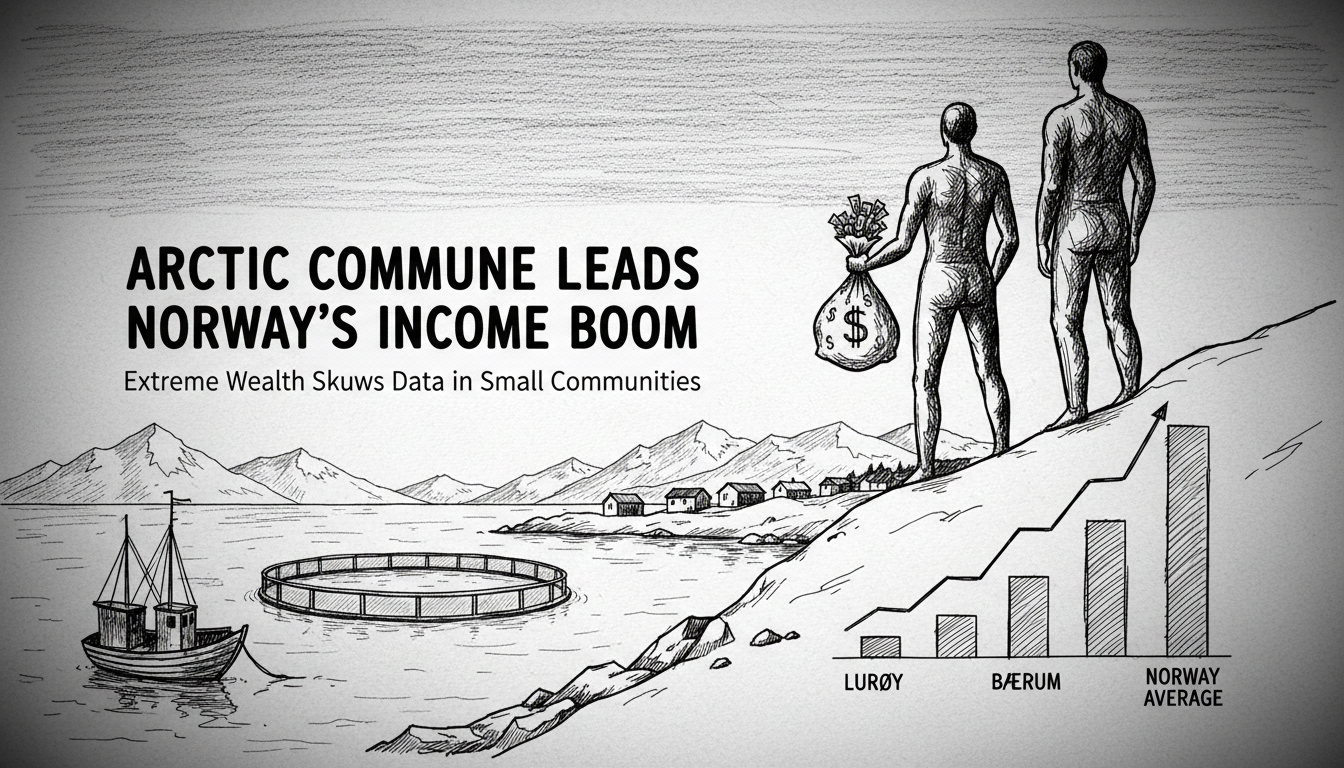
A remote Arctic commune has unexpectedly taken the top spot in Norway's annual income rankings. Lurøy, a municipality of just 1,900 residents in Nordland county, now boasts the nation's highest average income. This development ends a long-standing streak held by the affluent suburban commune of Bærum. The shift highlights the outsized impact of individual wealth in small communities and sparks a conversation about economic disparity within Norway's egalitarian model. The annual tax list publication provides a unique snapshot of personal finances across the country, revealing surprising trends beneath the surface of national averages.
The average income in Lurøy reached 664,432 Norwegian kroner, a sharp increase of over 200,000 kroner from the previous year. This dramatic jump is not due to widespread wage growth. The median income, a more representative figure for most residents, sits at a modest 337,000 kroner. The surge is attributed almost entirely to two individuals. Bjørnar Olaisen and Bjørg Hilda Stemland each reported an income of 207 million kroner, a colossal increase from 13 million kroner each the year prior. Their wealth stems from the sale of their stake in Nova Sea, one of Norway's largest salmon farming companies. The local mayor acknowledged the top ranking but noted a significant caveat. Lurøy has been a strong contributor to the regional income equalization system for decades, meaning a substantial portion of its tax revenue is redistributed to other northern Norwegian communes.
This story underscores a critical aspect of the Nordic economic landscape. Extreme individual wealth can drastically skew average figures in small municipalities, creating a misleading picture of general prosperity. The focus on average income often obscures the more telling median income, which represents the middle point where half earn more and half earn less. In Lurøy's case, the gap between the average and median is stark, pointing to profound income concentration. For international observers, this illustrates that even in nations known for wealth distribution, local economic realities can be complex and uneven. The Norwegian system of public tax lists, while promoting transparency, also fuels annual debates about privacy, inequality, and regional development.
Meanwhile, Bærum retains its position as the commune with the highest median income, over 406,000 kroner, indicating more widespread affluence among its population. At the other end of the spectrum, Fjaler commune in Vestland county recorded the lowest average income. Its mayor suggested the figure was influenced by a large number of international students registered as low-income residents. Similarly, the mountain commune of Trysil has historically ranked low due to many foreign cabin owners reporting zero Norwegian income. Its mayor argued this creates a distorted and unfairly negative impression of the local economy. These explanations reveal how demographic quirks and registration rules can significantly impact these highly publicized rankings. The annual list is more than just numbers. It serves as a national conversation starter about wealth, place, and perception in one of the world's most developed economies.
The data shows Norway's economic geography is full of surprises. A tiny Arctic fishing and aquaculture community can out-earn the wealthy suburbs of the capital, if only on paper. The real story lies in the details behind the headline figures. It highlights the continuing economic power of Norway's aquaculture sector and the vast wealth it can generate for founders. It also questions what these rankings truly measure and whose prosperity they actually reflect. For a small commune like Lurøy, the fame of topping the list is bittersweet, accompanied by the reality of being a net contributor to regional fiscal transfers. This nuanced outcome is a very Norwegian paradox of collective responsibility existing alongside remarkable individual financial success.